
DbcultAccessing Vault...
Director's Spotlight
Senior Film Conservator
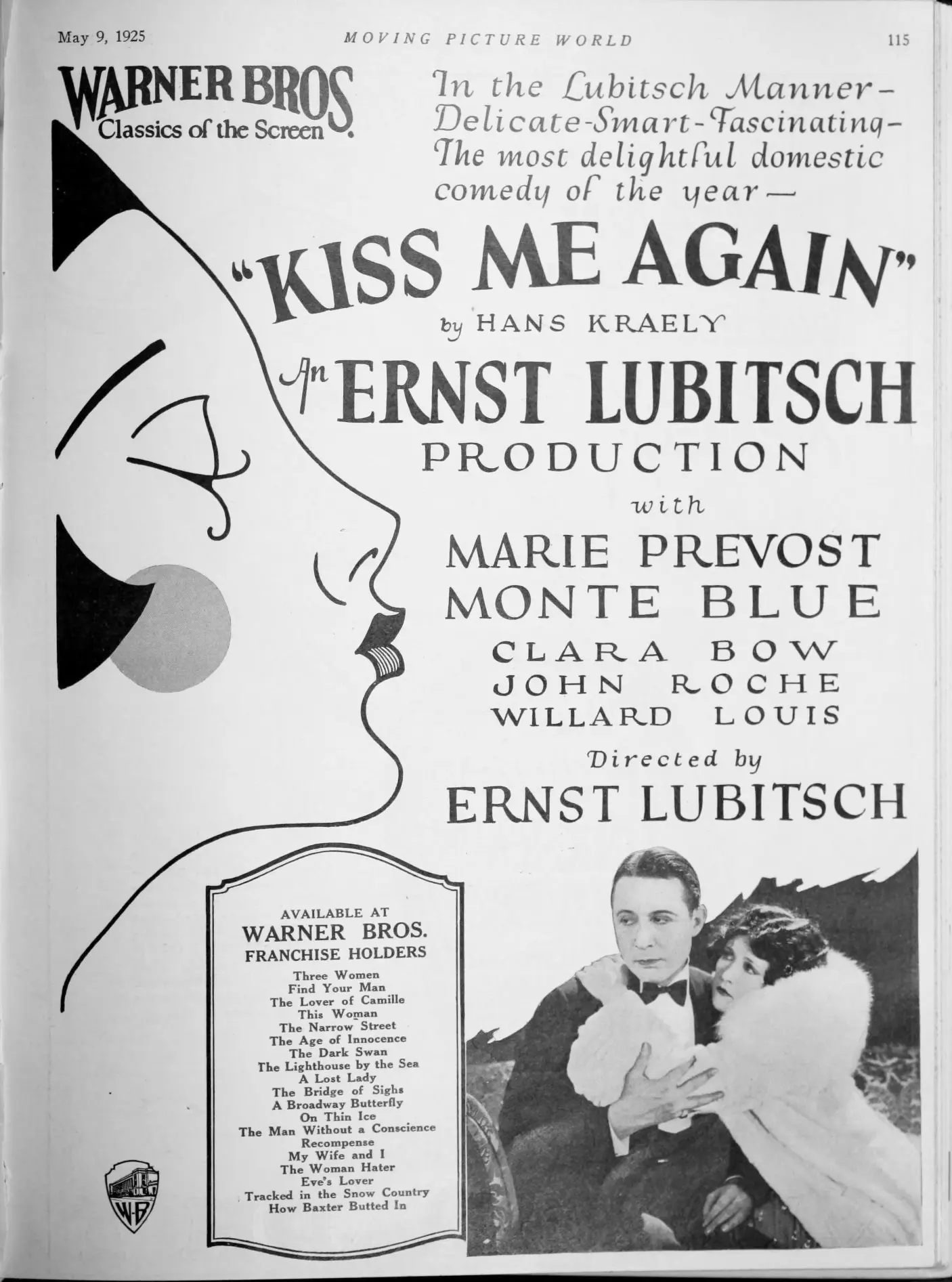
Director's Spotlight: United States
A Deep Dive into the 1925 Vision of Ernst Lubitsch
As a cultural artifact of the 1925s, Kiss Me Again provides the global recognition that Ernst Lubitsch garnered after the release of Kiss Me Again. Elevating the source material through Ernst Lubitsch's unique vision, it solidifies Ernst Lubitsch's reputation as a master of the craft.
In Kiss Me Again, Ernst Lubitsch pushes the boundaries of conventional narrative. The film's unique approach to its subject matter has sparked endless debates and interpretations among cinephiles and critics alike.

In this work, Ernst Lubitsch explores the intersection of Comedy and United States cultural identity. The meticulous attention to detail suggests a deep-seated commitment to pushing the boundaries of the medium, ensuring that Kiss Me Again remains a relevant topic of study for Comedy enthusiasts.
| Cinematography | Static |
| Soundtrack | Experimental |
| Editing | Invisible |
| Art Direction | Kitsch |
Visualizing the convergence of Ernst Lubitsch's style and the core Comedy narrative.
Gaston Fleury's (Monte Blue) wife, Loulou (Marie Prevost), takes a perfunctory interest in music but a deeper one in a musician named Maurice (John Roche). Although Gaston has no intention of releasing his wife into the hands of Maurice, he feigns willingness to give Loulou a divorce. Loulou then becomes bored with Maurice, and clever maneuvering on the part of Gaston brings her to want desperately a reconciliation with him. He happily fulfills her wish.
Decades after its release, Kiss Me Again remains a vital piece of the cinematic puzzle. Its influence can be seen in countless modern works, solidifying Ernst Lubitsch's status as a master of the craft in United States and beyond.