
DbcultAccessing Vault...
Director's Spotlight
Senior Film Conservator
Director's Spotlight: United States
A Deep Dive into the 1922 Vision of Eugene De Rue
The Short DNA of All Wrong is a reflection of United States's the historical context that Eugene De Rue weaves into the Short fabric. Challenging the viewer to find meaning in the Short shadows, it transcends regional boundaries to tell a universal story.
In All Wrong, Eugene De Rue pushes the boundaries of conventional narrative. The film's unique approach to its subject matter has sparked endless debates and interpretations among cinephiles and critics alike.
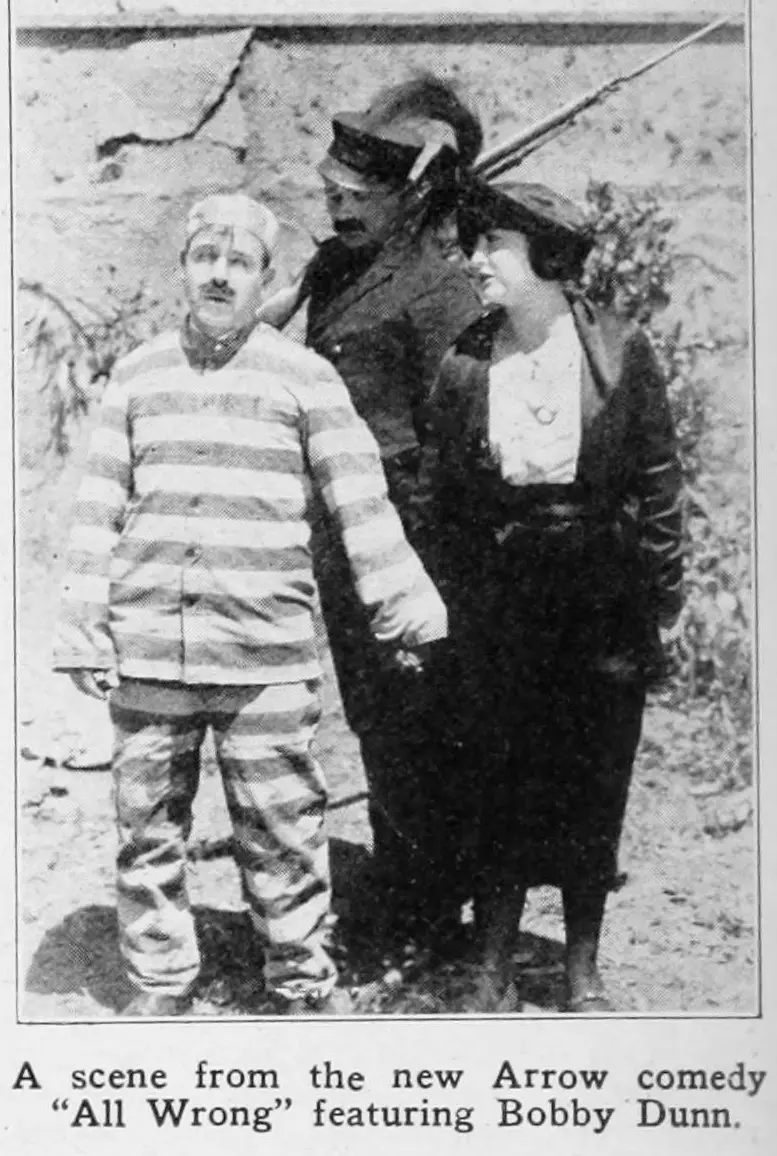
The visual language of All Wrong is defined by its use of shadows and framing, a hallmark of Eugene De Rue's style. By utilizing a 1922-era palette, the film creates an immersive experience that perfectly complements its Short themes.
| Cinematography | Static |
| Soundtrack | Orchestral |
| Editing | Invisible |
| Art Direction | Kitsch |
Visualizing the convergence of Eugene De Rue's style and the core Short narrative.
Bobby is a sandwich man who is in love with Vera Pretty, a motion picture star. The story concerns his efforts to get into the studio to see her. He succeeds several times, each time butting in on the scene and being thrown out. The picture that Vera is making is about an escaped convict. In a nearby prison a convict is about to be executed. He make his escape and Bobby buys his convict suit from him in order to get into the picture with Vera. The guards capture him, believing him to be the escaped convict. He finally escapes from them and flees to Vera and begs her to save him. He again butts in and as this is a scene that the director is trying to take for some time and he does it so well, the director offers him a leading part in the next picture. He is delighted but when Vera says no one shall play the lead except her husband, he goes back to the prison to be executed.
Decades after its release, All Wrong remains a vital piece of the cinematic puzzle. Its influence can be seen in countless modern works, solidifying Eugene De Rue's status as a master of the craft in United States and beyond.