
DbcultAccessing Vault...
Director's Spotlight
Senior Film Conservator
Director's Spotlight: United States
A Deep Dive into the 1914 Vision of Eugene Moore
Deciphering the layers of Joseph in the Land of Egypt (1914) reveals a monumental shift in cult filmmaking spearheaded by Eugene Moore. With its avant-garde structure and atmospheric tension, offering layers of thematic complexity that demand repeated viewing.
In Joseph in the Land of Egypt, Eugene Moore pushes the boundaries of conventional narrative. The film's unique approach to its subject matter has sparked endless debates and interpretations among cinephiles and critics alike.
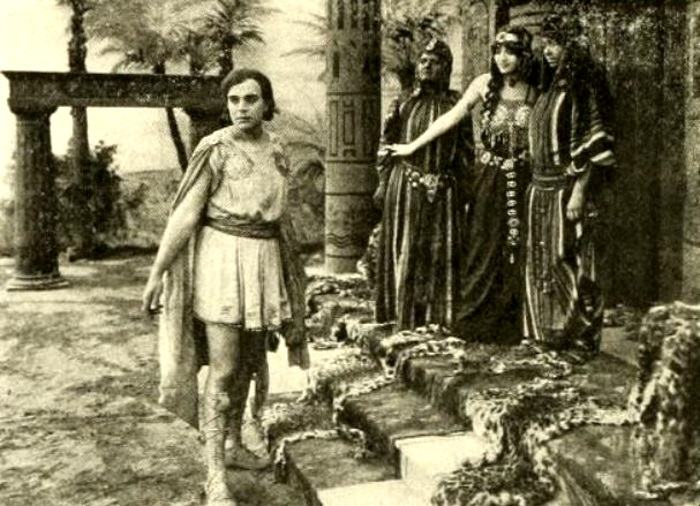
The visual language of Joseph in the Land of Egypt is defined by its use of shadows and framing, a hallmark of Eugene Moore's style. By utilizing a 1914-era palette, the film creates an immersive experience that perfectly complements its cult themes.
| Cinematography | Static |
| Soundtrack | Diegetic |
| Editing | Elliptical |
| Art Direction | Expressionist |
Visualizing the convergence of Eugene Moore's style and the core cult narrative.
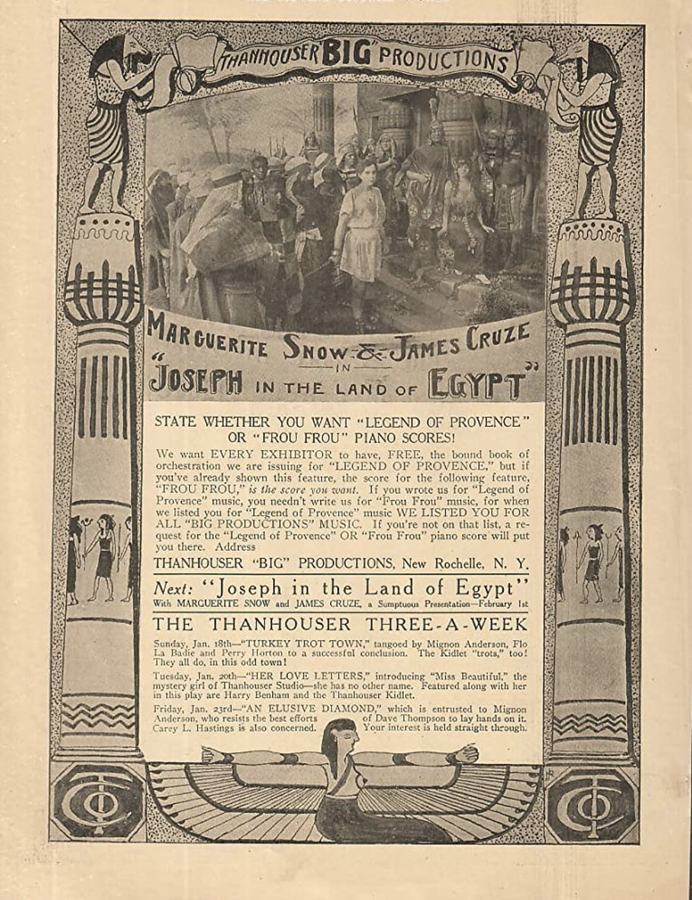
The second of "Thanhouser Big Productions," a monthly schedule, Joseph in the Land of Egypt was a true "feature" film, a new class of film which came to dominate the market by the end of 1914. A feature was an hour or more, heavily advertised, with elaborate production values, often with higher ticket prices, longer runs per theater, strongly promoted star cast and was always a drama. Thanhouser followed up on the enormous success one year earlier of THE STAR OF BETHLEHEM with a familiar Biblical story, large and highly decorated (and highly populated) sets, elaborate costumes and (something new) star promotion. Only a few "Thanhouser Big Productions" in early 1914 included specially-commissioned scores from Tams Music Library. It had been common for accompanists to improvise or use standard selections from theater and classical music, or "cue sheets" of compilations tailored specifically to the film. Beginning in 1915, the biggest features included original scores commissioned by the production studio. The performed score for JOSEPH IN THE LAND OF EGYPT is a combination of the written original music and the musician's improvisation based on its themes. This original music is a transition to the fully-composed scores introduced in Europe and the U.S. a year later. Whether it is another Thanhouser innovation is a subject for research. As in all the other titles in this Thanhouser collection, organist Ben Model exhibits the demanding and skillful art of improvisation.
Decades after its release, Joseph in the Land of Egypt remains a vital piece of the cinematic puzzle. Its influence can be seen in countless modern works, solidifying Eugene Moore's status as a master of the craft in United States and beyond.