Summary
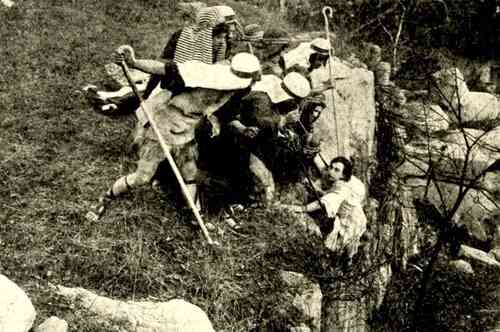
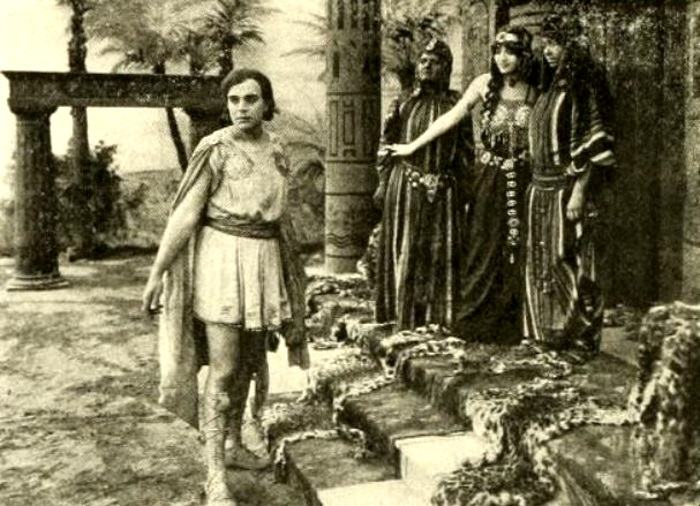
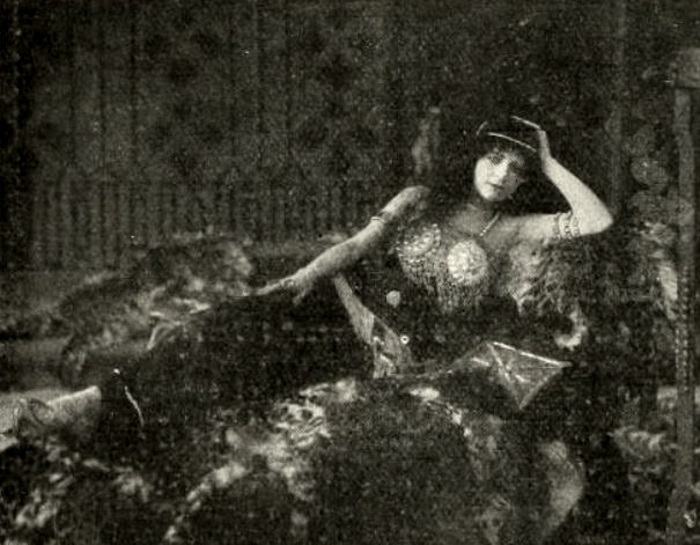
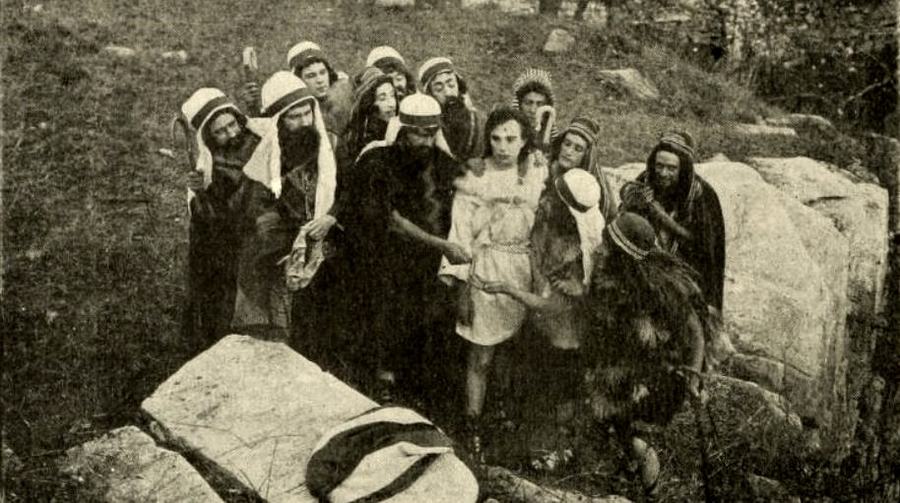
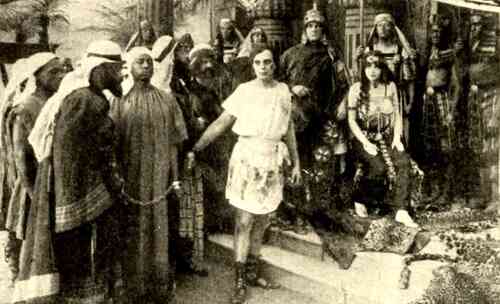
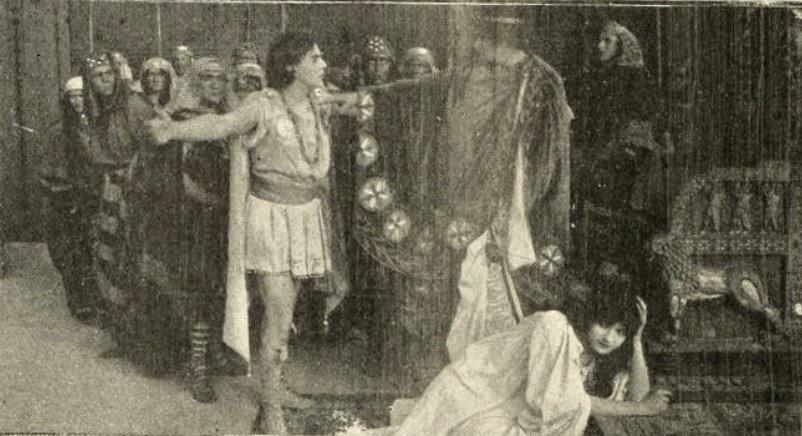
A shimmering Nile of celluloid unfurls in 1914 as Thanhouser’s second “Big Production” drifts like incense through cathedral-dark theaters: Joseph, the dream-weaving seer, is hurled by his brothers—jealous wolves in kaleidoscopic tunics—into a pit that yawns like the mouth of Hades itself, then sold to spice-laden Ishmaelite merchants whose camel bells clink like frost against stars. In Egypt’s opulent labyrinth of lotus-columned halls and gold-leafed sphinxes, the boy becomes property, then prophet, then vizier, his silhouette swallowed and regurgitated by hieroglyphic shadows. Potiphar’s wife, a panther in silk, stalks corridors echoing with forbidden flutes; her failed seduction detonates into a scandal that chains Joseph in subterranean gloom where scorpions scuttle across stone like spilled obsidian. Yet dreams—those iridescent moths—flutter through prison bars: fat cows devoured by lean ones, sheaves of wheat bowing to a single sheaf, the cosmos whispering its riddles in cobalt flickers. Pharaoh’s insomnia summons the interpreter, and suddenly the shepherd stands robed in midnight linen, eyes reflecting the Nile’s moon-slick skin. Famine descends like a bronze locust cloud; Jacob’s sons, gaunt as gilded specters, kneel before the brother they once bloodied, now unrecognizable behind kohl and power. Recognition arrives in a thunderclap of silver cups hidden in grain sacks, Judah’s torn cloak, Benjamin’s tears—an emotional avalanche shot in chiaroscuro that feels closer to Rembrandt than to nickelodeon slapstick. The reconciliation is no Sunday-school tableau but a trembling negotiation of culpability and mercy, staged on vast palace steps thronged with extras whose breathing turbans and clattering wands of office conjure a living papyrus.
Synopsis
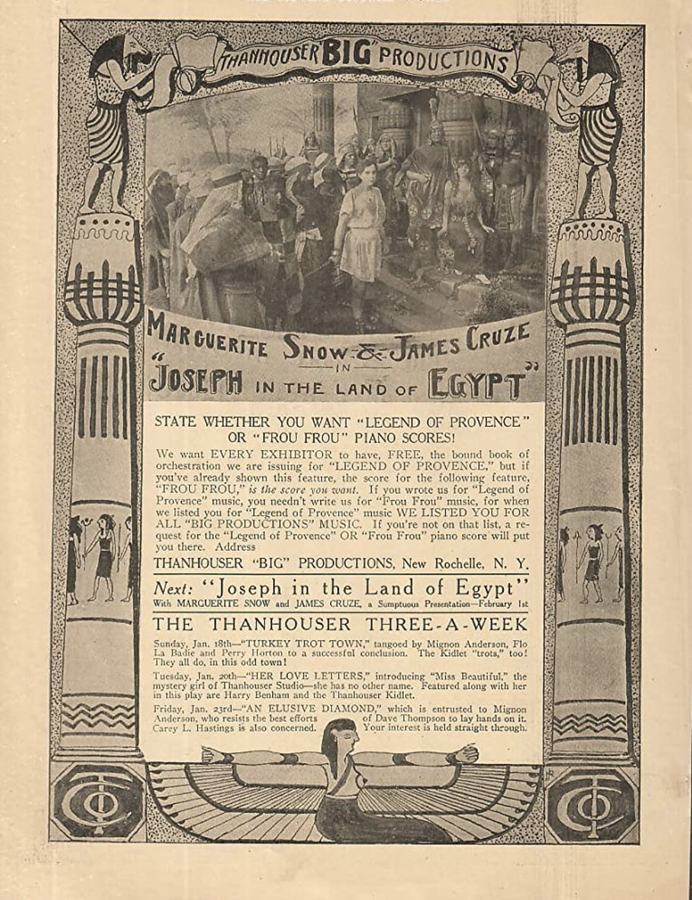
The second of "Thanhouser Big Productions," a monthly schedule, Joseph in the Land of Egypt was a true "feature" film, a new class of film which came to dominate the market by the end of 1914. A feature was an hour or more, heavily advertised, with elaborate production values, often with higher ticket prices, longer runs per theater, strongly promoted star cast and was always a drama. Thanhouser followed up on the enormous success one year earlier of THE STAR OF BETHLEHEM with a familiar Biblical story, large and highly decorated (and highly populated) sets, elaborate costumes and (something new) star promotion. Only a few "Thanhouser Big Productions" in early 1914 included specially-commissioned scores from Tams Music Library. It had been common for accompanists to improvise or use standard selections from theater and classical music, or "cue sheets" of compilations tailored specifically to the film. Beginning in 1915, the biggest features included original scores commissioned by the production studio. The performed score for JOSEPH IN THE LAND OF EGYPT is a combination of the written original music and the musician's improvisation based on its themes. This original music is a transition to the fully-composed scores introduced in Europe and the U.S. a year later. Whether it is another Thanhouser innovation is a subject for research. As in all the other titles in this Thanhouser collection, organist Ben Model exhibits the demanding and skillful art of improvisation.
Review Excerpt
"
Imagine, if you can, the collective gasp that rippled through 1914 auditoriums when the first true “feature” shimmered above footlights—Joseph in the Land of Egypt—a film whose very existence feels like a miracle of cultural tectonics. One moment moviegoers were nibbling on ten-minute one-reelers like salted peanuts; the next they were being asked to swallow a biblical saga stretching longer than a Wagner act, its intertitles glowing like stained glass against velvet darkness. Thanhouser wasn’t..."