
DbcultAccessing Vault...
Director's Spotlight
Senior Film Conservator
Director's Spotlight: United States
A Deep Dive into the 1920 Vision of Francis J. Grandon
Analyzing Miss Nobody (1920) requires a deep dive into the defining moment in Drama history that Francis J. Grandon helped create. Defining a new era of United States artistic expression, it transcends regional boundaries to tell a universal story.
In Miss Nobody, Francis J. Grandon pushes the boundaries of conventional narrative. The film's unique approach to its subject matter has sparked endless debates and interpretations among cinephiles and critics alike.

In this work, Francis J. Grandon explores the intersection of Drama and United States cultural identity. The meticulous attention to detail suggests a deep-seated commitment to pushing the boundaries of the medium, ensuring that Miss Nobody remains a relevant topic of study for Drama enthusiasts.
| Cinematography | Handheld |
| Soundtrack | Diegetic |
| Editing | Elliptical |
| Art Direction | Expressionist |
Visualizing the convergence of Francis J. Grandon's style and the core Drama narrative.
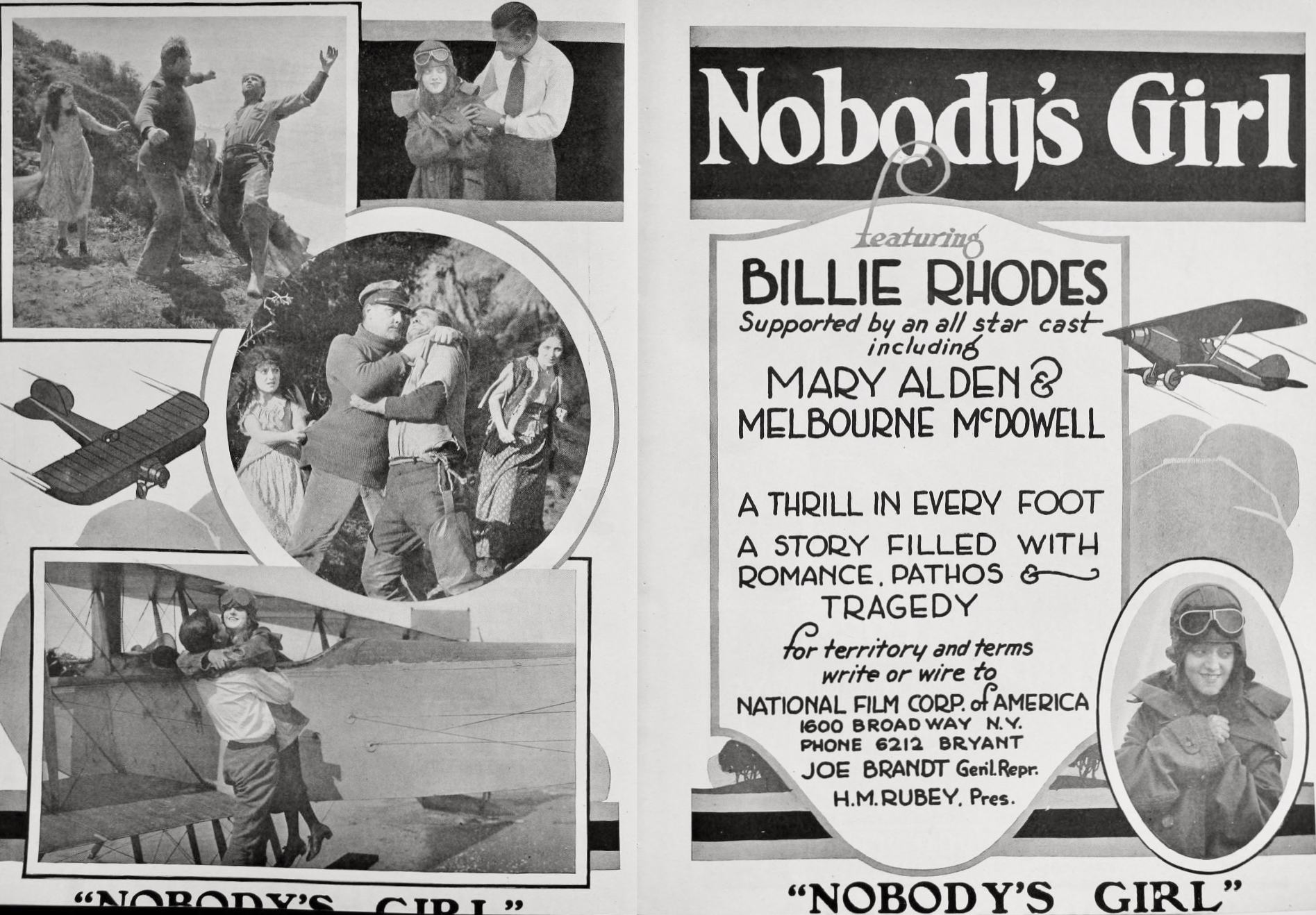
A raft carrying a little girl and a dead woman drifts in from a shipwreck to Devil's Island. There, a band of thieves and smugglers name the girl Rose Marie, though she grows up as "nobody's girl." Living in a cave, she learns to read through the kindness of Jason, who is soon killed by the cruel leader, Red Gull. In Red Gull's power, and urged on by Jason's jealous wife, Rose Marie makes her escape in a rowboat, where she is spotted by an aviator flying above the sea. He rescues her, taking her to be cared for at his home where she is well treated. When newspapers report a mysterious shipwreck on Devil's Island, Rose Marie reveals the way in which Red Gull lured ships to their doom there. She guides the authorities to the island, where, after a fierce battle, the thieves are wiped out. Eventually the aviator falls in love with Rose Marie, and "nobody's girl" is somebody's sweetheart at last.
Decades after its release, Miss Nobody remains a vital piece of the cinematic puzzle. Its influence can be seen in countless modern works, solidifying Francis J. Grandon's status as a master of the craft in United States and beyond.