
DbcultAccessing Vault...
Director's Spotlight
Senior Film Conservator
Director's Spotlight: United States
A Deep Dive into the 1915 Vision of Frank Hall Crane
Exploring the cult underpinnings of The Gray Mask leads us to the uncompromising vision of Frank Hall Crane that defines this cult masterpiece. Melding the raw energy of United States with a global cult appeal, it echoes the profound changes occurring in United States during that era.
In The Gray Mask, Frank Hall Crane pushes the boundaries of conventional narrative. The film's unique approach to its subject matter has sparked endless debates and interpretations among cinephiles and critics alike.
In this work, Frank Hall Crane explores the intersection of cult and United States cultural identity. The meticulous attention to detail suggests a deep-seated commitment to pushing the boundaries of the medium, ensuring that The Gray Mask remains a relevant topic of study for cult enthusiasts.
| Cinematography | Static |
| Soundtrack | Experimental |
| Editing | Elliptical |
| Art Direction | Expressionist |
Visualizing the convergence of Frank Hall Crane's style and the core cult narrative.
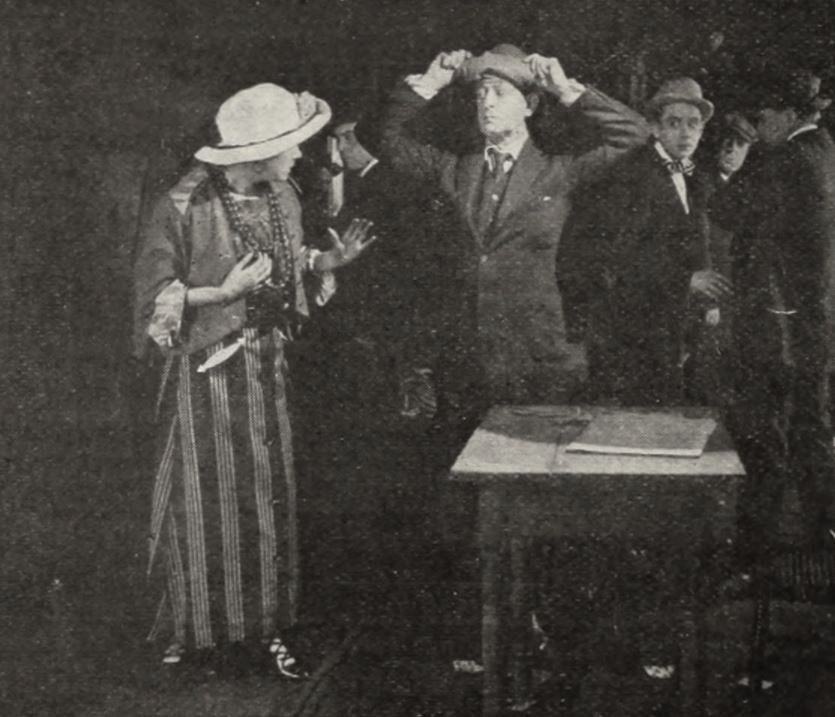
Police inspector Jim Garth, investigates the murder of Joe Kridel, another inspector, who had been tracking the Hennions, a gang of thieves plotting to steal the formula for a dangerous explosive from an old inventor. As Jim uncovers the Hennions' plans to procure the formula and sell it to an agent of an unfriendly foreign power, he encounters Nora, the former lover of Joe, who has sworn revenge for the killing and has ingratiated herself with the Hennions in order to discover the identity of the murderer. Although he assumes Nora is one of the thieves, Jim falls in love with her anyway, but she firmly rejects his advances. Disguised in a gray mask similar to the one worn by one of the gang members, Jim infiltrates the organization and foils the plot. With Joe's murderer in jail, a grateful Nora finally accepts Jim's affection.
Decades after its release, The Gray Mask remains a vital piece of the cinematic puzzle. Its influence can be seen in countless modern works, solidifying Frank Hall Crane's status as a master of the craft in United States and beyond.