
DbcultAccessing Vault...
Director's Spotlight
Senior Film Conservator
Director's Spotlight: United States
A Deep Dive into the 1918 Vision of Frank Hall Crane
As we revisit the 1918 masterpiece The Life Mask, we are struck by the atmospheric immersion that Frank Hall Crane achieves throughout The Life Mask. Exploring the nuances of the human condition with cult flair, it solidifies Frank Hall Crane's reputation as a master of the craft.
In The Life Mask, Frank Hall Crane pushes the boundaries of conventional narrative. The film's unique approach to its subject matter has sparked endless debates and interpretations among cinephiles and critics alike.
To fully appreciate The Life Mask, one must consider the cinematic climate of 1918. During this period, United States was undergoing significant artistic shifts, and Frank Hall Crane was at the forefront of this cult movement, often challenging established norms.
| Cinematography | High-Contrast |
| Soundtrack | Experimental |
| Editing | Elliptical |
| Art Direction | Expressionist |
Visualizing the convergence of Frank Hall Crane's style and the core cult narrative.
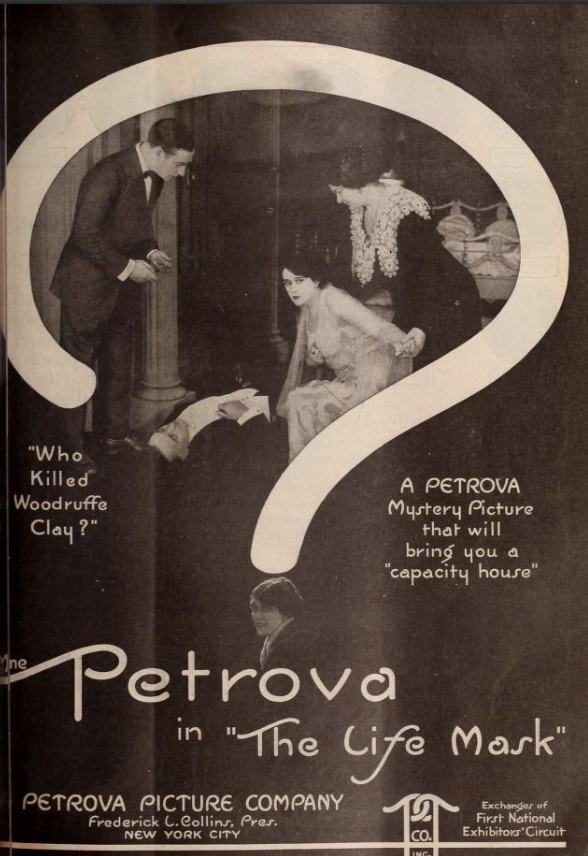
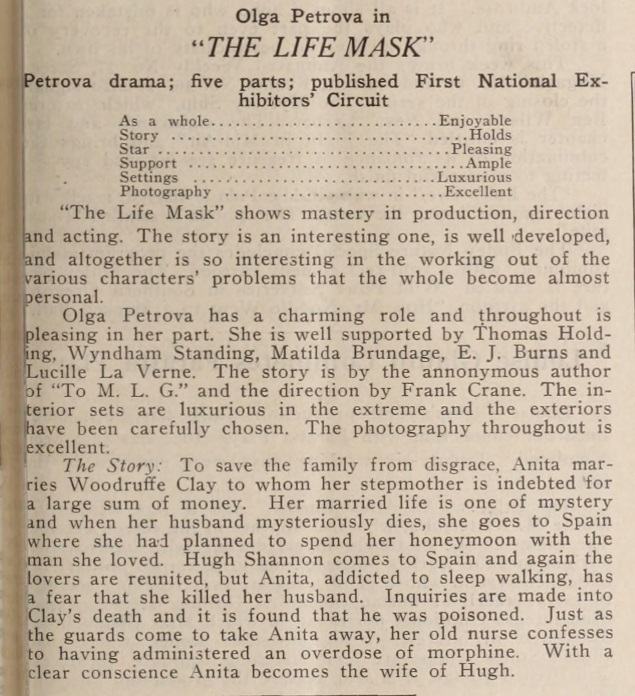
Mrs. Helen Courtland passes a fake check for $25,000 from a millionaire named Woodruffe Clay, who is in love with her daughter Anita. To save the family from a scandal in court, Anita marries Woodruffe, even though she loves Captain Hugh Shannon of the Foreign Legion. During an argument on their wedding night, Woodruffe falls and is seriously injured, and during his recovery, he makes her life miserable. Anita suffers from sleepwalking, and after one episode she dreams of poisoning her husband, she awakens to find him dead. Believing that she killed Woodruffe, Anita travels to Europe with Sarah Harden, her nurse, and there renews her affair with Hugh. When the evidence points overwhelmingly to Anita, however, she decides to return to America, but before she can confess her guilt, Sarah admits that it was she who killed Woodruffe in order to free her mistress from an unhappy marriage.
Decades after its release, The Life Mask remains a vital piece of the cinematic puzzle. Its influence can be seen in countless modern works, solidifying Frank Hall Crane's status as a master of the craft in United States and beyond.