
DbcultAccessing Vault...
Director's Spotlight
Senior Film Conservator
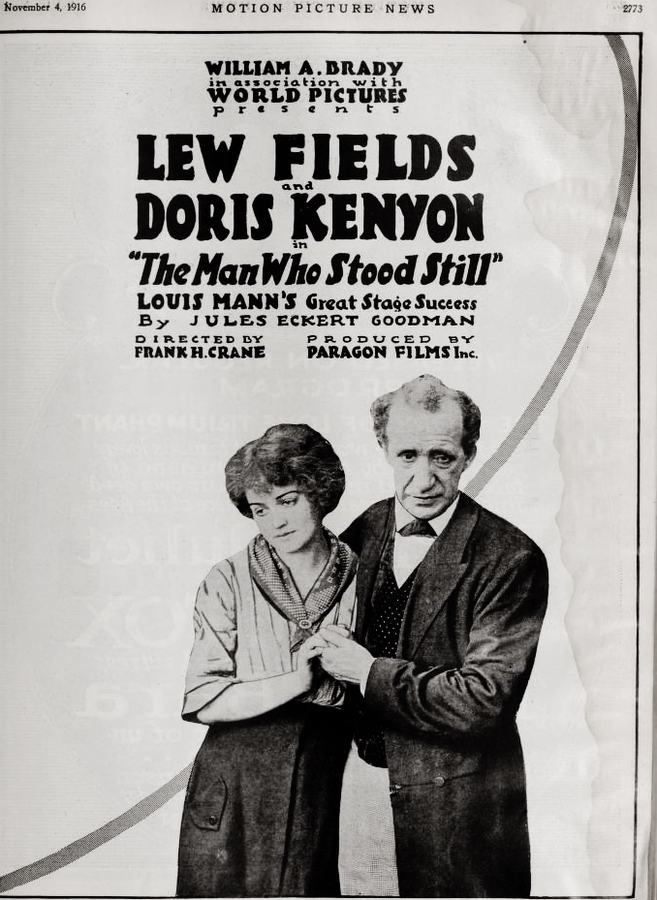
Director's Spotlight: United States
A Deep Dive into the 1916 Vision of Frank Hall Crane
The artistic breakthrough represented by The Man Who Stood Still in 1916 highlights the uncompromising vision of Frank Hall Crane that defines this cult masterpiece. In the context of United States's rich cinematic history, it captures a specific kind of cinematic magic that is rarely replicated.
In The Man Who Stood Still, Frank Hall Crane pushes the boundaries of conventional narrative. The film's unique approach to its subject matter has sparked endless debates and interpretations among cinephiles and critics alike.
In this work, Frank Hall Crane explores the intersection of cult and United States cultural identity. The meticulous attention to detail suggests a deep-seated commitment to pushing the boundaries of the medium, ensuring that The Man Who Stood Still remains a relevant topic of study for cult enthusiasts.
| Cinematography | Handheld |
| Soundtrack | Experimental |
| Editing | Elliptical |
| Art Direction | Expressionist |
Visualizing the convergence of Frank Hall Crane's style and the core cult narrative.
Kraus' little jewelry shop on the east side of New York is typical of that locality thirty years ago, and while his competitors advance with the times, he stands still in the simplicity of his kindly old soul, and devotes more time to his domestic affairs than to his business. In the rear of his small shop are the few immaculate rooms presided over by Katie, his motherly old housekeeper for many years, who also fills the vacancy of mother for Marie, the daughter of Kraus. Kraus' most intimate friend and neighbor is Spiegel, a kindred soul, and the father of Fred. Both parents have planned for years the ultimate union of their children. Marie, however, has other ideas on the subject, and has given her heart to Frank MacPherson, a worthless young "sport" and the son of her father's keenest competitor. From time to time a pinochle game at the home of one or the other is arranged by the two old Germans, as a pretext to throw Marie and Fred in each other's company. Fred's attentions to Marie on these occasions mislead the old folks, who do not see that Fred's sincerity is not returned. Marie's eighteenth birthday arrives, and in honor of the event, Kraus closes up shop, and with Marie, Katie and the Spiegels, journeys to the Jersey shore for a picnic in the woods. Frank follows them, and in the midst of their gaiety calls Marie to him. She slips away unseen, and tells him of the predicament that her blind love for him has placed her in. Unsympathetic, he speaks of her delicate condition as his "rotten luck." His craven mind plans further deception, and she becomes the victim of a mock marriage. Before leaving with Frank she sends a boy back to the picnic with a note to her father, telling of her intention. Old Kraus' grief upon its receipt is pitiful, and the holiday's joy is turned to sorrow. No word comes from Marie and Kraus broods over his loss until poverty and want confront him. He is at last compelled to accept a position in the store of his former salesman and a home with the Spiegels. Meanwhile, Marie and Frank have traveled down a parallel scale until he leaves her with her baby and goes away. Without support she is eventually dispossessed from her squalid room, and going she knows not where, encounters Fred, her father's choice. He persuades her to come home with him, where his sister Alice makes her comfortable. The Spiegels now plan a reconciliation, and by shrewd means bring father and daughter back to each other's arms. MacPherson has turned against his son Frank, and is the means of bringing him to an accounting. With his grandchild in his arms, Kraus' anger melts, and the glances he detects between Fred and Marie make him believe that his fondest hopes may yet be realized.
Decades after its release, The Man Who Stood Still remains a vital piece of the cinematic puzzle. Its influence can be seen in countless modern works, solidifying Frank Hall Crane's status as a master of the craft in United States and beyond.