Summary
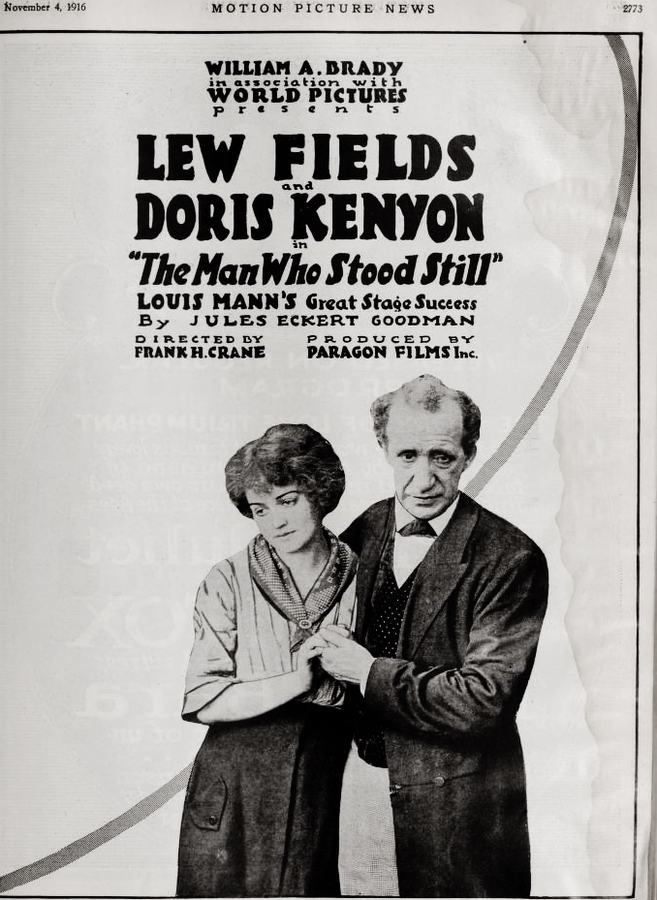
In a poignant tableau of turn-of-the-century New York, 'The Man Who Stood Still' unfurls the tragicomic saga of Kraus, a benevolent, anachronistic jeweler whose steadfast devotion to domesticity eclipses his entrepreneurial drive. While the bustling East Side evolves around him, Kraus remains ensconced in a tranquil, almost static existence, anchored by his loyal housekeeper, Katie, and his cherished daughter, Marie. His dearest confidant, Spiegel, shares a parallel dream: the matrimonial alliance of their offspring, Marie and Fred. Yet, the currents of youthful desire prove formidable, as Marie, on the cusp of womanhood, surreptitiously pledges her heart to Frank MacPherson, a charming but utterly dissolute scion of her father’s fiercest business rival. The elders’ meticulously crafted pinochle evenings, intended as romantic catalysts, only serve to highlight Fred’s unrequited sincerity against Marie’s burgeoning, ill-fated infatuation. Marie’s eighteenth birthday precipitates a calamitous picnic on the Jersey shore, where Frank's insidious machinations culminate in a mock marriage, leaving Marie pregnant and abandoned. Her desperate note shatters Kraus’s idyllic world, plunging him into a vortex of grief, financial ruin, and social displacement, forcing him into the employ of a former salesman and the compassionate embrace of the Spiegels. Meanwhile, Marie endures a parallel descent into squalor and destitution, ultimately finding herself dispossessed and adrift, only to be providentially reunited with the ever-steadfast Fred. Through a delicate orchestration of reconciliation by the Spiegels and a surprising intervention from Frank’s own disillusioned father, the fractured family begins to mend. The film culminates in a tender, redemptive embrace, as Kraus, cradling his grandchild, witnesses the nascent rekindling of affection between Marie and Fred, hinting at the potential fulfillment of his long-cherished, though previously derailed, dynastic hopes.
Synopsis
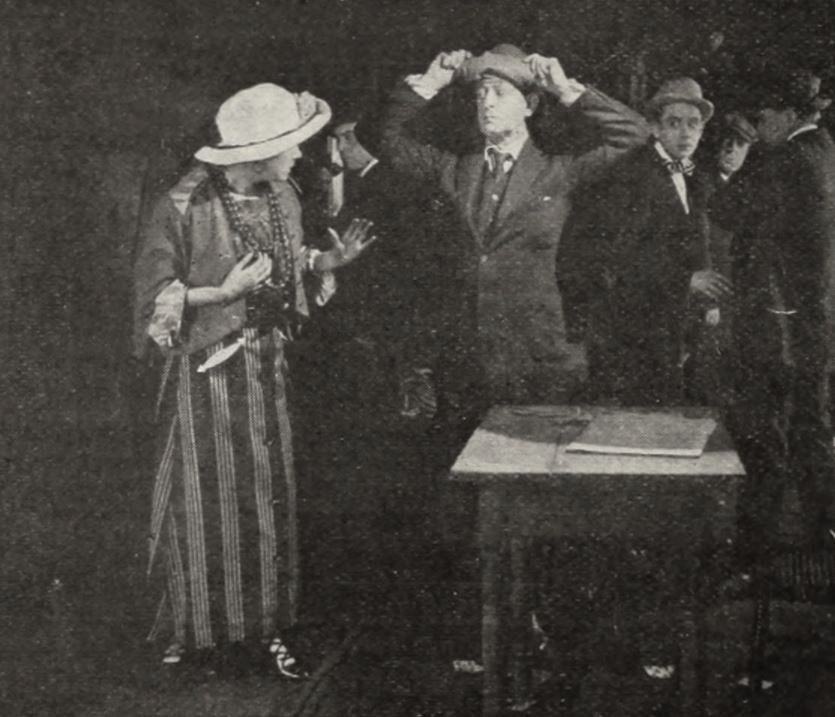
Kraus' little jewelry shop on the east side of New York is typical of that locality thirty years ago, and while his competitors advance with the times, he stands still in the simplicity of his kindly old soul, and devotes more time to his domestic affairs than to his business. In the rear of his small shop are the few immaculate rooms presided over by Katie, his motherly old housekeeper for many years, who also fills the vacancy of mother for Marie, the daughter of Kraus. Kraus' most intimate friend and neighbor is Spiegel, a kindred soul, and the father of Fred. Both parents have planned for years the ultimate union of their children. Marie, however, has other ideas on the subject, and has given her heart to Frank MacPherson, a worthless young "sport" and the son of her father's keenest competitor. From time to time a pinochle game at the home of one or the other is arranged by the two old Germans, as a pretext to throw Marie and Fred in each other's company. Fred's attentions to Marie on these occasions mislead the old folks, who do not see that Fred's sincerity is not returned. Marie's eighteenth birthday arrives, and in honor of the event, Kraus closes up shop, and with Marie, Katie and the Spiegels, journeys to the Jersey shore for a picnic in the woods. Frank follows them, and in the midst of their gaiety calls Marie to him. She slips away unseen, and tells him of the predicament that her blind love for him has placed her in. Unsympathetic, he speaks of her delicate condition as his "rotten luck." His craven mind plans further deception, and she becomes the victim of a mock marriage. Before leaving with Frank she sends a boy back to the picnic with a note to her father, telling of her intention. Old Kraus' grief upon its receipt is pitiful, and the holiday's joy is turned to sorrow. No word comes from Marie and Kraus broods over his loss until poverty and want confront him. He is at last compelled to accept a position in the store of his former salesman and a home with the Spiegels. Meanwhile, Marie and Frank have traveled down a parallel scale until he leaves her with her baby and goes away. Without support she is eventually dispossessed from her squalid room, and going she knows not where, encounters Fred, her father's choice. He persuades her to come home with him, where his sister Alice makes her comfortable. The Spiegels now plan a reconciliation, and by shrewd means bring father and daughter back to each other's arms. MacPherson has turned against his son Frank, and is the means of bringing him to an accounting. With his grandchild in his arms, Kraus' anger melts, and the glances he detects between Fred and Marie make him believe that his fondest hopes may yet be realized.
Review Excerpt
"In the annals of early cinema, where moral parables often held sway and human drama unfolded with an almost theatrical earnestness, 'The Man Who Stood Still' emerges as a particularly poignant artifact. It's a narrative that, despite its seemingly straightforward plot, delves into the intricate tapestry of family loyalty, the perilous allure of superficial charm, and the relentless march of time against the backdrop of an unchanging heart. This film, a testament to the storytelling sensibilities..."