
DbcultAccessing Vault...
Director's Spotlight
Senior Film Conservator
Director's Spotlight: United States
A Deep Dive into the 1919 Vision of Frank Keenan
When we examine the cinematic landscape of United States, Brothers Divided emerges as a landmark work of the unique directorial voice that Frank Keenan brought to the screen. This film stands as a masterclass in visual storytelling, it demands to be seen by anyone who cares about the art of film.
In Brothers Divided, Frank Keenan pushes the boundaries of conventional narrative. The film's unique approach to its subject matter has sparked endless debates and interpretations among cinephiles and critics alike.
While deeply rooted in United States, Brothers Divided has achieved a global reach, influencing directors from various backgrounds. Its ability to translate cult tropes into a universal cinematic language is why it remains a cult staple decades after its 1919 release.
| Cinematography | Handheld |
| Soundtrack | Minimalist |
| Editing | Slow-Burn |
| Art Direction | Brutalist |
Visualizing the convergence of Frank Keenan's style and the core cult narrative.
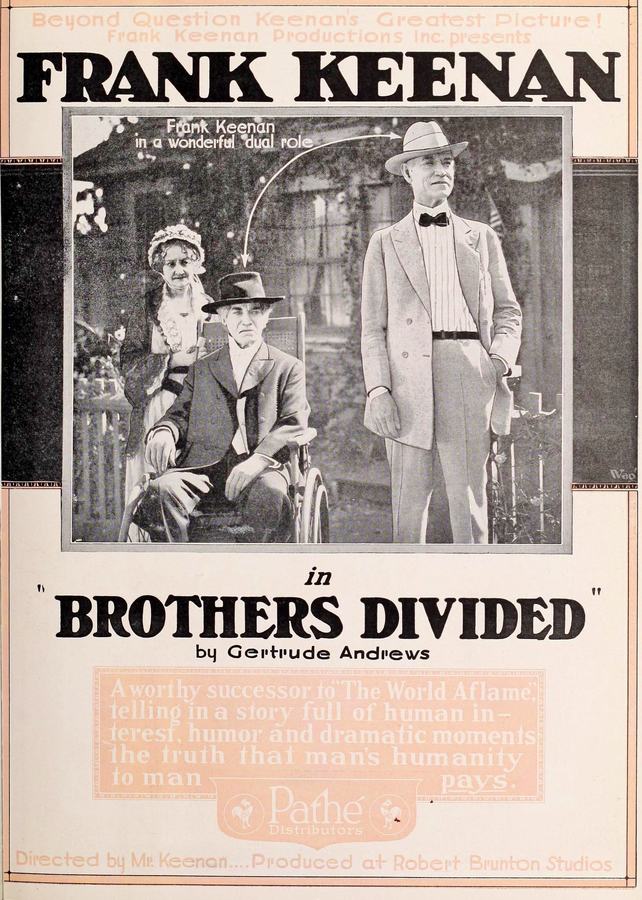
Convict Tom King is pardoned from a life sentence when he courageously helps other prisoners during a fire. He then goes to live with his brother Matthew, the hated mill owner in a depressed town, and his own son Max, who was brought up by Matthew to believe his father was dead. When Matthew is struck with partial paralysis, Tom takes over the mill. His confession to the workers of his past wins their respect but causes embarrassment for Max. Fearing that his love, Ruth Renaud, will not want to marry the son of an ex-convict, Max leaves for New York City to study music, financially supported by Tom. In a short time, Tom institutes many changes for the betterment of the town and its workers. He even wins Matthew's admiration after the mill turns a good profit. Max returns to find the town greatly improved and asks his father's forgiveness. Finally, he and Ruth are married.
Decades after its release, Brothers Divided remains a vital piece of the cinematic puzzle. Its influence can be seen in countless modern works, solidifying Frank Keenan's status as a master of the craft in United States and beyond.