
DbcultAccessing Vault...
Director's Spotlight
Senior Film Conservator
Director's Spotlight: United States
A Deep Dive into the 1926 Vision of Frank O'Connor
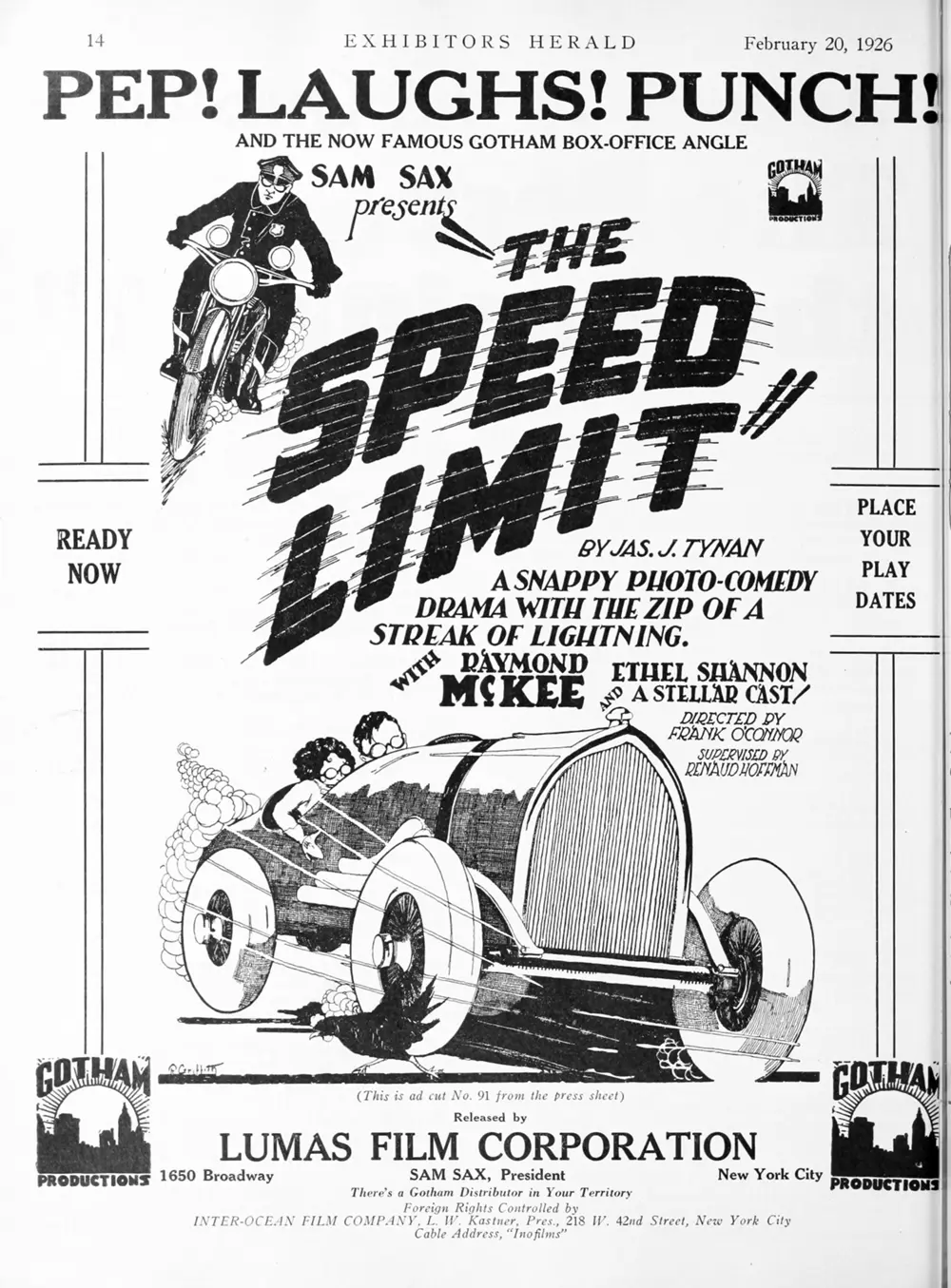
The 1926 release of The Speed Limit marked a significant moment for the stylistic boundaries pushed by Frank O'Connor during the production. In the context of United States's rich cinematic history, it invites us to question our own perceptions of Romance narratives.
In The Speed Limit, Frank O'Connor pushes the boundaries of conventional narrative. The film's unique approach to its subject matter has sparked endless debates and interpretations among cinephiles and critics alike.
The visual language of The Speed Limit is defined by its use of shadows and framing, a hallmark of Frank O'Connor's style. By utilizing a 1926-era palette, the film creates an immersive experience that perfectly complements its Romance themes.
| Cinematography | High-Contrast |
| Soundtrack | Minimalist |
| Editing | Disjunctive |
| Art Direction | Baroque |
Visualizing the convergence of Frank O'Connor's style and the core Romance narrative.
Tom Milburn, racing enthusiast experimenting with a new tire process, wants to marry Bess Stanton. However, her head is turned by a young man, Claude Roswell, driving a Rolls-Royce. The two men engage in a series of pranks culminating in Roswell's framing Tom for car theft. Tom's name is cleared, and so he is able to drive in the big race and test his experimental tires. The tires prove to be successful, and he wins the race, a manufacturer's royalty contract, and Bess.
Decades after its release, The Speed Limit remains a vital piece of the cinematic puzzle. Its influence can be seen in countless modern works, solidifying Frank O'Connor's status as a master of the craft in United States and beyond.