
DbcultAccessing Vault...
Director's Spotlight
Senior Film Conservator
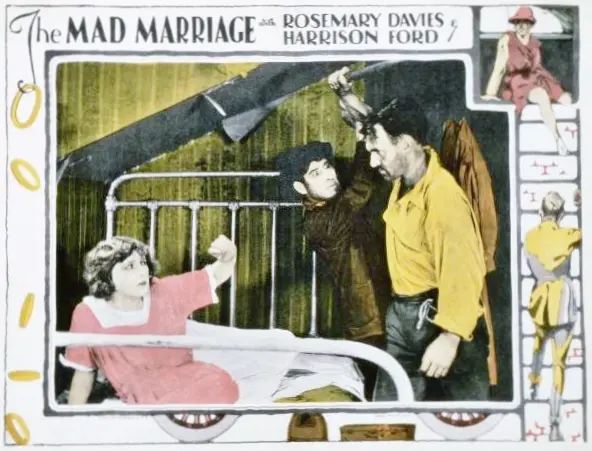
Director's Spotlight: United States
A Deep Dive into the 1925 Vision of Frank P. Donovan
Analyzing The Mad Marriage (1925) requires a deep dive into the defining moment in Drama history that Frank P. Donovan helped create. Defining a new era of United States artistic expression, it transcends regional boundaries to tell a universal story.
In The Mad Marriage, Frank P. Donovan pushes the boundaries of conventional narrative. The film's unique approach to its subject matter has sparked endless debates and interpretations among cinephiles and critics alike.
The visual language of The Mad Marriage is defined by its use of shadows and framing, a hallmark of Frank P. Donovan's style. By utilizing a 1925-era palette, the film creates an immersive experience that perfectly complements its Drama themes.
| Cinematography | Deep Focus |
| Soundtrack | Experimental |
| Editing | Elliptical |
| Art Direction | Expressionist |
Visualizing the convergence of Frank P. Donovan's style and the core Drama narrative.
Alice Darvil, an innocent and simple girl of sixteen, lives with her harsh father in a sequestered country cottage. Writer Walter Butler is caught in a storm while on a walking tour and seeks shelter for the night in the Darvil home. He is attracted to Alice, and after she is forced to leave home, Walter invites her to live with him. They soon marry, but, while Walter is with his dying father, Alice leaves, believing her husband has abandoned her. She gives birth to a daughter, Mary Jane, and becomes a servant in the home of Mrs. Leslie, a charitable woman of wealth. There she meets Colonel Anderson, an old man whom she also marries. Alice and the colonel drift apart and when he dies, his considerable fortune goes to Mary Jane. Walter, who lives in seclusion and writes about spiritual consolation under the name of Malvern, tires of the solitary life and decides to open his home to visitors. Mary Jane visits the house and Walter falls in love with her. They are about to be married when Walter discovers that Mary Jane is his daughter. He is then reconciled with Alice, and Mary Jane marries her young sweetheart.
Decades after its release, The Mad Marriage remains a vital piece of the cinematic puzzle. Its influence can be seen in countless modern works, solidifying Frank P. Donovan's status as a master of the craft in United States and beyond.