
DbcultAccessing Vault...
Director's Spotlight
Senior Film Conservator
Director's Spotlight: United States
A Deep Dive into the 1919 Vision of Frank Powell
The 1919 release of The Unbroken Promise marked a significant moment for the stylistic boundaries pushed by Frank Powell during the production. In the context of United States's rich cinematic history, it invites us to question our own perceptions of cult narratives.
In The Unbroken Promise, Frank Powell pushes the boundaries of conventional narrative. The film's unique approach to its subject matter has sparked endless debates and interpretations among cinephiles and critics alike.
The visual language of The Unbroken Promise is defined by its use of shadows and framing, a hallmark of Frank Powell's style. By utilizing a 1919-era palette, the film creates an immersive experience that perfectly complements its cult themes.
| Cinematography | Deep Focus |
| Soundtrack | Minimalist |
| Editing | Disjunctive |
| Art Direction | Baroque |
Visualizing the convergence of Frank Powell's style and the core cult narrative.
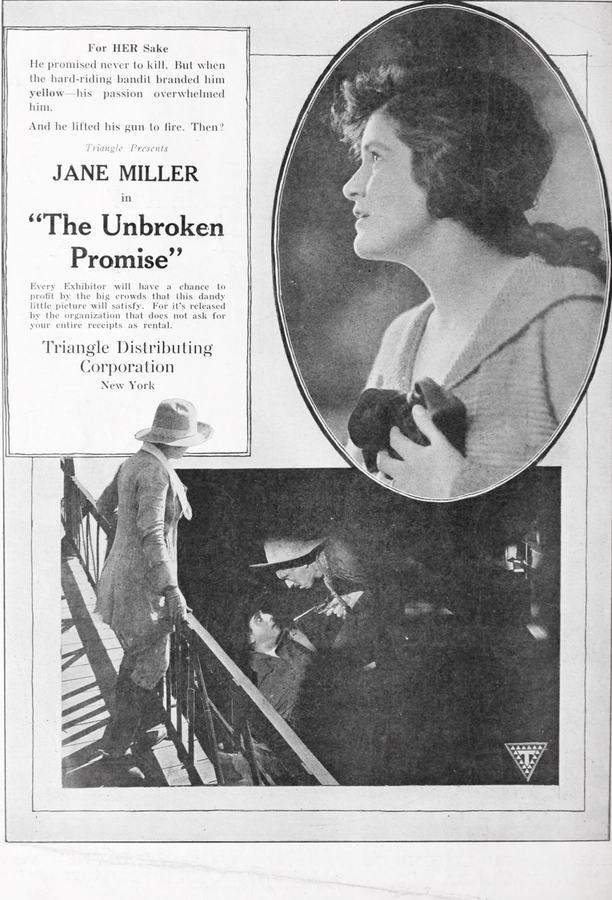
Nell Loring, a Texas sheep rancher's daughter, stops a fight between her father and his neighbor John Corliss, a cattleman, who have feuded for years. Although John loves Nell, he keeps it secret when she promises to marry his errant brother Billy if he stops drinking. After John rescues Nell from a runaway horse, though, she confesses that she really loves him. Worried about the feud, Nell makes John promise never to kill anyone. After Billy is wounded in a barroom brawl, John refuses him money until he reforms. Angered, Billy plots with Fadeaway, a cowboy John dismissed, to rob John's safe. John remembers his promise during his subsequent fight with Fadeaway and only punches him soundly. After Fadeaway is killed by the sister of a woman he betrayed, John, believing that Nell killed him, plants evidence to convict himself. Although Billy, now reformed, tries to take the blame, the murderer's written confession frees John to marry Nell.
Decades after its release, The Unbroken Promise remains a vital piece of the cinematic puzzle. Its influence can be seen in countless modern works, solidifying Frank Powell's status as a master of the craft in United States and beyond.