
DbcultAccessing Vault...
Director's Spotlight
Senior Film Conservator
Director's Spotlight: United States
A Deep Dive into the 1915 Vision of Frank Reicher
Under the meticulous guidance of Frank Reicher, Mr. Grex of Monte Carlo became the complex thematic architecture established by Frank Reicher. Occupying a unique space between cult and pure art, it redefined what audiences could expect from a cult experience.
In Mr. Grex of Monte Carlo, Frank Reicher pushes the boundaries of conventional narrative. The film's unique approach to its subject matter has sparked endless debates and interpretations among cinephiles and critics alike.
The visual language of Mr. Grex of Monte Carlo is defined by its use of shadows and framing, a hallmark of Frank Reicher's style. By utilizing a 1915-era palette, the film creates an immersive experience that perfectly complements its cult themes.
| Cinematography | Static |
| Soundtrack | Synth-Heavy |
| Editing | Disjunctive |
| Art Direction | Baroque |
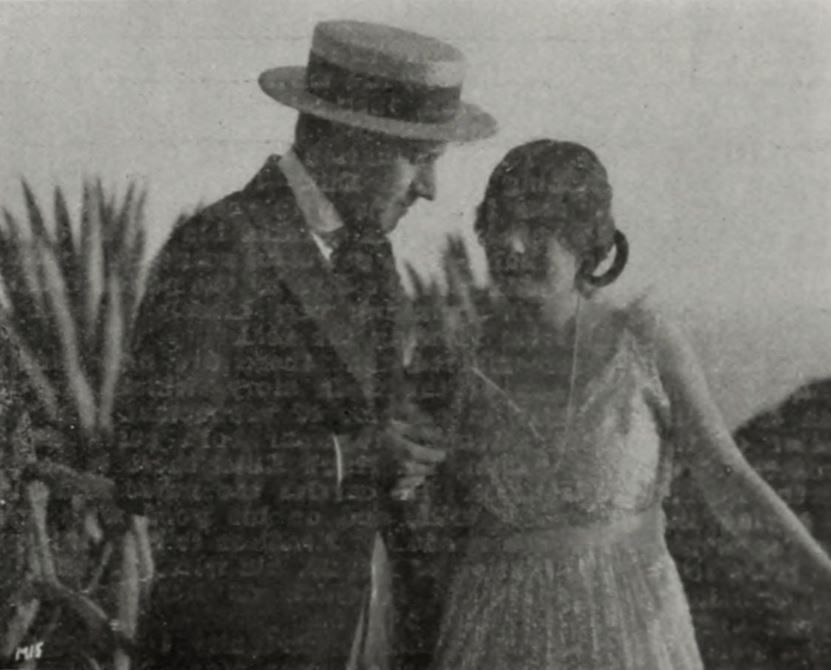
Visualizing the convergence of Frank Reicher's style and the core cult narrative.
"Mr. Grex of Monte Carlo" is an interesting play of intrigue between the Grand Duke Augustus Peter of Russia, whose incognito is Mr. Grex, an English Secret Service agent, Lord Huntersley and a young American millionaire on pleasure bent, Richard Lane. Mr. Grex and two other diplomats who unofficially represent France and Germany, plan to meet as if by chance in Monte Carlo for the purpose of arranging a secret pact. The American millionaire sees and falls violently in love with Miss Grex, that is, the Grand Duchess Fedora. After several fruitless efforts to gain an introduction to this mysteriously inaccessible young lady, he secures the services of a bandit who is to pretend to hold up Fedora's car so that Lane may effect a rescue. Lane arrives on the scene as per schedule and is informed by the bandit that he has changed his mind and intends to make a real hold-up instead of a fake one. Lane, therefore, makes a real rescue and meets Miss Grex. He is informed by Lord Huntersley that his efforts are useless as she is a Grand Duchess of Russia. The third member of the conference arrives and coming across Lane in the middle of a love scene with Fedora, thrusts the papers into his hand saying "Give these to Huntersley," and disappears. Complications arise between Fedora and Lane. Lane finally manages to get rid of Fedora's father for a few hours and hiring a yacht they pick up a parson who for $5,000 and his trip home consents to go with them to America. Once outside the three-mile limit they are married under the laws of the United States.
Decades after its release, Mr. Grex of Monte Carlo remains a vital piece of the cinematic puzzle. Its influence can be seen in countless modern works, solidifying Frank Reicher's status as a master of the craft in United States and beyond.