
DbcultAccessing Vault...
Director's Spotlight
Senior Film Conservator
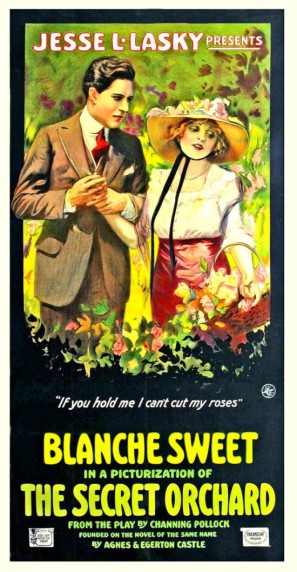
Director's Spotlight: United States
A Deep Dive into the 1915 Vision of Frank Reicher
Witnessing the stylistic transformation of cult through The Secret Orchard reveals the global recognition that Frank Reicher garnered after the release of The Secret Orchard. Serving as a mirror to the anxieties of a changing world, offering layers of thematic complexity that demand repeated viewing.
In The Secret Orchard, Frank Reicher pushes the boundaries of conventional narrative. The film's unique approach to its subject matter has sparked endless debates and interpretations among cinephiles and critics alike.
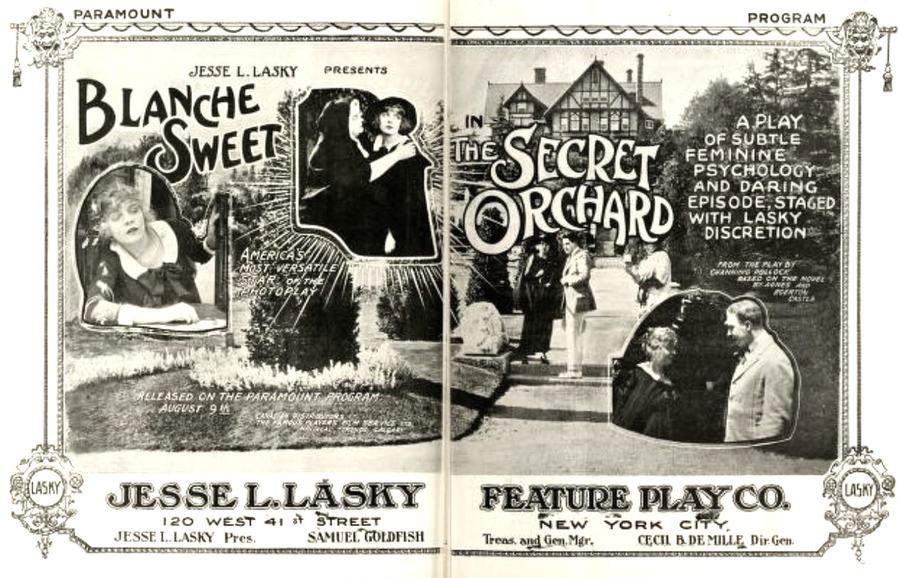
To fully appreciate The Secret Orchard, one must consider the cinematic climate of 1915. During this period, United States was undergoing significant artistic shifts, and Frank Reicher was at the forefront of this cult movement, often challenging established norms.
| Cinematography | Deep Focus |
| Soundtrack | Experimental |
| Editing | Invisible |
| Art Direction | Kitsch |
Visualizing the convergence of Frank Reicher's style and the core cult narrative.
The sound of merry voices and the clinking of wine glasses came through the closed door of a child's room in an apartment situated in a quarter of Paris where night life predominates and where revelers know they may come and go as they please. It was late at night. The child had been asleep, but awakening, frightened, she stepped to the door a moment to listen and then fearlessly, having heard the musical laugh of her mother, she opened the door and entered a large room. It was filled with men and women, whose gaiety may have had some inspiration from the bottles which poked their heads above the rim of ice buckets, which formed an outer fortification around the banquet table. At the sight of the child the conversation ceased for a moment, then burst forth at some indiscreet remark. A woman arising from the head of the table hurried across the room, caught the child in her arms and carried her back into her room. The woman was Cora May, the child her daughter Diane, age four. Cora May was one of the stirs of the Parisian demimonde. The next morning Cora took the child to a convent, bade her a tearful farewell, and returned, sorrowful, to Paris. In her ears there still rang relentlessly the words spoken by a friend the previous evening when he saw the child, "She has the devil in her eyes, Cora, just like you." The little girl, Diane, grew up in the convent, learned to love the sisters and their sweet ways, blossomed into lovely girlhood and at 19 she left the convent to pass a vacation at a friend's home by the seashore at Narbonne. "Monsieur le Chevalier" saw her one day. Her beauty attracted him, her innocence kept him at a distance, but her eyes, those eyes wherein the "devil" was lurking, baffled and confused him. There followed a flirtation, innocent enough, a few words between them, a declaration of love and Diane had fallen a victim to the worldly wiles of "Monsieur le Chevalier," who was, in fact none other than the Duke of Cluny. Meanwhile Cora May, Diane's mother, had died, never having seen her child from the day she had taken her to the convent. Deserted by her care-free friends she found sympathy in a woman of rank, Duchess of Cluny, who sat at her bedside and watched an unhappy life ebb swiftly away. The Duchess made one promise: she would seek out the child, Diane, and take her into her home and guard her from temptation. Diane, still stunned by the experience of her betrayal, dedicates her life to the friendship for the kind Duchess, never associating her with "Monsieur le Chevalier." Subsequently Diane and the Duke, filled with remorse because of his indiscretion, recognize each other yet spare the Duchess, whom each loves from their secret. The past would have remained untold had Diane and not Lieutenant Dodd, U.S.N. fallen in love. The young woman refuses marriage but withholds her reasons, but the young American is obdurate and in time the truth dawns upon him. In a duel he kills the Duke of Cluny who by death atones for his sin, and we are left with the reasonable conclusion that in time Diane and Lieutenant Dodd find happiness together.
Decades after its release, The Secret Orchard remains a vital piece of the cinematic puzzle. Its influence can be seen in countless modern works, solidifying Frank Reicher's status as a master of the craft in United States and beyond.