
DbcultAccessing Vault...
Director's Spotlight
Senior Film Conservator
Director's Spotlight: United States
A Deep Dive into the 1916 Vision of Frank Thorne
As we revisit the 1916 masterpiece The Undertow, we are struck by the meticulous attention to detail that Frank Thorne applied to every frame. Anchored by a narrative that is both personal and universal, it bridges the gap between traditional cult and contemporary vision.
In The Undertow, Frank Thorne pushes the boundaries of conventional narrative. The film's unique approach to its subject matter has sparked endless debates and interpretations among cinephiles and critics alike.
In this work, Frank Thorne explores the intersection of cult and United States cultural identity. The meticulous attention to detail suggests a deep-seated commitment to pushing the boundaries of the medium, ensuring that The Undertow remains a relevant topic of study for cult enthusiasts.
| Cinematography | Deep Focus |
| Soundtrack | Orchestral |
| Editing | Invisible |
| Art Direction | Kitsch |
Visualizing the convergence of Frank Thorne's style and the core cult narrative.
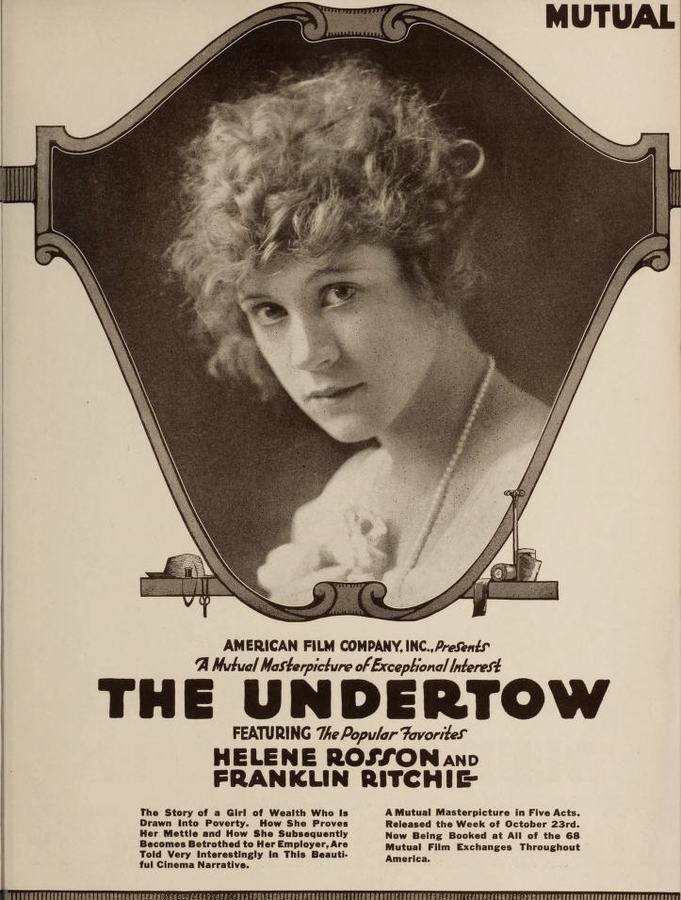
James King has unfortunately married a woman void of ambition. King warns his wife against her questionable associates but she pays no attention to him. He becomes the head of a large factory employing many hands. Hammond, his foreman, is dishonest and mean to the help, who hate him. Morden, another foreman in the factory, is honest and trustworthy. He has adopted David Strong, who is employed in the factory, and later takes Esther, his brother's daughter, into his home. The girl has been used to wealth, but accustoms herself to her surroundings and also goes to work in the factory. King, unable to stand his wife's actions any longer, settles a good sum on her and she leaves for England to secure a divorce. The ship she sails on is wrecked and she loses her life. A disturbance arises in the factory and Esther writes a letter to King, the letter being suppressed by Hammond. King's attentions are directed to Hammond, however, and he also meets Esther and falls in love with her. Hammond bribes one of the workmen to fire the factory, but Esther overhears the plot and warns King. King then calls all of the workmen in, reinstates them in their former places, and with Esther's consent introduces her to them as his affianced wife.
Decades after its release, The Undertow remains a vital piece of the cinematic puzzle. Its influence can be seen in countless modern works, solidifying Frank Thorne's status as a master of the craft in United States and beyond.