
DbcultAccessing Vault...
Director's Spotlight
Senior Film Conservator
Director's Spotlight: United States
A Deep Dive into the 1926 Vision of Fred C. Newmeyer
Analyzing The Savage (1926) requires a deep dive into the unique directorial voice that Fred C. Newmeyer brought to the screen. By challenging the status quo of 1926 cinema, it continues to spark endless debates among critics and cinephiles alike.
In The Savage, Fred C. Newmeyer pushes the boundaries of conventional narrative. The film's unique approach to its subject matter has sparked endless debates and interpretations among cinephiles and critics alike.

To fully appreciate The Savage, one must consider the cinematic climate of 1926. During this period, United States was undergoing significant artistic shifts, and Fred C. Newmeyer was at the forefront of this Comedy movement, often challenging established norms.
| Cinematography | Deep Focus |
| Soundtrack | Experimental |
| Editing | Invisible |
| Art Direction | Kitsch |
Visualizing the convergence of Fred C. Newmeyer's style and the core Comedy narrative.
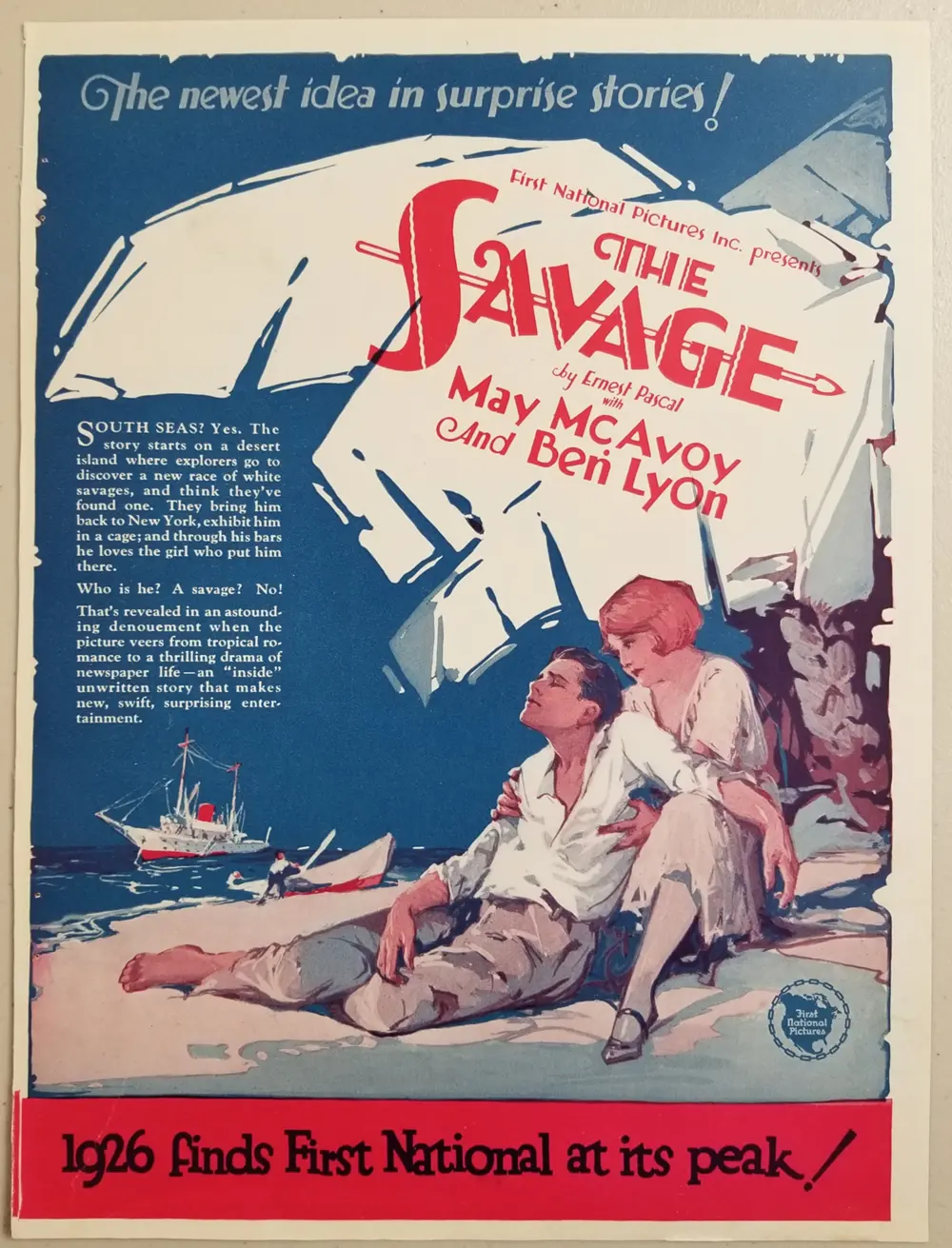
Danny Terry, a wild-animal expert for a scientific magazine, goes to the Mariposa Islands and pretends to be a white savage to put over a hoax on a rival magazine's expedition, guided by Professor Atwater. In New York, he is placed on exhibition at a "jungle ball" given by Mrs. Atwater to celebrate the betrothal of her daughter to Howard Kipp. Terry's editor tries to expose the hoax, but Terry has fallen in love with Ysabel and refuses to disgrace her further; meanwhile, Ysabel breaks her engagement upon finding her fiancé with another girl. Though she knows Terry is a fake, she goes away with him, and they declare their mutual love. Terry convinces his pursuers that the "savage" has escaped, and as himself he finds happiness with Ysabel.
Decades after its release, The Savage remains a vital piece of the cinematic puzzle. Its influence can be seen in countless modern works, solidifying Fred C. Newmeyer's status as a master of the craft in United States and beyond.