
DbcultAccessing Vault...
Director's Spotlight
Senior Film Conservator
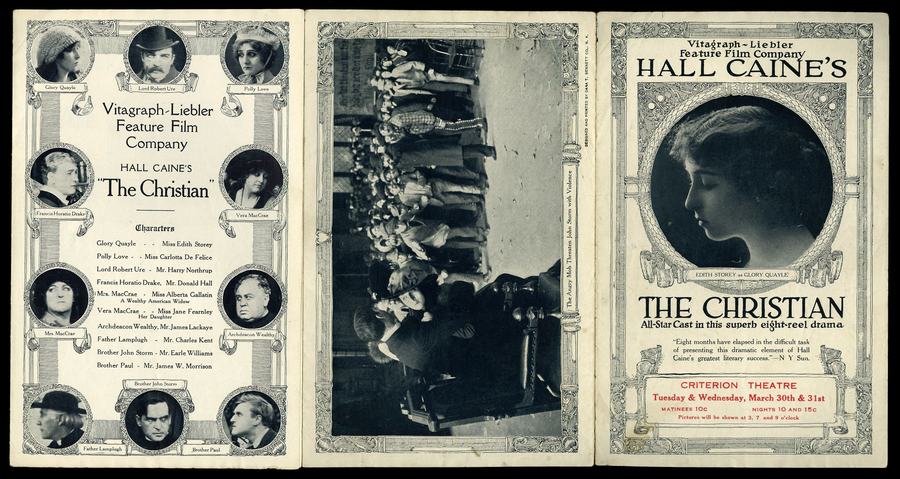
Director's Spotlight: United States
A Deep Dive into the 1914 Vision of Frederick A. Thomson
To understand the modern evolution of United States film, one must first look at The Christian and the collaborative alchemy between Frederick A. Thomson and the 1914 creative team. Subverting the expectations of the typical 1914 audience, it remains a vital reference point for anyone studying the evolution of Frederick A. Thomson.
In The Christian, Frederick A. Thomson pushes the boundaries of conventional narrative. The film's unique approach to its subject matter has sparked endless debates and interpretations among cinephiles and critics alike.
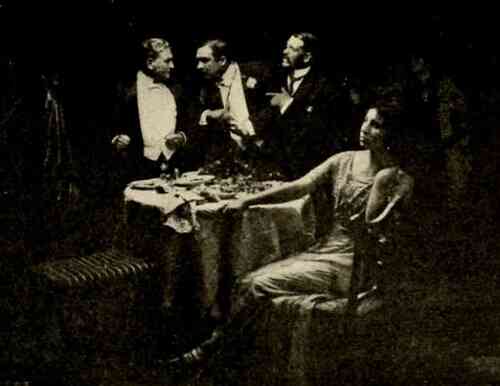
In this work, Frederick A. Thomson explores the intersection of cult and United States cultural identity. The meticulous attention to detail suggests a deep-seated commitment to pushing the boundaries of the medium, ensuring that The Christian remains a relevant topic of study for cult enthusiasts.
| Cinematography | Deep Focus |
| Soundtrack | Minimalist |
| Editing | Disjunctive |
| Art Direction | Baroque |
Visualizing the convergence of Frederick A. Thomson's style and the core cult narrative.
Natural-born mimic Glory Quayle leaves her country home, reaches London, goes on the stage, and gains fame and affluence. Her country sweetheart John Storm, believing he has lost Glory forever, enters a monastery, tries to forget her, cannot kill his love, returns to the world, and becomes a famous slum worker and friend of the poor. Social vampire Lord Robert Ure, a beast in human form, betrays Glory's chum Polly Love. Glory tells John of Lord Robert's wicked treatment of poor Polly. John demands that Lord Robert marry Polly to save her from dishonor. Lord Robert refuses, as he intends to marry a rich American heiress, and a terrific clash erupts between the Right of John and the Might of Lord Robert. John exposes Lord Robert, who swears revenge. Polly dies of shame and a broken heart. Lord Robert plans fiendish revenge on John. He broadcasts the report that John predicts the end of the world on Derby Day, the greatest day of sport in England. John becomes an object of hatred. All Britain wrought up by John's alleged prediction. His former friends become bitter foes. The uneducated and weak are in mortal fear. Thousands and thousands incite riots against John Widespread and awful panics in the slums. Derby Day becomes a day of terror. (Wonderful scenes of the world-famous Derby Race, with its great horses and its terrific crowds, taken in England especially for these scenes.) John is a target for the vengeance of everyone, both rich and poor. He stands alone, with all the world against him. Glory rushes to his aid, quells the angry hordes and saves him from them. Through persecution, John's mind becomes unbalanced. That night, fearful for Glory, John goes to her home, tries to kill her to save her from a fate like the one which befell poor Polly. Glory rises supreme makes a magnificent defense, recalls John to his senses, helps establish his innocence, proves Lord Robert's guilt, accepts John's love, joins him for life, be it better or worse and in spite of the terror, the deep disappointment, the tribulations, the misunderstandings, in spite of all, Glory and John find happiness in each other's love.
Decades after its release, The Christian remains a vital piece of the cinematic puzzle. Its influence can be seen in countless modern works, solidifying Frederick A. Thomson's status as a master of the craft in United States and beyond.