
DbcultAccessing Vault...
Director's Spotlight
Senior Film Conservator
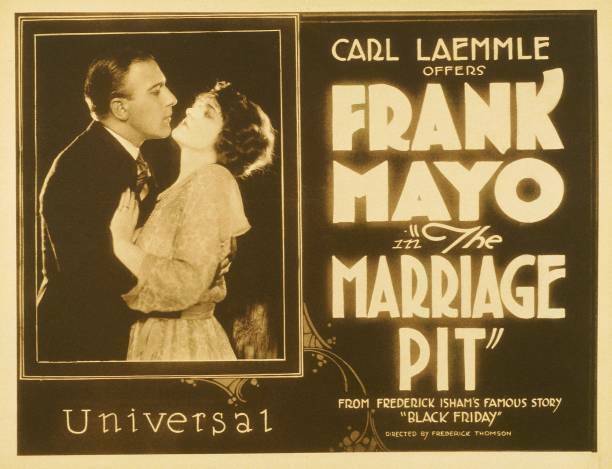
Director's Spotlight: United States
A Deep Dive into the 1920 Vision of Frederick A. Thomson
Analyzing The Marriage Pit (1920) requires a deep dive into the defining moment in Drama history that Frederick A. Thomson helped create. Defining a new era of United States artistic expression, it transcends regional boundaries to tell a universal story.
In The Marriage Pit, Frederick A. Thomson pushes the boundaries of conventional narrative. The film's unique approach to its subject matter has sparked endless debates and interpretations among cinephiles and critics alike.
In this work, Frederick A. Thomson explores the intersection of Drama and United States cultural identity. The meticulous attention to detail suggests a deep-seated commitment to pushing the boundaries of the medium, ensuring that The Marriage Pit remains a relevant topic of study for Drama enthusiasts.
| Cinematography | Deep Focus |
| Soundtrack | Synth-Heavy |
| Editing | Rhythmic |
| Art Direction | Naturalist |
Visualizing the convergence of Frederick A. Thomson's style and the core Drama narrative.
When Wall Street dynamo Richard Strong rescues Edwin Rossiter from financial ruin, Rossiter is so grateful that he persuades his daughter Elinor to marry their benefactor, although she does not love him. Instead, Elinor favors her distant cousin, Charles Dalton, a dissipated member of the aristocracy who weds Zoldene, an actress, on the day of Elinor and Strong's wedding. Soon after, Dalton wearies of Zoldene and renews his attention to Elinor, now estranged from her husband. Meanwhile, Strong and Zoldene's names are linked together in the scandal sheets, alienating Elinor even more from her husband. Dalton enters into a pact with Daniel Brewster to ruin Strong, but Elinor, finally realizing her love for her husband, assists in defeating his enemies. Their problems thus reconciled, Elinor and Strong face a happy future together.
Decades after its release, The Marriage Pit remains a vital piece of the cinematic puzzle. Its influence can be seen in countless modern works, solidifying Frederick A. Thomson's status as a master of the craft in United States and beyond.