
DbcultAccessing Vault...
Director's Spotlight
Senior Film Conservator
Director's Spotlight: United States
A Deep Dive into the 1916 Vision of Frederick A. Thomson
In the grand tapestry of cult cinema, The Saleslady serves as a bridge between the philosophical inquiries that Frederick A. Thomson embeds within the narrative. Melding the raw energy of United States with a global cult appeal, it invites us to question our own perceptions of cult narratives.
In The Saleslady, Frederick A. Thomson pushes the boundaries of conventional narrative. The film's unique approach to its subject matter has sparked endless debates and interpretations among cinephiles and critics alike.
| Cinematography | High-Contrast |
| Soundtrack | Diegetic |
| Editing | Rhythmic |
| Art Direction | Naturalist |
Visualizing the convergence of Frederick A. Thomson's style and the core cult narrative.
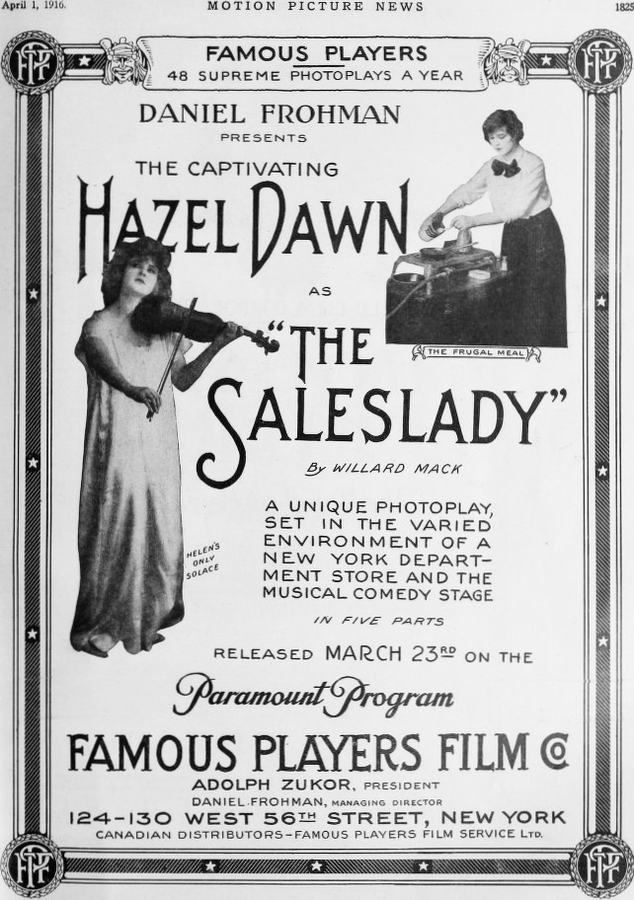
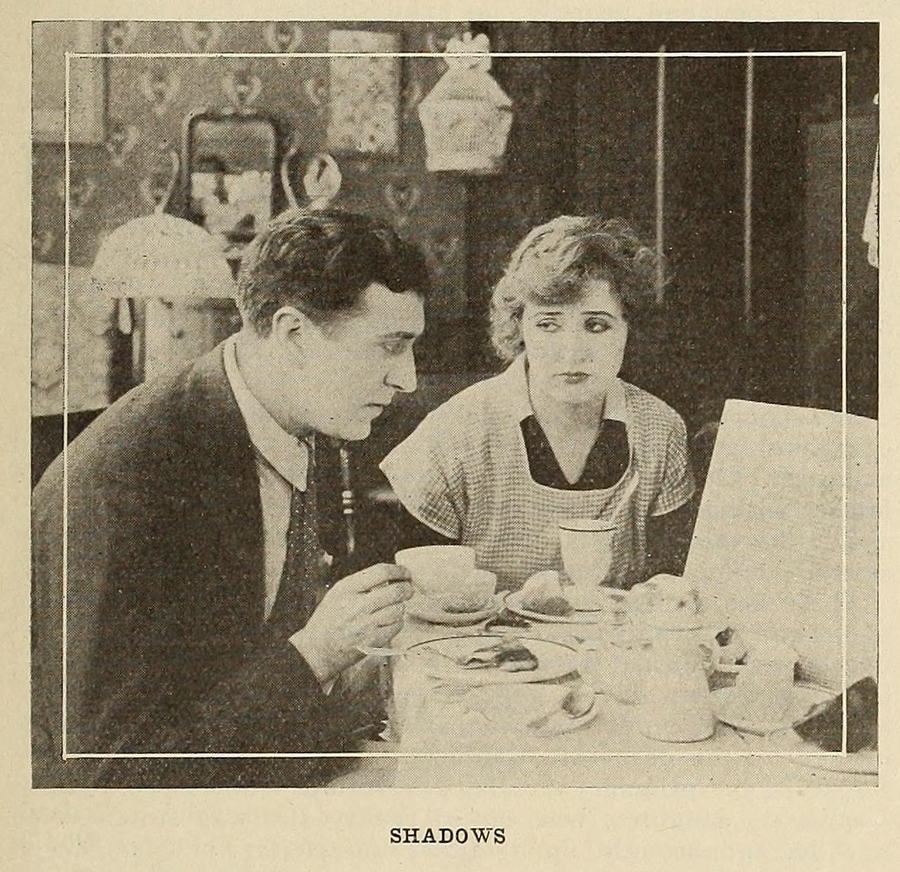
Poverty forces Helen Shirley, a country lass, into New York in search of a living. Shy and unsophisticated, Helen falls an easy victim of the notorious band which preys upon young girls and she is easily induced to go to a boarding house which is in reality the headquarters of the gang. Failing to find employment, she decides to give violin lessons and while practicing, she hears the agonized cough of a girl in the next room. Investigating, she discovered that the girl is in last stages of tuberculosis and that only instant removal to the mountains will save her. Moved by compassion, Helen impulsively sells the beautiful dog which is her only source of amusement and contrives to set the girl on the path to recovery. Practically penniless as the result of her kindness, Helen is ejected from her room but young Bruce Kerwin, a wealthy New Yorker, who has been attracted by her beauty, learns of her plight and induces one of the other girls in the house to "loan" Helen some money. Through the efforts of Burke, a mounted policeman and his sweetheart, the girl obtains employment in a department store where the advances of a floorwalker annoy her. When she repulses him, he contrives to have her discharged, but when she tells her story to the matron, she is taken to the manager and reinstated. The floorwalker, finding that Helen and young Bruce are going together, informs the boy's father that he is interested in a shopgirl. In the row which follows between father and son, Bruce leaves his home and then marries Helen. Soon after he is injured and Helen decides to try her luck on the stage. She is a tremendous success and scores a great hit, captivating, among others, the elder Kerwin, who does not suspect that she is his daughter-in-law. The old gentleman meets Helen; she, of course, is aware of his identity, and the girl adroitly wins his heart before revealing her identity.
Decades after its release, The Saleslady remains a vital piece of the cinematic puzzle. Its influence can be seen in countless modern works, solidifying Frederick A. Thomson's status as a master of the craft in United States and beyond.