
DbcultAccessing Vault...
Director's Spotlight
Senior Film Conservator
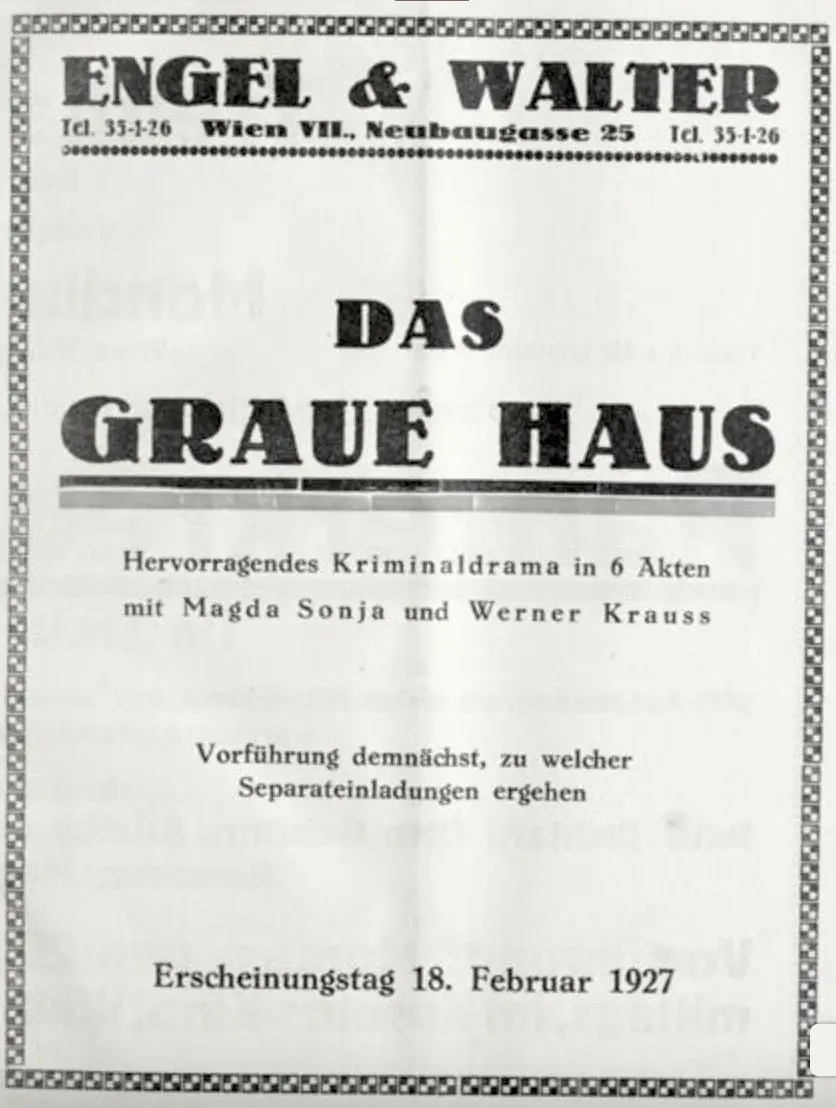
Director's Spotlight: Germany
A Deep Dive into the 1926 Vision of Friedrich Feher
The thematic gravity of Das graue Haus (1926) is rooted in the historical context that Friedrich Feher weaves into the Drama fabric. Synthesizing the best elements of Germany and international cinema, it highlights the importance of independent voices in Germany.
In Das graue Haus, Friedrich Feher pushes the boundaries of conventional narrative. The film's unique approach to its subject matter has sparked endless debates and interpretations among cinephiles and critics alike.
The visual language of Das graue Haus is defined by its use of shadows and framing, a hallmark of Friedrich Feher's style. By utilizing a 1926-era palette, the film creates an immersive experience that perfectly complements its Drama themes.
| Cinematography | Noir-Inspired |
| Soundtrack | Diegetic |
| Editing | Rhythmic |
| Art Direction | Naturalist |
Visualizing the convergence of Friedrich Feher's style and the core Drama narrative.
The film explores profound themes through its avant-garde structure and atmospheric tension.
Decades after its release, Das graue Haus remains a vital piece of the cinematic puzzle. Its influence can be seen in countless modern works, solidifying Friedrich Feher's status as a master of the craft in Germany and beyond.