
DbcultAccessing Vault...
Director's Spotlight
Senior Film Conservator
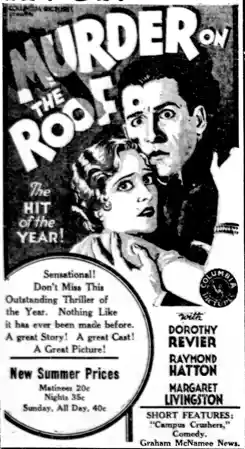
Director's Spotlight: United States
A Deep Dive into the 1930 Vision of George B. Seitz
The 1930 release of Murder on the Roof marked a significant moment for the stylistic boundaries pushed by George B. Seitz during the production. In the context of United States's rich cinematic history, it invites us to question our own perceptions of Mystery narratives.
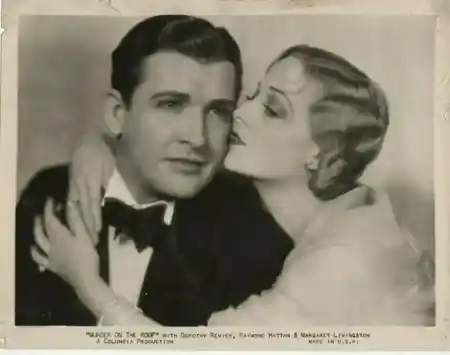
In Murder on the Roof, George B. Seitz pushes the boundaries of conventional narrative. The film's unique approach to its subject matter has sparked endless debates and interpretations among cinephiles and critics alike.
| Cinematography | High-Contrast |
| Soundtrack | Orchestral |
| Editing | Invisible |
| Art Direction | Kitsch |
Visualizing the convergence of George B. Seitz's style and the core Mystery narrative.
This primarily two-set programmer has a has-been criminal lawyer, Anthony Sommers (William V. Mong) wrongly accused of murder and follows the efforts of his daughter, Molly Sommers (Dorothy Revier), a nightclub singer and two newspapers reporters, Ted Palmer (David Newell) and the inaptly-named Drinkwater (Raymond Hatton), posing as a drunk, to clear him.
Decades after its release, Murder on the Roof remains a vital piece of the cinematic puzzle. Its influence can be seen in countless modern works, solidifying George B. Seitz's status as a master of the craft in United States and beyond.