
DbcultAccessing Vault...
Director's Spotlight
Senior Film Conservator
Director's Spotlight: United States
A Deep Dive into the 1921 Vision of George D. Baker
To understand the modern evolution of United States film, one must first look at Garments of Truth and the meticulous attention to detail that George D. Baker applied to every frame. Reflecting the political and social shifts of the 1921s, it showcases the power of Comedy as a tool for social commentary.
In Garments of Truth, George D. Baker pushes the boundaries of conventional narrative. The film's unique approach to its subject matter has sparked endless debates and interpretations among cinephiles and critics alike.
| Cinematography | Noir-Inspired |
| Soundtrack | Experimental |
| Editing | Elliptical |
| Art Direction | Expressionist |
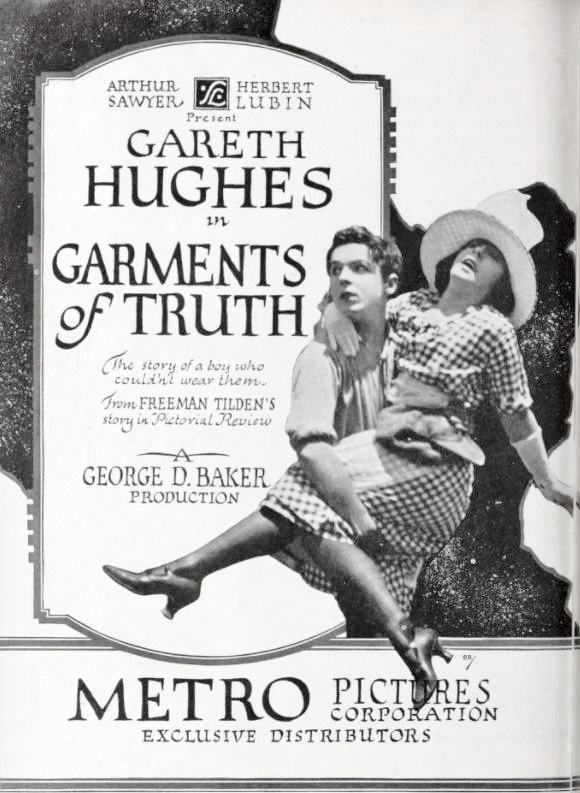
Visualizing the convergence of George D. Baker's style and the core Comedy narrative.
Lester Crope, who has a penchant for inventing imaginative stories, alarms his village by reporting that the dam above the mayor's house has burst; incidentally he "saves" the life of Catherine Willis, the mayor's niece. The town council sends Lester to Dr. Mills of Boston to be treated for his condition. Now cured, his propensity for telling the truth on all occasions upsets village life: he works in a grocery store and informs customers of stale products; he also ruins a real-estate deal that would have meant prosperity for the town. Dr. Mills states that the only way to return Lester to his former safe tricks will be to arrange that he fall in love. Lester gets a job as railway ticket agent; seeing Catherine, the girl he loves, stepping from a train, he once again gets stirred up to start telling stories of hunting down bandits in Arizona. Once again he is a harmless liar.
Decades after its release, Garments of Truth remains a vital piece of the cinematic puzzle. Its influence can be seen in countless modern works, solidifying George D. Baker's status as a master of the craft in United States and beyond.