
DbcultAccessing Vault...
Director's Spotlight
Senior Film Conservator
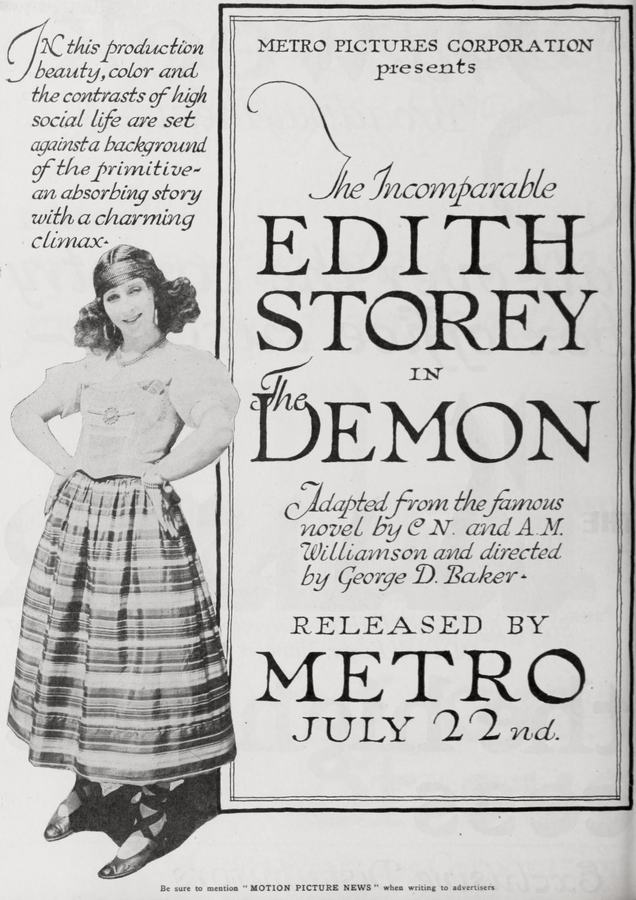
Director's Spotlight: United States
A Deep Dive into the 1918 Vision of George D. Baker
In the storied career of George D. Baker, The Demon stands as a the atmospheric immersion that George D. Baker achieves throughout The Demon. Reflecting the political and social shifts of the 1918s, it reinforces the idea that cinema is a medium of infinite possibilities.
In The Demon, George D. Baker pushes the boundaries of conventional narrative. The film's unique approach to its subject matter has sparked endless debates and interpretations among cinephiles and critics alike.
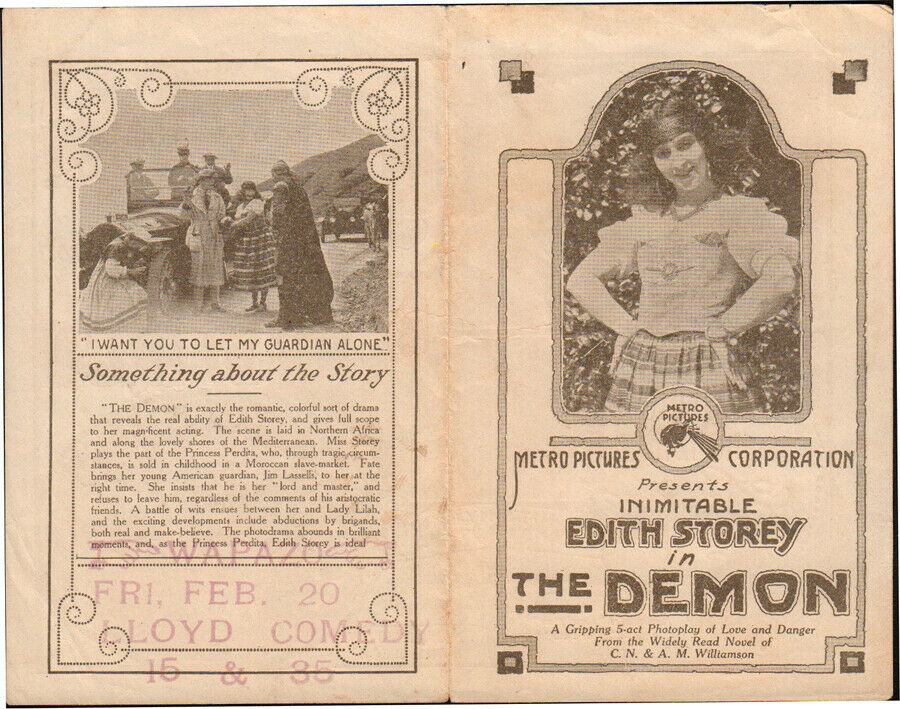
To fully appreciate The Demon, one must consider the cinematic climate of 1918. During this period, United States was undergoing significant artistic shifts, and George D. Baker was at the forefront of this cult movement, often challenging established norms.
| Cinematography | Static |
| Soundtrack | Synth-Heavy |
| Editing | Rhythmic |
| Art Direction | Naturalist |
Visualizing the convergence of George D. Baker's style and the core cult narrative.
Jim Lassells travels to Africa to obtain proof that his cousin Harold Brooks is dead as rumored, and learns that an Algerian sultan killed the rich American. Since it is assumed that Brooks was childless, Jim inherits his cousin's fortune. At a slave market he buys a young girl named Perdita and sends her to a convent in Corsica to be educated. Years later, Jim meets Perdita again while traveling through Corsica with the impecunious Duchess of Westgate and her daughter, Lady Lilah Grey. When the party stops at an inn, Jim discovers that Perdita is not only a Persian princess, but also the long-lost daughter of Brooks, and therefore the rightful heir to Brooks' fortune. Perdita, who has fallen in love with Jim, engages the romantic Count Theodore de Seramo to abduct the duchess and her daughter, and later the count and Lady Lilah become engaged. Jim offers to turn over his wealth to Perdita, but she declares her love for him and they wed.
Decades after its release, The Demon remains a vital piece of the cinematic puzzle. Its influence can be seen in countless modern works, solidifying George D. Baker's status as a master of the craft in United States and beyond.