
DbcultAccessing Vault...
Director's Spotlight
Senior Film Conservator
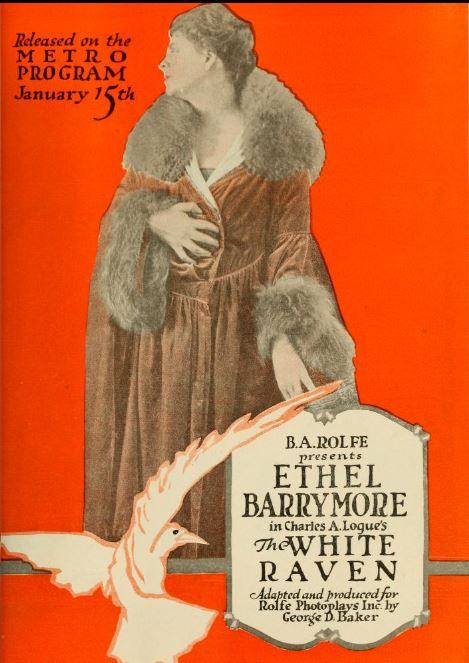
Director's Spotlight: United States
A Deep Dive into the 1917 Vision of George D. Baker
The enduring fascination with The White Raven is a testament to the defining moment in cult history that George D. Baker helped create. This film stands as a masterclass in visual storytelling, it has cemented its place in the global cult cinema archive.
In The White Raven, George D. Baker pushes the boundaries of conventional narrative. The film's unique approach to its subject matter has sparked endless debates and interpretations among cinephiles and critics alike.
While deeply rooted in United States, The White Raven has achieved a global reach, influencing directors from various backgrounds. Its ability to translate cult tropes into a universal cinematic language is why it remains a cult staple decades after its 1917 release.
| Cinematography | High-Contrast |
| Soundtrack | Diegetic |
| Editing | Elliptical |
| Art Direction | Expressionist |
Visualizing the convergence of George D. Baker's style and the core cult narrative.
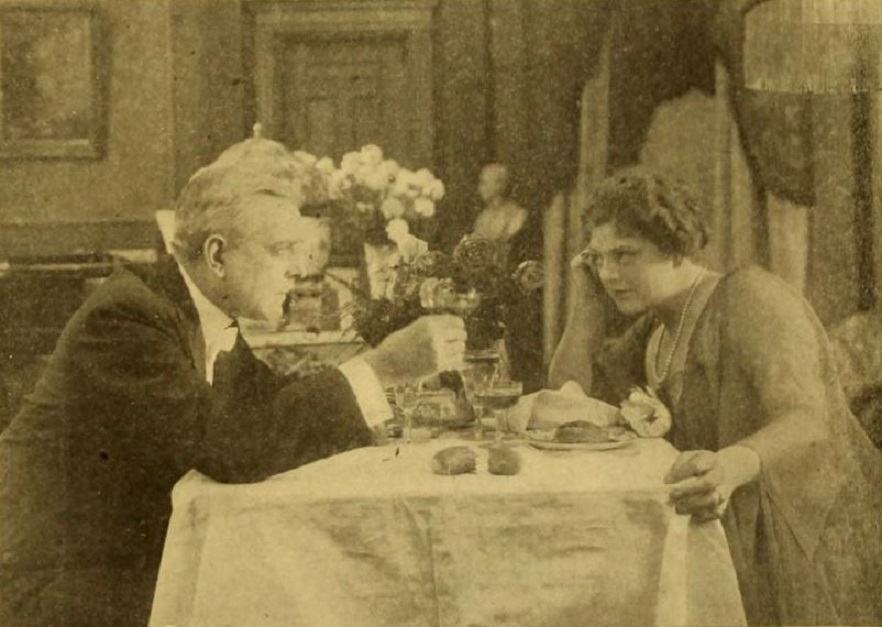
William Baldwin, ruined in business by his partner John Blaisdell, implores Blaisdell's aid and receives in answer a five-dollar bill inscribed with "Spend this for a gun and use it on herself." Hopelessly, Baldwin and his daughter Nan go to the Yujon, where the father dies and Nan earns a living in a rough dance hall where as "Nightingale Nan" she is the miners' idol. When she discovers that the little claim on Bear Creek, the only thing her father has left her, is worthless, at first she collapses; then she becomes defiant and tells the miners who have been forcing their attentions upon her that they may have her, the lucky man to be the winner in a card-game, she to take the money won in the game and go away to seek fame and fortune. A bearded stranger wins the game with a pair of deuces and pays her $1,000 a card, and she leaves with him for her cabin. Once there, however, she repents her rash bargain, and implores him to release her, offering the money in return. He makes her sign an I.O.U. for herself, promising to pay the debt at any future time that he sees fit. "You'll win success," the stranger tells her, "but in the hour of your greatest triumph I shall claim you, and you must return." She leaves on this condition. Nan's voice wins success for her all over the world. Five years later, as Mlle. Nanon Boldini, she is the reigning operatic queen at La Scala, Milan, then comes to the Metropolitan Opera House, New York, to make her American debut in "Lucia di Lammermoor." Her success is instantaneous. Two of the most important patrons of the opera house, business rivals John Blaisdell and James Van Brunt, are united in their admiration of Mlle. Boldini, and obtain an introduction. When Nan discovers the identity of Blaisdell, the man who ruined her father, she quietly plans his downfall. She encourages his attention, even at the risk of displeasing a young stranger with whom she has fallen in love. She refuses an offer of marriage from the man who won her heart, telling him of her promise made under amazing conditions to a man in Alaska five years ago. That promise, she tells him, must be fulfilled, no matter how great the sacrifice she makes in doing so. Inviting Blaisdell to her apartment to dinner, she has a telephone connection so arranged that James Van Brunt, at his downtown office with the receiver at his ear, hears Blaisdell's answers to the carefully prepared questions Nan asks, betraying all his business secrets. As Blaisdell falls across the table in a drunken stupor, after having told everything, Nan's triumph is complete. It is at this moment that two fateful cards, the deuces with which the Alaskan won his game, are thrust under the door, and Nan falls fainting. The next day she prepares for her journey to the Northland, ready to pay the price of her five years' freedom. The man she loves insists on accompanying her. Going to her little cabin, she finds it sumptuously furnished. As she turns to her lover in surprise, he places on the table a crumpled "I.O.U." then tears it in two, giving her the pieces. As the realization slowly dawns on Nan that the man she has learned to love is the bearded stranger of so long ago, she fits the two pieces of the "I.O.U." back together, presents them to him, and creeps into the arms of her stranger-lover.
Decades after its release, The White Raven remains a vital piece of the cinematic puzzle. Its influence can be seen in countless modern works, solidifying George D. Baker's status as a master of the craft in United States and beyond.