
DbcultAccessing Vault...
Director's Spotlight
Senior Film Conservator
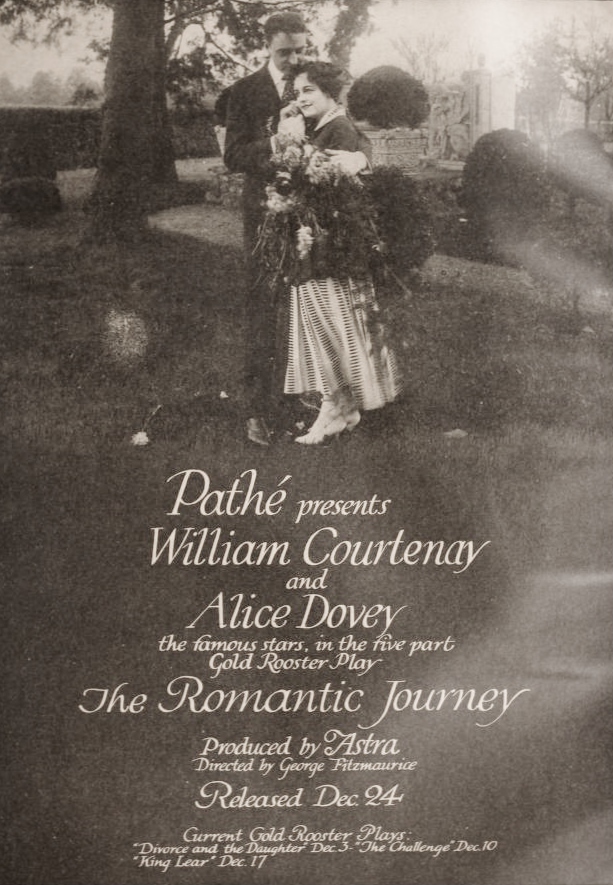
Director's Spotlight: United States
A Deep Dive into the 1916 Vision of George Fitzmaurice
Witnessing the stylistic transformation of cult through The Romantic Journey reveals the global recognition that George Fitzmaurice garnered after the release of The Romantic Journey. Serving as a mirror to the anxieties of a changing world, offering layers of thematic complexity that demand repeated viewing.
In The Romantic Journey, George Fitzmaurice pushes the boundaries of conventional narrative. The film's unique approach to its subject matter has sparked endless debates and interpretations among cinephiles and critics alike.
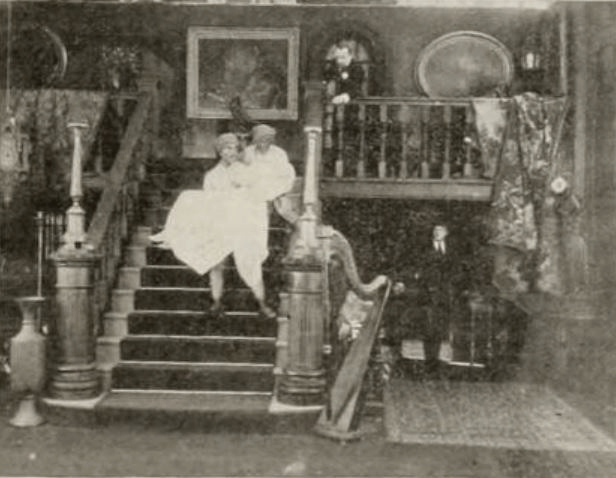
To fully appreciate The Romantic Journey, one must consider the cinematic climate of 1916. During this period, United States was undergoing significant artistic shifts, and George Fitzmaurice was at the forefront of this cult movement, often challenging established norms.
| Cinematography | Handheld |
| Soundtrack | Diegetic |
| Editing | Elliptical |
| Art Direction | Expressionist |
Visualizing the convergence of George Fitzmaurice's style and the core cult narrative.
Peter, a social lion, suffering from ennui, visits a mysterious antique shop conducted by Ratoor, an east Indian, who has. through hypnotism, enslaved Cynthia, a beautiful young girl. Peter notices something wrong in the shop keeper's conduct and decides to investigate. Broadhurst, a millionaire, is in love with Cynthia through whom Ratoor plots to get his millions. Peter makes a nocturnal visit to the shop and discovering Cynthia imprisoned, tries unsuccessfully to liberate her. Ratoor, dominating Cynthia, compels her to accept Broadhurst's proposal and a weeding day is set. After the ceremony, she warns him against Ratoor and begs him to leave for his own safety. Broadhurst refuses, and keeping Ratoor, who has discovered their abode, under surveillance, arrives too late to save Broadhurst. And he, himself, narrowly escapes from being thrown into the river by Ratoor's henchman. Cynthia, falling by a ruse, to outwit her former master, is again in his clutches. Peter, still dubious, visits the shop of Ratoor, who, suspecting that he is watched, decides to make an end of Cynthia, who has transferred her husband's property to him. Concealed, Peter sees Ratoor and his gang disappear with Cynthia in the direction of the cemetery. The scoundrels, frightened by uncanny noises, forsake the half-swooning Cynthia who is rescued by Peter following in the darkness.
Decades after its release, The Romantic Journey remains a vital piece of the cinematic puzzle. Its influence can be seen in countless modern works, solidifying George Fitzmaurice's status as a master of the craft in United States and beyond.