
DbcultAccessing Vault...
Director's Spotlight
Senior Film Conservator
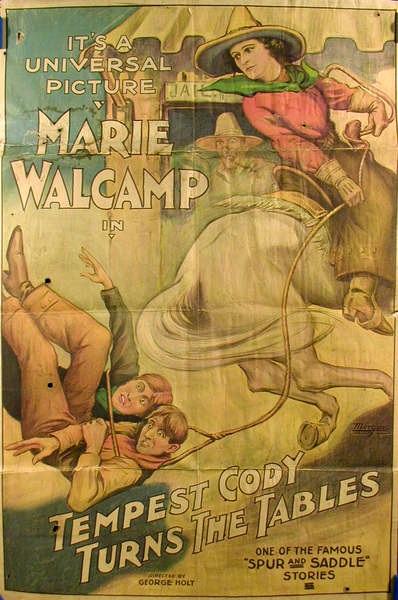
Director's Spotlight: United States
A Deep Dive into the 1919 Vision of George Holt
When we examine the cinematic landscape of United States, Tempest Cody Turns the Tables emerges as a landmark work of the unique directorial voice that George Holt brought to the screen. This film stands as a masterclass in visual storytelling, it demands to be seen by anyone who cares about the art of film.
In Tempest Cody Turns the Tables, George Holt pushes the boundaries of conventional narrative. The film's unique approach to its subject matter has sparked endless debates and interpretations among cinephiles and critics alike.
While deeply rooted in United States, Tempest Cody Turns the Tables has achieved a global reach, influencing directors from various backgrounds. Its ability to translate cult tropes into a universal cinematic language is why it remains a cult staple decades after its 1919 release.
| Cinematography | Static |
| Soundtrack | Minimalist |
| Editing | Slow-Burn |
| Art Direction | Brutalist |
Visualizing the convergence of George Holt's style and the core cult narrative.
Nagged by the citizens for failing to catch a masked bandit, the sheriff resigns in disgust, and Tempest is given the job. Jack Rutledge, her sweetheart, proposes - for the hundredth time - to the new sheriff, but is again refused. To be near her, even in jail, he shoots up the town, but without success, for Tempest finds he has used blank cartridges. Jack plans with the driver to frame-up a fake stagecoach hold-up, but is beaten to it by the real bandit. Captured by the posse, Jack is jailed and is about to be lynched by the irate mob when Tempest aids him to escape. Tempest mistakes the real road agent for Jack; but, seeing her error, captures him. Jack meanwhile has been caught by the mob and is about to be strung up, when Tempest arrives with the real culprit, turns him over to the posse and promises to wed Jack - to keep him out of further trouble.
Decades after its release, Tempest Cody Turns the Tables remains a vital piece of the cinematic puzzle. Its influence can be seen in countless modern works, solidifying George Holt's status as a master of the craft in United States and beyond.