
DbcultAccessing Vault...
Director's Spotlight
Senior Film Conservator
Director's Spotlight: United States
A Deep Dive into the 1919 Vision of George Irving
In the storied career of George Irving, The Capitol stands as a the atmospheric immersion that George Irving achieves throughout The Capitol. Reflecting the political and social shifts of the 1919s, it reinforces the idea that cinema is a medium of infinite possibilities.
In The Capitol, George Irving pushes the boundaries of conventional narrative. The film's unique approach to its subject matter has sparked endless debates and interpretations among cinephiles and critics alike.
In this work, George Irving explores the intersection of cult and United States cultural identity. The meticulous attention to detail suggests a deep-seated commitment to pushing the boundaries of the medium, ensuring that The Capitol remains a relevant topic of study for cult enthusiasts.
| Cinematography | Handheld |
| Soundtrack | Minimalist |
| Editing | Slow-Burn |
| Art Direction | Brutalist |
Visualizing the convergence of George Irving's style and the core cult narrative.
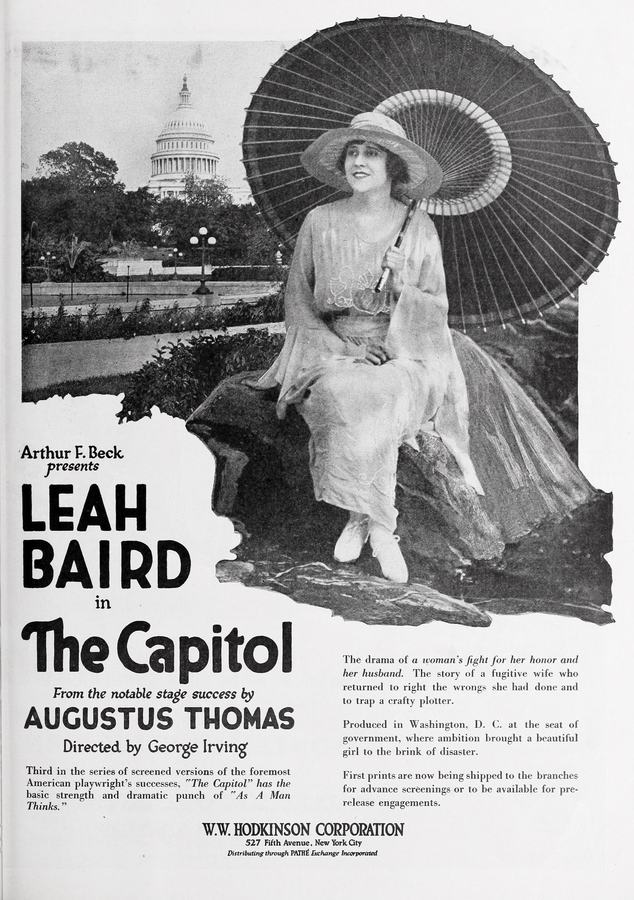
Margaret Kennard takes her baby daughter Agnes and leaves her husband Eustace for James Carroll. Upon discovering that Carroll is a thief, she leaves him, joins the Salvation Army and places Agnes in a convent. Twenty years pass. Agnes marries young Congressman Blake, and Eustace has become a priest. Carroll is now a lobbyist trying to prevent Blake from passing an anti-profiteering bill. Attempting to help her husband by proving that Carroll is a scoundrel, Agnes goes to Carroll's house. Eustace hears of her intentions and follows. Blake and Margaret also arrive, and Agnes is informed of her mother's true identity. Margaret then recognizes Eustace and the family is reconciled.
Decades after its release, The Capitol remains a vital piece of the cinematic puzzle. Its influence can be seen in countless modern works, solidifying George Irving's status as a master of the craft in United States and beyond.