Summary
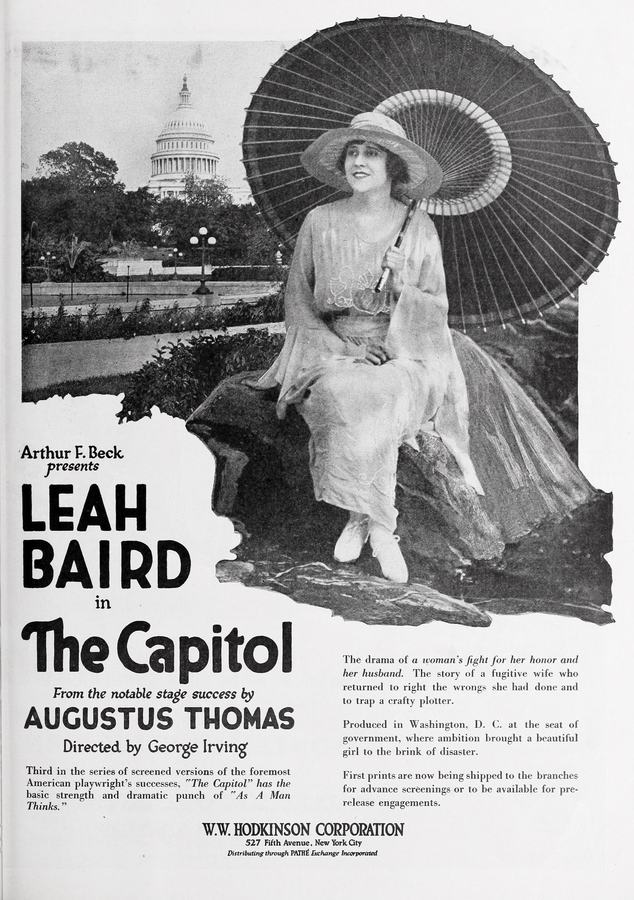
A sprawling domestic odyssey that transmutes from a tale of perfidious abandonment into a high-stakes legislative thriller, The Capitol navigates the turbulent waters of early 20th-century morality. The narrative ignites when Margaret Kennard, stifled by the domesticity of her life with Eustace, elopes with the ostensibly charismatic James Carroll, taking her infant daughter Agnes into a precarious future. The veneer of romantic escape quickly dissolves when Carroll is revealed as a common thief, prompting a shattered Margaret to seek sanctuary within the ascetic rigors of the Salvation Army. In an act of desperate altruism, she surrenders Agnes to the cloistered seclusion of a convent. Two decades later, the seeds of this fracture bloom into a complex political web: Agnes has emerged as the wife of the idealistic Congressman Blake, while the abandoned Eustace has transmuted his grief into the solemnity of the priesthood. The past and present collide when Carroll, now a Machiavellian lobbyist, attempts to derail Blake’s anti-profiteering legislation. The climax serves as a masterclass in melodramatic convergence, as a clandestine attempt to expose Carroll’s villainy draws the estranged family into a singular, explosive confrontation where identities are unmasked and the fractured shards of the Kennard lineage are finally, painfully fused back together.
Synopsis
Margaret Kennard takes her baby daughter Agnes and leaves her husband Eustace for James Carroll. Upon discovering that Carroll is a thief, she leaves him, joins the Salvation Army and places Agnes in a convent. Twenty years pass. Agnes marries young Congressman Blake, and Eustace has become a priest. Carroll is now a lobbyist trying to prevent Blake from passing an anti-profiteering bill. Attempting to help her husband by proving that Carroll is a scoundrel, Agnes goes to Carroll's house. Eustace hears of her intentions and follows. Blake and Margaret also arrive, and Agnes is informed of her mother's true identity. Margaret then recognizes Eustace and the family is reconciled.
Review Excerpt
"
In the annals of silent cinema, few works attempt to bridge the chasm between the intimate domestic drama and the sprawling machinations of national governance as ambitiously as The Capitol (1919). Directed with a keen eye for the theatrical traditions of its screenwriter, Augustus Thomas, the film is a fascinating artifact of a world reeling from the Great War, grappling with the burgeoning power of the lobbyist and the enduring sanctity of the family unit. It is not merely a story of a 'fal..."