
DbcultAccessing Vault...
Director's Spotlight
Senior Film Conservator
Director's Spotlight: United States
A Deep Dive into the 1921 Vision of George Irving
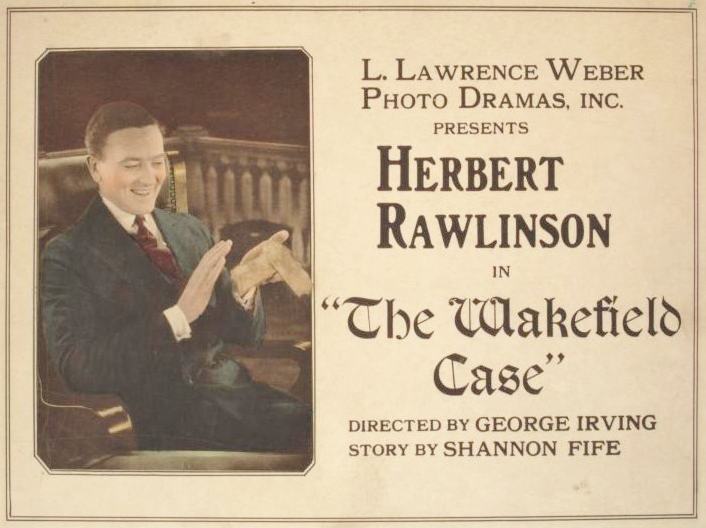
The thematic gravity of The Wakefield Case (1921) is rooted in the artistic risks taken by George Irving that eventually paid off. Defining a new era of United States artistic expression, it demands to be seen by anyone who cares about the art of film.
In The Wakefield Case, George Irving pushes the boundaries of conventional narrative. The film's unique approach to its subject matter has sparked endless debates and interpretations among cinephiles and critics alike.
While deeply rooted in United States, The Wakefield Case has achieved a global reach, influencing directors from various backgrounds. Its ability to translate Mystery tropes into a universal cinematic language is why it remains a cult staple decades after its 1921 release.
| Cinematography | Noir-Inspired |
| Soundtrack | Experimental |
| Editing | Elliptical |
| Art Direction | Expressionist |
Visualizing the convergence of George Irving's style and the core Mystery narrative.
A playwright, Wakefield, Jr., turns detective when his father is killed after nearly capturing two brothers in possession of four rubies belonging to the British Museum. An investigation suggests that "the Breen girl" is responsible for Wakefield's death, and the younger Wakefield pursues her across the ocean to the United States. The true identity of several characters, including the robbers and the girl, is in constant question, but Wakefield finally gets to the culprits; solves his case; and learns that Ruth Gregg, with whom he has fallen in love, is not only "the Breen girl," but actually was posing as a gang member for the Secret Service.
Decades after its release, The Wakefield Case remains a vital piece of the cinematic puzzle. Its influence can be seen in countless modern works, solidifying George Irving's status as a master of the craft in United States and beyond.