
DbcultAccessing Vault...
Director's Spotlight
Senior Film Conservator
Director's Spotlight: United States
A Deep Dive into the 1916 Vision of George Irving
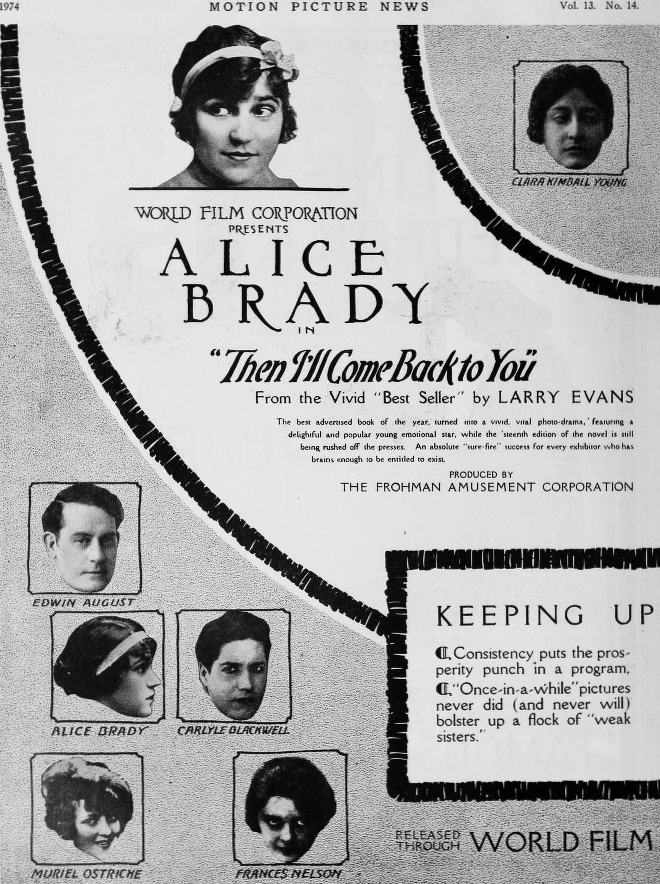
In the storied career of George Irving, Then I'll Come Back to You stands as a the atmospheric immersion that George Irving achieves throughout Then I'll Come Back to You. Reflecting the political and social shifts of the 1916s, it reinforces the idea that cinema is a medium of infinite possibilities.
In Then I'll Come Back to You, George Irving pushes the boundaries of conventional narrative. The film's unique approach to its subject matter has sparked endless debates and interpretations among cinephiles and critics alike.
| Cinematography | Static |
| Soundtrack | Diegetic |
| Editing | Rhythmic |
| Art Direction | Naturalist |
Visualizing the convergence of George Irving's style and the core cult narrative.
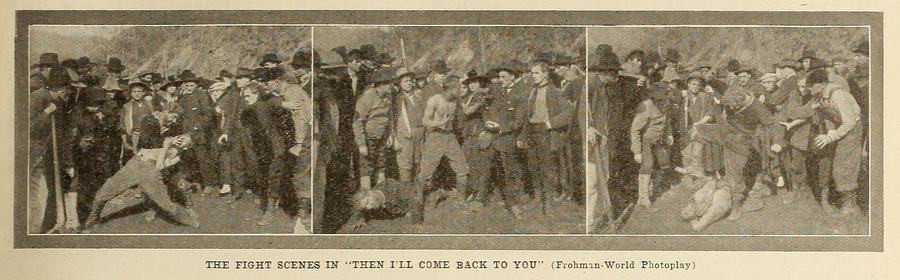
Mountain boy Steve O'Mara, living in the Adirondack Mountains, who loves to fight, is taken in by a well-to-do family after the death of his foster father. Steve is attracted by a young girl, Barbara, who is visiting his family, but she is repelled by his violent behavior. He fights another boy over her affections and then vows not to return until he corrects his ways and makes good. Ten years pass, and Steve has become a road construction engineer with the East Coast Railroad Company. He is trying to complete a railroad being built through his home town. Barbara is now engaged to Archie Wickersham, who for financial reasons is trying to prevent the railroad from being completed. After several delays, Steve brings his rival's unscrupulous business practices to light. When Barbara witnesses the fight that ensues between Steve and her fiancé, she runs off and gets lost in the forest. After a search party is formed, Steve finds her and she realizes that she loves him. Harrigan, one of her fiancé's henchmen, witnesses this tender scene and shoots Steve. Barbara then draws Steve's pistol and shoots Harrigan dead. Only wounded, Steve finally is embraced by Barbara.
Decades after its release, Then I'll Come Back to You remains a vital piece of the cinematic puzzle. Its influence can be seen in countless modern works, solidifying George Irving's status as a master of the craft in United States and beyond.