
DbcultAccessing Vault...
Director's Spotlight
Senior Film Conservator
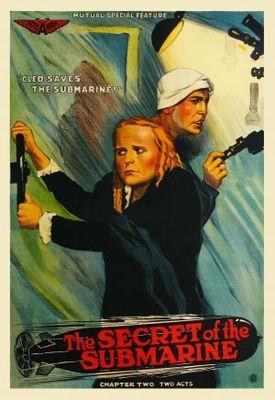
Director's Spotlight: United States
A Deep Dive into the 1916 Vision of George L. Sargent
When we examine the cinematic landscape of United States, The Secret of the Submarine emerges as a landmark work of the enduring legacy of George L. Sargent's artistic contribution to the genre. Through a lens of existential fatalism and cult tropes, it captures a specific kind of cinematic magic that is rarely replicated.
In The Secret of the Submarine, George L. Sargent pushes the boundaries of conventional narrative. The film's unique approach to its subject matter has sparked endless debates and interpretations among cinephiles and critics alike.

The visual language of The Secret of the Submarine is defined by its use of shadows and framing, a hallmark of George L. Sargent's style. By utilizing a 1916-era palette, the film creates an immersive experience that perfectly complements its cult themes.
| Cinematography | Handheld |
| Soundtrack | Diegetic |
| Editing | Elliptical |
| Art Direction | Expressionist |
Visualizing the convergence of George L. Sargent's style and the core cult narrative.
Episode 1: Dr. Ralph Burke, a scientist and inventor, perfects an apparatus enabling submarine craft to remain underwater indefinitely without relying wholly upon compressed air stored in the boat. The discovery is perfected at the opening of the story and has been offered to the United States government. Lieut. Jarvis Hope. U.S.N., is dispatched to witness a practical demonstration of the invention. Arriving in the city where Dr. Burke lives, Lieut. Hope meets an old acquaintance. Hook Barnacle, whose life he once saved. Hook had his right hand bitten off by a shark, and an iron hook being substituted gained for him the odd sobriquet. Hook escorts the lieutenant to the Burke home and relates to Cleo, the doctor's "daughter," how his life had been saved by the young naval officer. Cleo and Hope become mutually interested. Hook is much given to talking and it is not long before the entire village knows the reason for Lieut. Hope's visit. Among those who learn the news are Sextus, a Russian, and Satsuma, a Jap, working under the orders of one Mahlin. The following day is set for the demonstration. Satsuma watching his chance has secreted himself aboard the submarine. Olga Ivanoff, head of the Russian bureau in this country, receives a visit from Sextus, who is commanded by her to obtain the secret of the submarine. Meantime Calvin Montgomery, a wealthy lobbyist, upon advices from influential friends at Washington, sends his nephew, Gerald Morton, an unprincipled rounder, to obtain the secret. Gerald is suspicious of his uncle's interest in Cleo Burke, but fails to learn anything definite before he leaves to see the inventor. On board the submarine the apparatus is being manipulated satisfactorily and Lieut. Hope is much impressed. The party repairs to the salon for lunch, affording opportunity for Satsuma to crawl stealthily from his hiding place. The Jap is examining the mechanism of the invention when he is surprised by Dr. Burke, who gives the alarm. Sailors rush in to overpower the Jap but he is desperate. Shots are fired, one of which disables the Burke apparatus. Satsuma throws over the lever opening the conning tower trap, leaps up the ladder, gains the top and dives off into the sea as the boat quickly sinking is almost lost to view. The water pours down through the open trap. The air machine is broken and with the boat uncontrollable, the inventor and his party battle for life in the watery darkness.
Decades after its release, The Secret of the Submarine remains a vital piece of the cinematic puzzle. Its influence can be seen in countless modern works, solidifying George L. Sargent's status as a master of the craft in United States and beyond.