
DbcultAccessing Vault...
Director's Spotlight
Senior Film Conservator
Director's Spotlight: United States
A Deep Dive into the 1917 Vision of George Melford
Witnessing the stylistic transformation of cult through The Evil Eye reveals the provocative questions that George Melford poses to the United States audience. Exploring the nuances of the human condition with cult flair, it showcases the power of cult as a tool for social commentary.
In The Evil Eye, George Melford pushes the boundaries of conventional narrative. The film's unique approach to its subject matter has sparked endless debates and interpretations among cinephiles and critics alike.
To fully appreciate The Evil Eye, one must consider the cinematic climate of 1917. During this period, United States was undergoing significant artistic shifts, and George Melford was at the forefront of this cult movement, often challenging established norms.
| Cinematography | Deep Focus |
| Soundtrack | Synth-Heavy |
| Editing | Rhythmic |
| Art Direction | Naturalist |
Visualizing the convergence of George Melford's style and the core cult narrative.
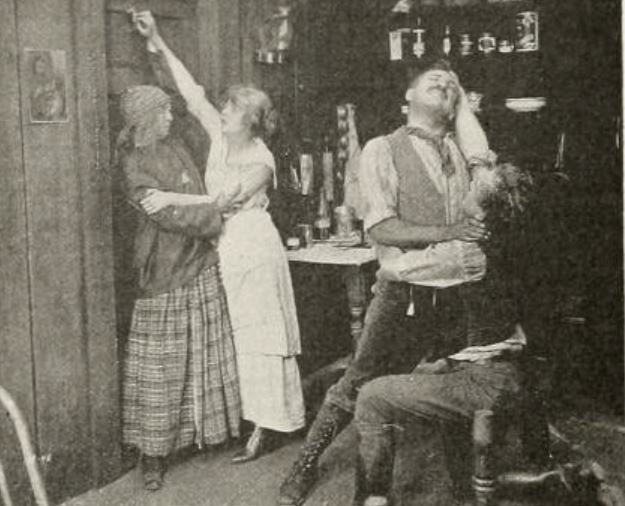
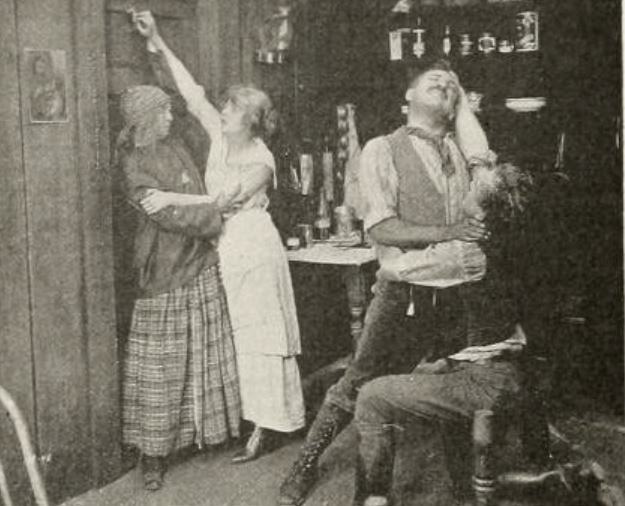
An alarming epidemic has broken out in the vineyards of which Leonard Sheldon is the manager, and in answer to his wire that a doctor be sent to the little Mexican settlement at once, Katherine Torrance, a young and beautiful physician, is sent. Accompanying her is her younger brother, Clifford, weak-willed and dissipated. The inhabitants of the village are ignorant and superstitious and the situation is a grave one. Upon Katherine's arrival, Sheldon, thunderstruck that a woman should tackle such a job, tries to persuade her to return, but this she declines to do and goes about her duties, faithfully caring for the afflicted. The light which she wears on her forehead in order that she may see clearly into the throats of her patients, arouses the suspicion of the benighted Mexicans, and as the disease spreads, the trouble is accredited to this light, or "evil eye," and the medicine which she leaves is thrown away. The friendship of Leonard and Katherine is rapidly ripening into love, but both are unconscious of this fact, so deeply are they absorbed in their strenuous duties. Sheldon falls ill and is unable to transfer the payroll to the bank, so Katherine volunteers to do it for him. A hold-up is planned by Mexican Joe, leader of the employees, but his plans are thwarted. Clifford braces up and becomes of great assistance to Katherine. Rosa, Sheldon's servant, is in love with Frank King, his assistant, whose affection for her is cooling. Sentiment against Katherine is growing daily and she decides to leave. Rosa's parents try to wring from her the name of the man responsible for her unfortunate condition and Leonard, believing it is Clifford, is about to announce himself as the guilty one when Frank confesses and sends for the priest. Leonard mistakes Katherine's tears as grief at Frank's wrongdoing, and is only awakened to her love for him when Clifford tells him to take her in his arms, which he promptly does, announcing to the crowd that they may send for a man doctor, Katherine is to be his wife.
Decades after its release, The Evil Eye remains a vital piece of the cinematic puzzle. Its influence can be seen in countless modern works, solidifying George Melford's status as a master of the craft in United States and beyond.