
DbcultAccessing Vault...
Director's Spotlight
Senior Film Conservator
Director's Spotlight: United States
A Deep Dive into the 1915 Vision of George Siegmann
The evocative power of A Yankee from the West stems from the unique collaboration between the subversive storytelling techniques employed by George Siegmann in 1915. Synthesizing the best elements of United States and international cinema, it reminds us of the fragility and beauty of the 1915s.
In A Yankee from the West, George Siegmann pushes the boundaries of conventional narrative. The film's unique approach to its subject matter has sparked endless debates and interpretations among cinephiles and critics alike.
While deeply rooted in United States, A Yankee from the West has achieved a global reach, influencing directors from various backgrounds. Its ability to translate cult tropes into a universal cinematic language is why it remains a cult staple decades after its 1915 release.
| Cinematography | Static |
| Soundtrack | Synth-Heavy |
| Editing | Disjunctive |
| Art Direction | Baroque |
Visualizing the convergence of George Siegmann's style and the core cult narrative.
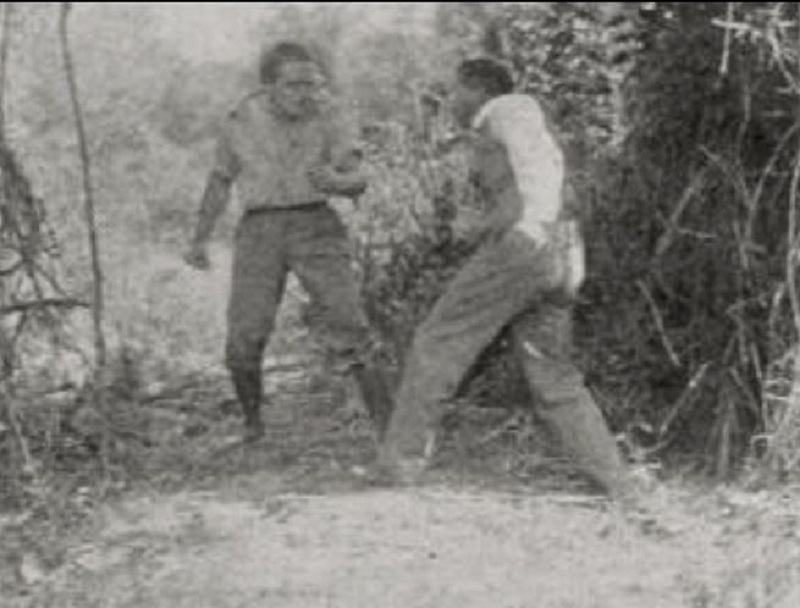
Billy Milford, Harvard graduate, goes west to seek his fortune. In .Addertown he secures a position as stationmaster of the L. & R. Railroad, but is forced out because of his drinking habits. He accidentally meets Gunhild, an emigrant Norwegian girl, as she arrives in Addertown to take up her home with Jan Hagsberg, the town's saloonkeeper. Seeking revenge on the railroad, Milford joins Jim Dorsey in a scheme to hold up the road's paymaster on his way to pay the employees of the company's mine. The holdup is carried out successfully and the loot hidden under the floor of Milford's cabin. Dorsey later returns and steals it. Then he flees the town. Milford is accused of the theft, but a search of his cabin does not reveal the money and he is freed. Gunhild, confident of his innocence, pledges her love as Milford goes east to live down the past. Two years later, Gunhild, employed as companion by a wealthy woman, arrives to spend the summer at a farm house adjoining the one operated by Milford. They meet by accident and their love is renewed. Dorsey, the strong man of a traveling show, reaches the town and insists upon forcing his attentions on Gunhild. Milford and Dorsey engage in a fistic encounter during which the latter is badly worsted. He leaves town that night. Having saved a large sum of money, Milford, accompanied by Gunhild, goes to the superintendent of the railroad and confesses his share in the holdup. Then he hands him the amount of money he had stolen from the paymaster. The superintendent, struck by Milford's honesty and the struggle he has made to make amends, gives the entire amount to Gunhild, now Milford's wife, as a wedding present. The two happy young persons then leave for parts unknown to begin life all over.
Decades after its release, A Yankee from the West remains a vital piece of the cinematic puzzle. Its influence can be seen in countless modern works, solidifying George Siegmann's status as a master of the craft in United States and beyond.