
DbcultAccessing Vault...
Director's Spotlight
Senior Film Conservator
Director's Spotlight: United States
A Deep Dive into the 1916 Vision of George Terwilliger
The enduring fascination with Perils of Our Girl Reporters is a testament to the defining moment in cult history that George Terwilliger helped create. This film stands as a masterclass in visual storytelling, it has cemented its place in the global cult cinema archive.
In Perils of Our Girl Reporters, George Terwilliger pushes the boundaries of conventional narrative. The film's unique approach to its subject matter has sparked endless debates and interpretations among cinephiles and critics alike.
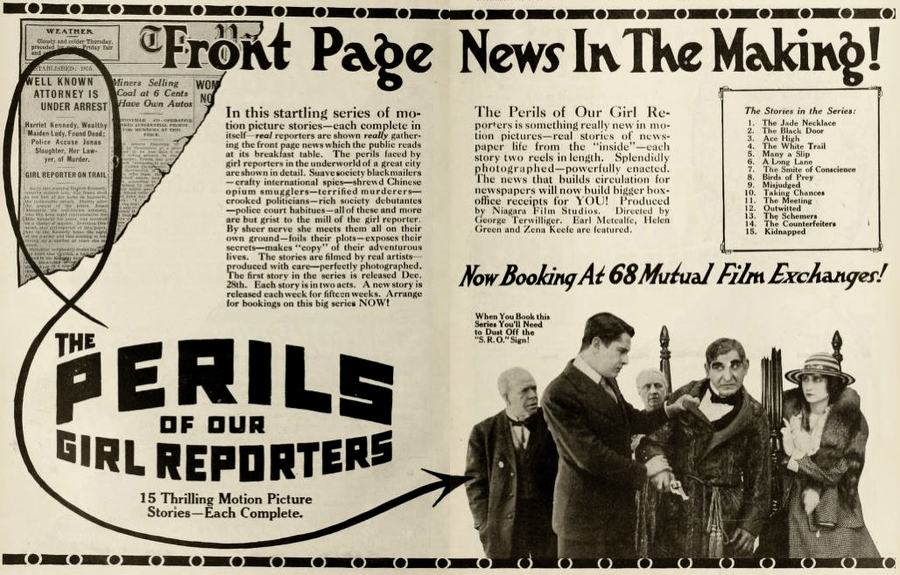
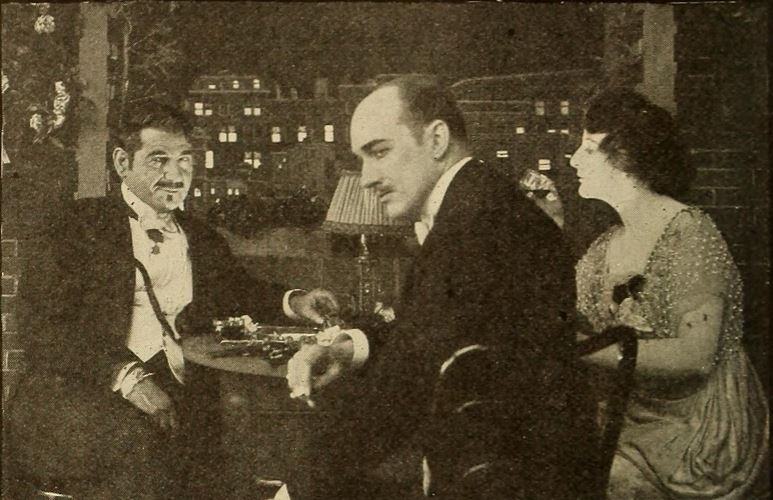
To fully appreciate Perils of Our Girl Reporters, one must consider the cinematic climate of 1916. During this period, United States was undergoing significant artistic shifts, and George Terwilliger was at the forefront of this cult movement, often challenging established norms.
| Cinematography | Handheld |
| Soundtrack | Diegetic |
| Editing | Elliptical |
| Art Direction | Expressionist |
Visualizing the convergence of George Terwilliger's style and the core cult narrative.
Episode 1: "The Jade Necklace" Dorothy Desmond, an inexperienced Kentucky girl whose father, an editor, had been shot at his desk by a political opponent, and whose mother had dropped dead of shock, found herself left virtually penniless. She believed she had a gift for writing and came to New York to seek a position on a newspaper. She was assigned to Chinatown to get an opium den story. She missed her escort and bravely and foolishly went to Chinatown alone. She yielded to the invitation of a Chinaman to enter his shop and inspect some beads, and he was at the point of attacking her when a storm of revolver shots broke, and a tong war was on. At the crack of the first pistol the Chinese shopkeeper desisted from his evil designs and shoved Dorothy into a secret room, the door of which he closed and locked on the outside. The girl was mad with fear. To her through the deadening walls came the sounds of the shooting. Then the shots ceased as suddenly as they had begun, and she heard faintly the gongs of police ambulances and patrols. Had she been liberated she would have seen white-jacketed emergency surgeons and orderlies picking up dead and wounded Chinamen and putting them into the wagons, while blue-coated officers with busy clubs rounded up other Chinamen, dragging them from all sorts of odd holes and corners and packing them into patrol wagons. "Worst tong fight in years," a sergeant observed pleasantly to a newspaper man. "Seven dead already, and some of the wounded sure to die. These Chinks shoot mighty straight for heathen. In the dark, too. What always puzzled me was how one tong could spot the other tong when they get mixed up in one of these nasty little wars. All Chinks look pretty much alike to me. You can never find out what started one of those shooting festivals. They won't tell a white man a thing. We can take our fill of guessing, though. Maybe it was a woman taken away from a member of one tong by a member of another. Maybe it was opium, maybe, you can think up a whole lot of maybes if you try, but what's the use"?
Decades after its release, Perils of Our Girl Reporters remains a vital piece of the cinematic puzzle. Its influence can be seen in countless modern works, solidifying George Terwilliger's status as a master of the craft in United States and beyond.