
DbcultAccessing Vault...
Director's Spotlight
Senior Film Conservator
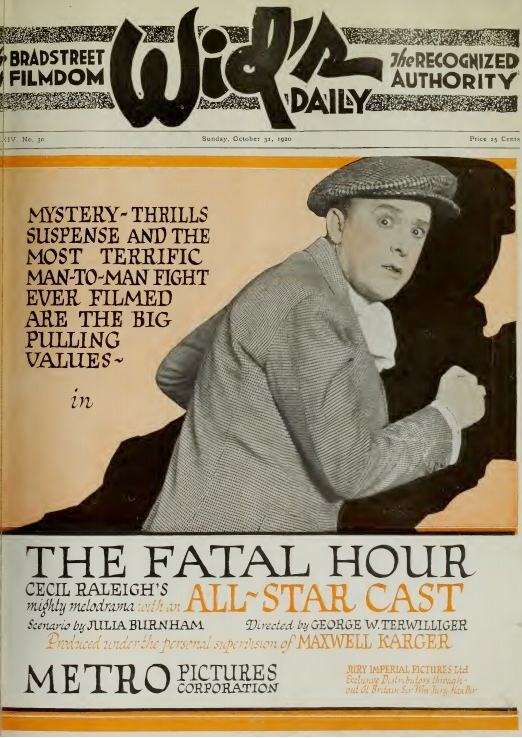
Director's Spotlight: United States
A Deep Dive into the 1920 Vision of George Terwilliger
The brilliance of The Fatal Hour (1920) is inseparable from a monumental shift in cult filmmaking spearheaded by George Terwilliger. Occupying a unique space between cult and pure art, it serves as a blueprint for future generations of cult directors.
In The Fatal Hour, George Terwilliger pushes the boundaries of conventional narrative. The film's unique approach to its subject matter has sparked endless debates and interpretations among cinephiles and critics alike.
In this work, George Terwilliger explores the intersection of cult and United States cultural identity. The meticulous attention to detail suggests a deep-seated commitment to pushing the boundaries of the medium, ensuring that The Fatal Hour remains a relevant topic of study for cult enthusiasts.
| Cinematography | Static |
| Soundtrack | Diegetic |
| Editing | Elliptical |
| Art Direction | Expressionist |
Visualizing the convergence of George Terwilliger's style and the core cult narrative.
When the Marquis of Deerminister dies, his nephew Nigel Villiers inherits the title, but Jim Callender, Nigel's enemy, decides to deprive him of the position. Among Callender's acquaintances is Lord Dolly, an uncle of Nigel, who schemes with Callender to prove that Nigel's father married his mother before the death of his first wife, thereby invalidating Nigel's title, which would then descend to Lord Dolly. Also as part of his revenge, Callender plots to blackmail Dudley Gore, brother of Nigel's sweetheart Dorothy, into stealing the crown jewels. To prove his ancestry, Nigel journeys to the monastery in Switzerland that contains his family records. Once there, he meets Callender, who has already purloined the documents. Dorothy arrives soon after and attempts to detain Callender while Nigel wrestles the papers from him. Callender falls to his death, and the papers and the jewels are returned to their rightful heirs.
Decades after its release, The Fatal Hour remains a vital piece of the cinematic puzzle. Its influence can be seen in countless modern works, solidifying George Terwilliger's status as a master of the craft in United States and beyond.