
DbcultAccessing Vault...
Director's Spotlight
Senior Film Conservator
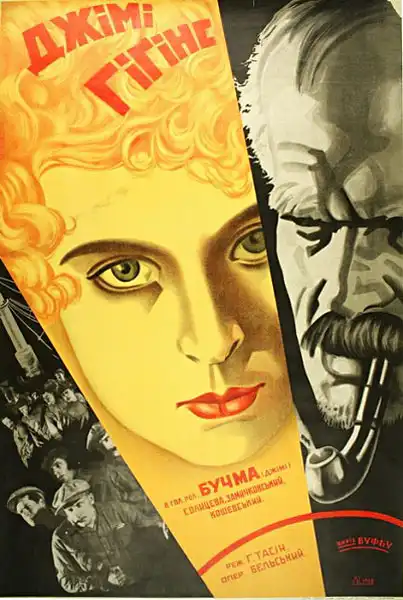
Director's Spotlight: Soviet Union
A Deep Dive into the 1928 Vision of Georgi Tasin
In the grand tapestry of Drama cinema, Jimmie Higgins serves as a bridge between the philosophical inquiries that Georgi Tasin embeds within the narrative. Melding the raw energy of Soviet Union with a global Drama appeal, it invites us to question our own perceptions of Drama narratives.
In Jimmie Higgins, Georgi Tasin pushes the boundaries of conventional narrative. The film's unique approach to its subject matter has sparked endless debates and interpretations among cinephiles and critics alike.
In this work, Georgi Tasin explores the intersection of Drama and Soviet Union cultural identity. The meticulous attention to detail suggests a deep-seated commitment to pushing the boundaries of the medium, ensuring that Jimmie Higgins remains a relevant topic of study for Drama enthusiasts.
| Cinematography | High-Contrast |
| Soundtrack | Orchestral |
| Editing | Slow-Burn |
| Art Direction | Brutalist |
Visualizing the convergence of Georgi Tasin's style and the core Drama narrative.
Jimmy Higgings is an worker at a plant making weapons for Tsarist Russia and the German Empire. During World War I, Jimmy speaks at a spontaneous rally against the war. He is arrested. When released, he becomes unemployed. He is happy to hear the news about the revolution; he volunteers into the American expeditionary force thinking that having the weapons he can fight against Germans - the enemies of the Russian revolution. However, finding himself in Russia, Jimmy soon realise that the expeditionary force of American volunteers fights not against the Germans, but against the young Socialist Russia. Without any hesitation, he takes the path of revolutionary struggle, he spreads propaganda among the American soldiers and distributes Bolshevik leaflets. Captured by the American military police, Jimmy Higgings does not betray his friends. He is sentenced to twenty years in a military prison. Jimmy cannot stand it and loses his mind.
Decades after its release, Jimmie Higgins remains a vital piece of the cinematic puzzle. Its influence can be seen in countless modern works, solidifying Georgi Tasin's status as a master of the craft in Soviet Union and beyond.