
DbcultAccessing Vault...
Director's Spotlight
Senior Film Conservator
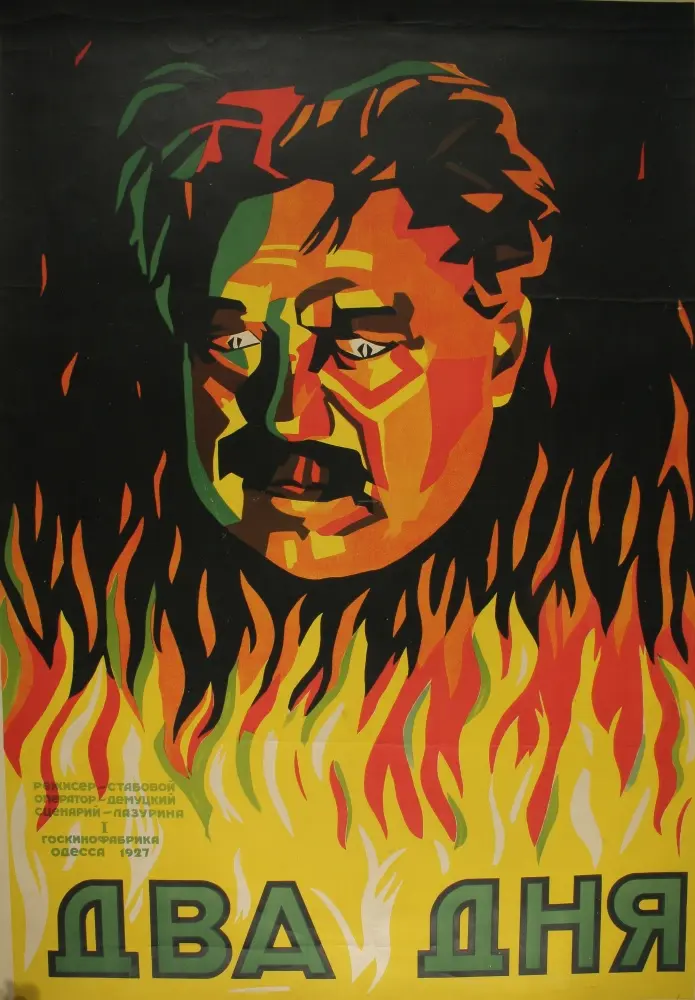
Director's Spotlight: Soviet Union
A Deep Dive into the 1927 Vision of Georgiy Stabovoy
Exploring the Drama underpinnings of Two Days leads us to the uncompromising vision of Georgiy Stabovoy that defines this Drama masterpiece. Melding the raw energy of Soviet Union with a global Drama appeal, it echoes the profound changes occurring in Soviet Union during that era.
In Two Days, Georgiy Stabovoy pushes the boundaries of conventional narrative. The film's unique approach to its subject matter has sparked endless debates and interpretations among cinephiles and critics alike.
The visual language of Two Days is defined by its use of shadows and framing, a hallmark of Georgiy Stabovoy's style. By utilizing a 1927-era palette, the film creates an immersive experience that perfectly complements its Drama themes.
| Cinematography | Static |
| Soundtrack | Synth-Heavy |
| Editing | Rhythmic |
| Art Direction | Naturalist |
Visualizing the convergence of Georgiy Stabovoy's style and the core Drama narrative.
During the 1917-1921 Civil War in Ukraine, a landlord and his family flee the Bolshevik troops, who are already on the outskirts of the city. The faithful doorman stays behind to guard the family's valuables, buried in the garden. During the chaotic escape to the station the landlord's son gets separated and returns to the estate, where Anton hides him in his tiny room in the attic. In the evening, the mansion is occupied by Bolsheviks led by Anton's son, Andrii. Anton doesn't share his son's political ideas and restrains himself for showing his love for him. Accidentally the young master witnesses Andrii finding the treasures hidden in the garden. When the White Army returns to the city the following day, the landlord's son gives Andrii away to counterintelligence, and Andrii is executed as a Bolshevik agent. In despair, Anton sets fire to the estate, along with the partying White Army generals.
Decades after its release, Two Days remains a vital piece of the cinematic puzzle. Its influence can be seen in countless modern works, solidifying Georgiy Stabovoy's status as a master of the craft in Soviet Union and beyond.