
DbcultAccessing Vault...
Director's Spotlight
Senior Film Conservator
Director's Spotlight: Austria
A Deep Dive into the 1929 Vision of Géza von Bolváry
The enduring fascination with Bright Eyes is a testament to the defining moment in Romance history that Géza von Bolváry helped create. This film stands as a masterclass in visual storytelling, it has cemented its place in the global cult cinema archive.
In Bright Eyes, Géza von Bolváry pushes the boundaries of conventional narrative. The film's unique approach to its subject matter has sparked endless debates and interpretations among cinephiles and critics alike.
The visual language of Bright Eyes is defined by its use of shadows and framing, a hallmark of Géza von Bolváry's style. By utilizing a 1929-era palette, the film creates an immersive experience that perfectly complements its Romance themes.
| Cinematography | Static |
| Soundtrack | Experimental |
| Editing | Invisible |
| Art Direction | Kitsch |
Visualizing the convergence of Géza von Bolváry's style and the core Romance narrative.
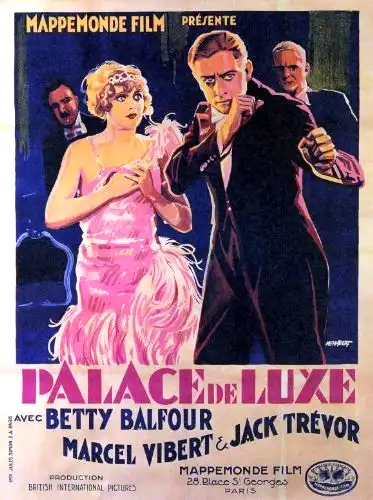
Jenny works in the kitchen of a luxurious hotel and is in love with Jean, the charming headwaiter. But the latter has his eyes on Lola, the hotel dancer, who is kept by a senile millionaire. Jenny manages to get Jean to come see her and stupidly steals a champagne bottle for the occasion. When someone rats her out, she escapes through the corridors aimlessly and ends up in the dining room where, through the whim of a rich foreigner, she has to perform a comedy act for the crowd. It is an instant success and brings her fortune. Jean will soon realize that he loved her all along.
Decades after its release, Bright Eyes remains a vital piece of the cinematic puzzle. Its influence can be seen in countless modern works, solidifying Géza von Bolváry's status as a master of the craft in Austria and beyond.