
DbcultAccessing Vault...
Director's Spotlight
Senior Film Conservator
Director's Spotlight: United States
A Deep Dive into the 1918 Vision of Gilbert P. Hamilton
The cult DNA of False Ambition is a reflection of United States's the historical context that Gilbert P. Hamilton weaves into the cult fabric. Challenging the viewer to find meaning in the cult shadows, it transcends regional boundaries to tell a universal story.
In False Ambition, Gilbert P. Hamilton pushes the boundaries of conventional narrative. The film's unique approach to its subject matter has sparked endless debates and interpretations among cinephiles and critics alike.
In this work, Gilbert P. Hamilton explores the intersection of cult and United States cultural identity. The meticulous attention to detail suggests a deep-seated commitment to pushing the boundaries of the medium, ensuring that False Ambition remains a relevant topic of study for cult enthusiasts.
| Cinematography | High-Contrast |
| Soundtrack | Synth-Heavy |
| Editing | Rhythmic |
| Art Direction | Naturalist |
Visualizing the convergence of Gilbert P. Hamilton's style and the core cult narrative.
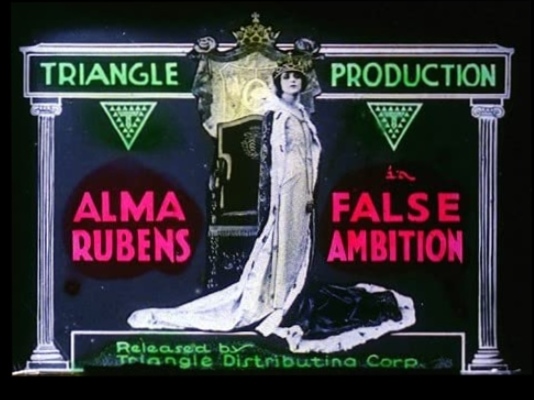
When self-seeking and bad-tempered Judith claims that she loves her sister Felicity's beau, David Strong, he gives her money for her trousseau which she uses to settle in New York City. Under the name of Zariska, Judith establishes herself as a society fortune-teller, counting among her many clients the wealthy Peter Van Dixon and his friend, Paul Vincent. After Judith has returned home to collect money willed to her by her uncle, she witnesses a shipwreck in which the wealthy Mrs. Dorian is killed. Seeing an opportunity to advance in society, Judith steals Mrs. Dorian's papers and jewels and uses them to masquerade as the rich woman. Her deception is a success, and she is about to marry Peter when David appears and exposes her. Deeply repentant, Judith returns home, and Paul, realizing that her better nature has asserted itself, asks her to be his wife.
Decades after its release, False Ambition remains a vital piece of the cinematic puzzle. Its influence can be seen in countless modern works, solidifying Gilbert P. Hamilton's status as a master of the craft in United States and beyond.