
DbcultAccessing Vault...
Director's Spotlight
Senior Film Conservator
Director's Spotlight: United States
A Deep Dive into the 1927 Vision of Harold Beaudine
Exploring the Short underpinnings of Break Away leads us to the uncompromising vision of Harold Beaudine that defines this Short masterpiece. Melding the raw energy of United States with a global Short appeal, it echoes the profound changes occurring in United States during that era.
In Break Away, Harold Beaudine pushes the boundaries of conventional narrative. The film's unique approach to its subject matter has sparked endless debates and interpretations among cinephiles and critics alike.
In this work, Harold Beaudine explores the intersection of Short and United States cultural identity. The meticulous attention to detail suggests a deep-seated commitment to pushing the boundaries of the medium, ensuring that Break Away remains a relevant topic of study for Short enthusiasts.
| Cinematography | Handheld |
| Soundtrack | Diegetic |
| Editing | Elliptical |
| Art Direction | Expressionist |
Visualizing the convergence of Harold Beaudine's style and the core Short narrative.
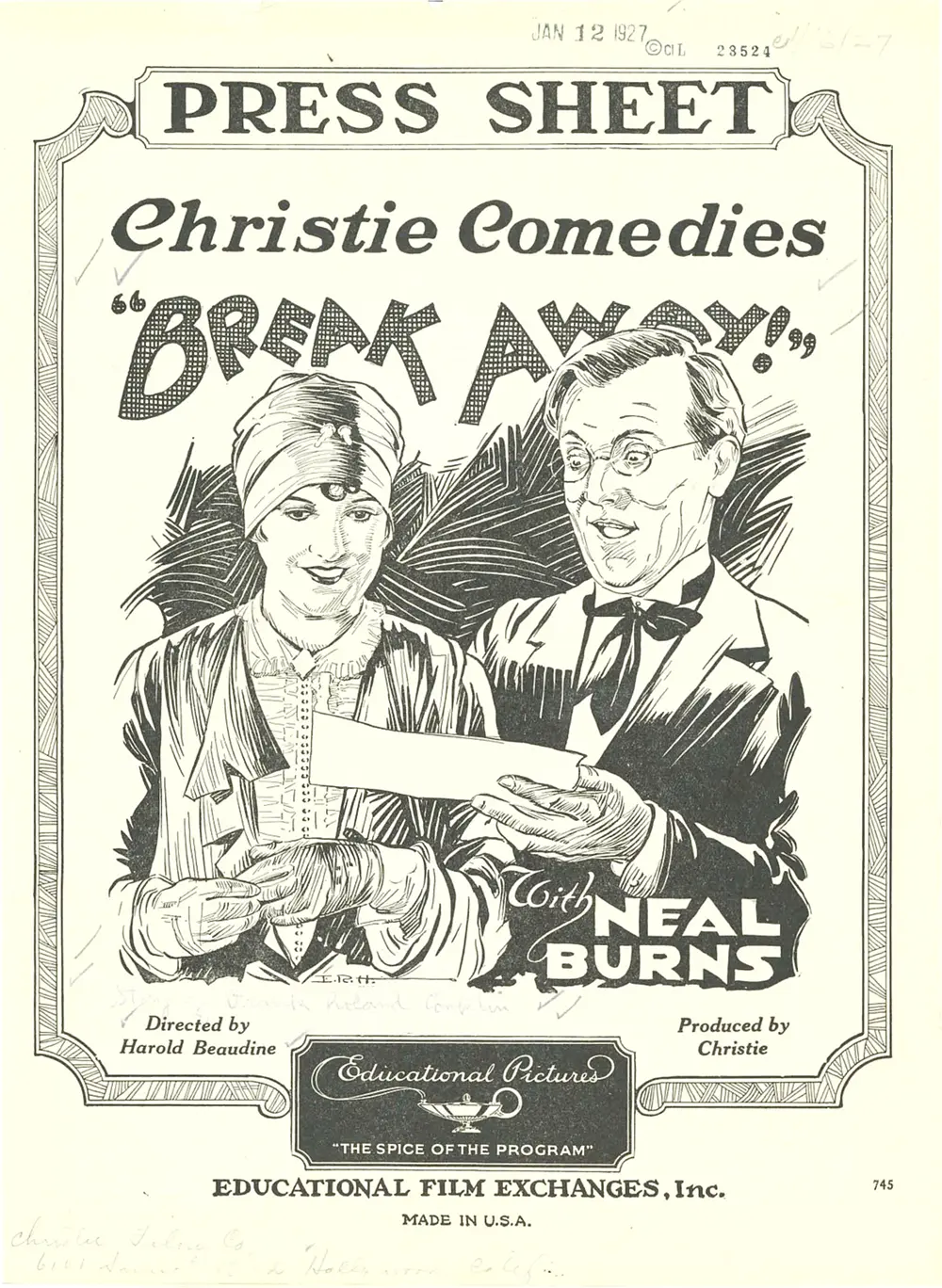
Neal is interrupted in the rehearsal of the show, he is getting ready for viewing by his financial backers by the arrival of a telegram from Natalie, his sweetheart, saying that they can be married soon if Neal's house suits her father. Neal has no house at all and is about crazy until his stage manager suggests they build one from the scenery. The house is finished in time, for Natalie and her father to see upon their arrival. Everything appears all right until father offers to make one of his famous omelettes. He fakes a fight with the cook. But he manages to mix things up worse than ever. Then Neal tries to make the best of things by frantically attempting to fix up the phony kitchen so that it will cook the omelette. Just as father has the omelette cooked, the carpenters start removing. the front part of the house for the first act at the theatre. Piece by piece the "scenic" house is carried away while another section is returned from the theatre as soon as the acts are completed. Consequently, Neal and Natalie have a busy time trying to keep her father in the section of the house which is neatly whole at that particular time. The lack of scenery disgusts the financial men and they begin to leave one by one. Neal hears of this and rushes up to the remaining one and begins to plead with him. In the meantime one side of the house has collapsed on father and he has started out for Neal with blood in his eye. He arrives at the same time as an unknown producer who has witnessed the farce of the scenery house. The moneyed man offers Neal $10,000 for a play written about this trick house and gives him a check in advance, Neal pretends that he won't take the check because he informs Natalie and her father that he is through with the stage forever. But father has a change of heart insists that he take the check, and asks to take part in the play.
Decades after its release, Break Away remains a vital piece of the cinematic puzzle. Its influence can be seen in countless modern works, solidifying Harold Beaudine's status as a master of the craft in United States and beyond.