
DbcultAccessing Vault...
Director's Spotlight
Senior Film Conservator
Director's Spotlight: United States
A Deep Dive into the 1926 Vision of Harold Beaudine
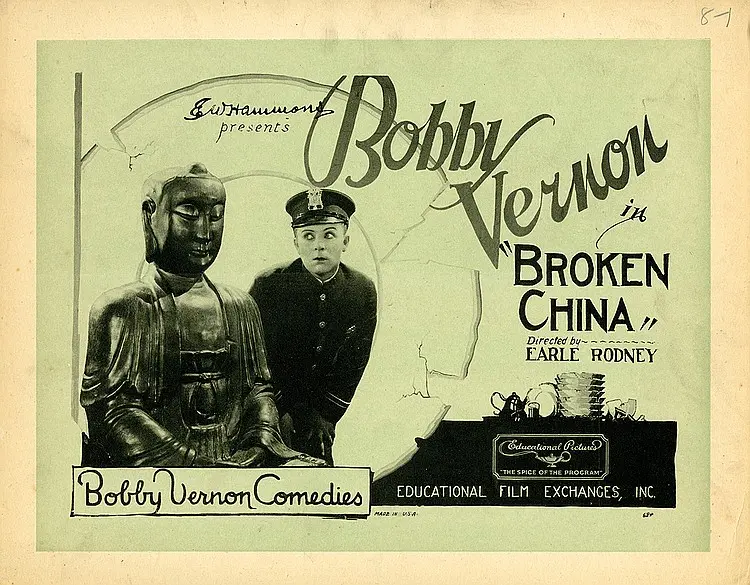
To understand the modern evolution of United States film, one must first look at Broken China and the collaborative alchemy between Harold Beaudine and the 1926 creative team. Subverting the expectations of the typical 1926 audience, it remains a vital reference point for anyone studying the evolution of Harold Beaudine.
In Broken China, Harold Beaudine pushes the boundaries of conventional narrative. The film's unique approach to its subject matter has sparked endless debates and interpretations among cinephiles and critics alike.
While deeply rooted in United States, Broken China has achieved a global reach, influencing directors from various backgrounds. Its ability to translate Comedy tropes into a universal cinematic language is why it remains a cult staple decades after its 1926 release.
| Cinematography | Deep Focus |
| Soundtrack | Diegetic |
| Editing | Elliptical |
| Art Direction | Expressionist |
Visualizing the convergence of Harold Beaudine's style and the core Comedy narrative.
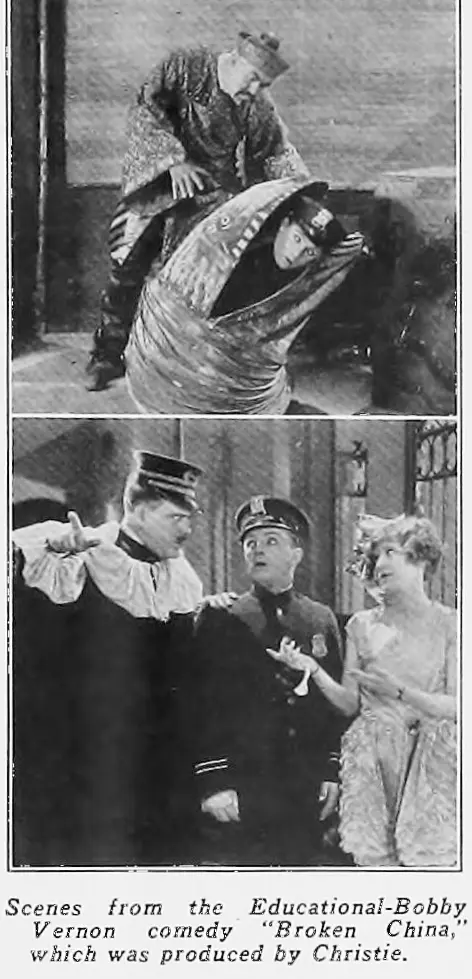
Bobby asks permission to marry Betty, but her father, who is Chief of Police, refuses, telling Bobby that she can only marry a policeman and that he has promised her hand to Artie, the new Lieutenant. Just then Artie comes in and tells Bobby he is to announce their engagement that night at the Policeman's Ball. Bobby leaves telling Betty he will see her that night. Bobby, masquerading in a policeman's outfit, arrives at the ball, but is thrown out. As he is walking along, a patrol wagon comes by, filled with police on their way to raid Chinatown. They see Bobby and thinking him an officer, pull him into the wagon. When the patrol reaches Chinatown, the Lieutenant order. Bobby to patrol the street and tells him to stay there. They depart, leaving Bobby all alone and a bit scared. As he sits on a garbage can a little Chinese boy places a big firecracker in it and when it explodes, Bobby lands in an underground Chinese den. Won Lung, a notorious smuggler, is seated in Buddha fashion when Bobby arrives. In his endeavor to see him better, Bobby ignites Won's beard with a candle and when Won discovers it, he starts after Bobby. In the meantime, the Chief of Police, Betty and Artie arrive with the other police. In the den, Won and Bobby are having a fight and the Chinaman is just about to kill Bobby when he knocks him out. Hiding behind Won, he directs the Chinamen to get out of the den. The ground opens and one by one they land in the patrol wagon. Finally, Bobby arrives with Won Lung and the police recognize him as the smuggler. The Chief of Police congratulates Bobby and gives him his daughter and his blessing. As they embrace the street opens and they disappear down below.
Decades after its release, Broken China remains a vital piece of the cinematic puzzle. Its influence can be seen in countless modern works, solidifying Harold Beaudine's status as a master of the craft in United States and beyond.