
DbcultAccessing Vault...
Director's Spotlight
Senior Film Conservator
Director's Spotlight: United States
A Deep Dive into the 1926 Vision of Harold Beaudine
The enduring fascination with For Sadie's Sake is a testament to the defining moment in Short history that Harold Beaudine helped create. This film stands as a masterclass in visual storytelling, it has cemented its place in the global cult cinema archive.
In For Sadie's Sake, Harold Beaudine pushes the boundaries of conventional narrative. The film's unique approach to its subject matter has sparked endless debates and interpretations among cinephiles and critics alike.
While deeply rooted in United States, For Sadie's Sake has achieved a global reach, influencing directors from various backgrounds. Its ability to translate Short tropes into a universal cinematic language is why it remains a cult staple decades after its 1926 release.
| Cinematography | Handheld |
| Soundtrack | Diegetic |
| Editing | Elliptical |
| Art Direction | Expressionist |
Visualizing the convergence of Harold Beaudine's style and the core Short narrative.
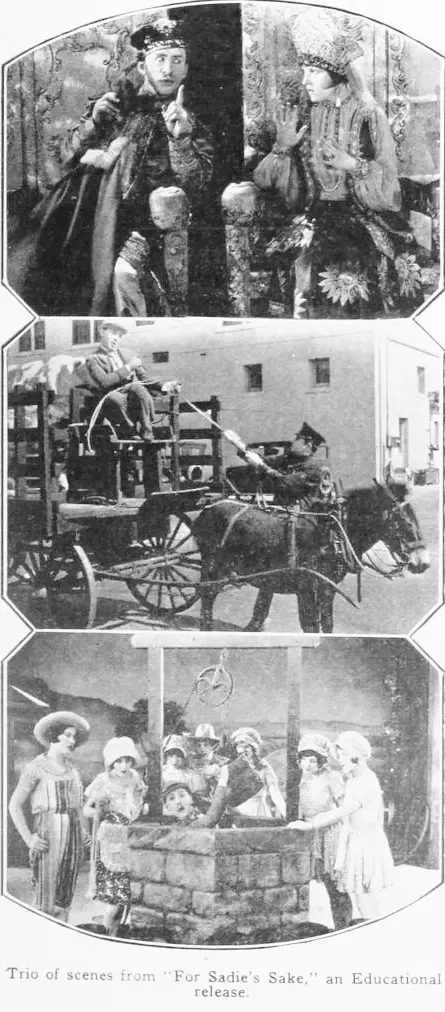
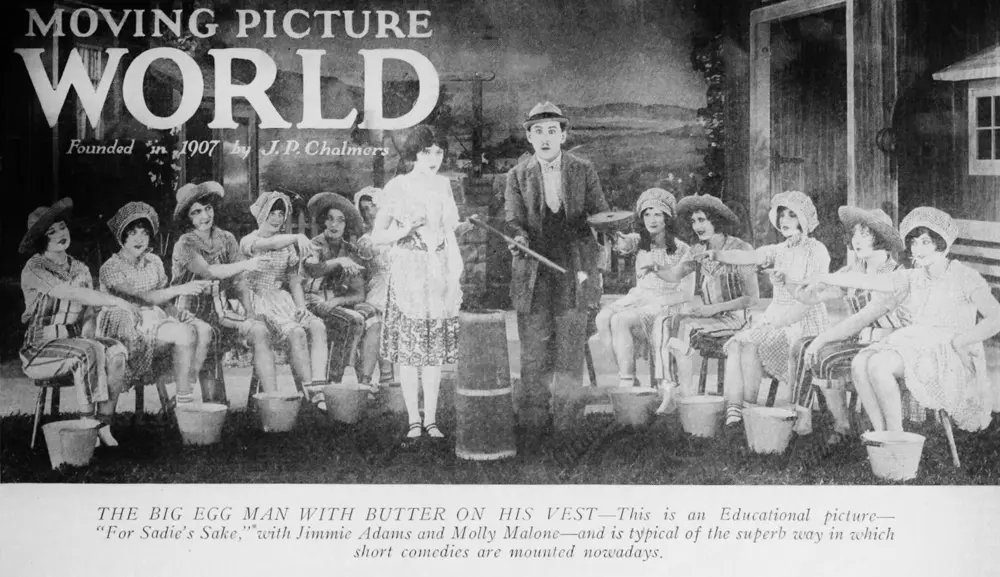
Wilbur, a young farmer, contracts to furnish his farm animals for a show. On his way to the city they all get away except his mule. At the Opera House he sees the manager making advances to Sadie, the leading lady. He knocks the manager down and tells Sadie that he'll keep him from bullying her again. The manager tells one of his prop men to throw Wilbur out. But he escapes, dressed in one of the Russian costumes. The show is going on. It is a Russian scene and the chorus is doing a Russian dance when the Czar and Czarina arrive. Wilbur is the Czar and Sadie is the Czarina. In the meantime, the manager instructs his prop men to examine every man with a beard until they find Wilbur. While they are looking for Wilbur, the real Czar comes out of his dressing room and says someone has stolen his costume. They discover Wilbur dressed as the Czar and throw him out. The second act is a country scene with the chorus girls dancing as dairy maids. The property men dress Wilbur's mule in a cow hide. Wilbur sees this, and when no one is looking and changes the hide to his own back. Sadie is carried in on his back and as she starts to alight, he falls and is unable to arise. In his efforts he loses his head and his disguise is penetrated. And once again he is thrown out. When the show is over he is waiting for Sadie at the stage door and they both drive off in the sleigh drawn by the mule. They are stopped by the traffic officer who asks them where they are going. Sadie tells him they are going back to the farm.
Decades after its release, For Sadie's Sake remains a vital piece of the cinematic puzzle. Its influence can be seen in countless modern works, solidifying Harold Beaudine's status as a master of the craft in United States and beyond.