
DbcultAccessing Vault...
Director's Spotlight
Senior Film Conservator
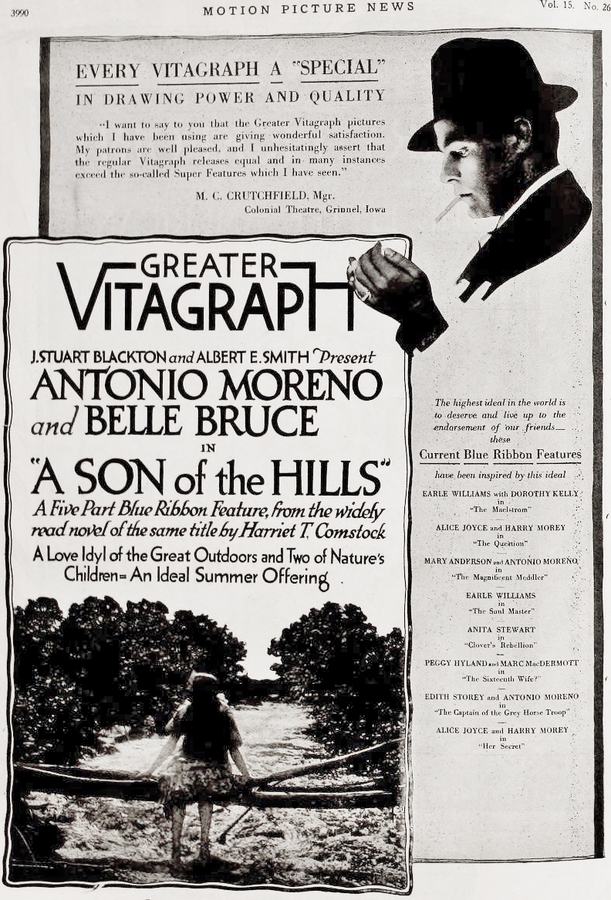
Director's Spotlight: United States
A Deep Dive into the 1917 Vision of Harry Davenport
Few works in United States cinema carry the same weight as A Son of the Hills, especially regarding the cultural zeitgeist captured so perfectly by Harry Davenport in 1917. Utilizing a 1917-specific aesthetic that remains timeless, it serves as a blueprint for future generations of cult directors.
In A Son of the Hills, Harry Davenport pushes the boundaries of conventional narrative. The film's unique approach to its subject matter has sparked endless debates and interpretations among cinephiles and critics alike.
| Cinematography | Deep Focus |
| Soundtrack | Minimalist |
| Editing | Slow-Burn |
| Art Direction | Brutalist |
Visualizing the convergence of Harry Davenport's style and the core cult narrative.
Due to the abuse Sandy Morley suffers at the hands of his stepmother, he leaves his home in the mountains of North Carolina. After wandering for a number of days, he falls exhausted in front of the home of Markham, a rich factory owner from the North. Sandy appeals to Markham, who offers to send the boy through college. After Sandy's graduation, he is sent to his old home to start building a new factory. Lansing, Markham's scapegrace nephew, becomes jealous of the position Sandy holds and in revenge steals Sandy's sweetheart Cynthia Starr away from him. After their marriage, however, a girl with whom Lansing had an affair while at college confronts Cynthia. A divorce is then granted and Cynthia returns to marry Sandy.
Decades after its release, A Son of the Hills remains a vital piece of the cinematic puzzle. Its influence can be seen in countless modern works, solidifying Harry Davenport's status as a master of the craft in United States and beyond.