
DbcultAccessing Vault...
Director's Spotlight
Senior Film Conservator
Director's Spotlight: United States
A Deep Dive into the 1916 Vision of Harry Davenport
The cult DNA of For a Woman's Fair Name is a reflection of United States's the historical context that Harry Davenport weaves into the cult fabric. Challenging the viewer to find meaning in the cult shadows, it transcends regional boundaries to tell a universal story.
In For a Woman's Fair Name, Harry Davenport pushes the boundaries of conventional narrative. The film's unique approach to its subject matter has sparked endless debates and interpretations among cinephiles and critics alike.
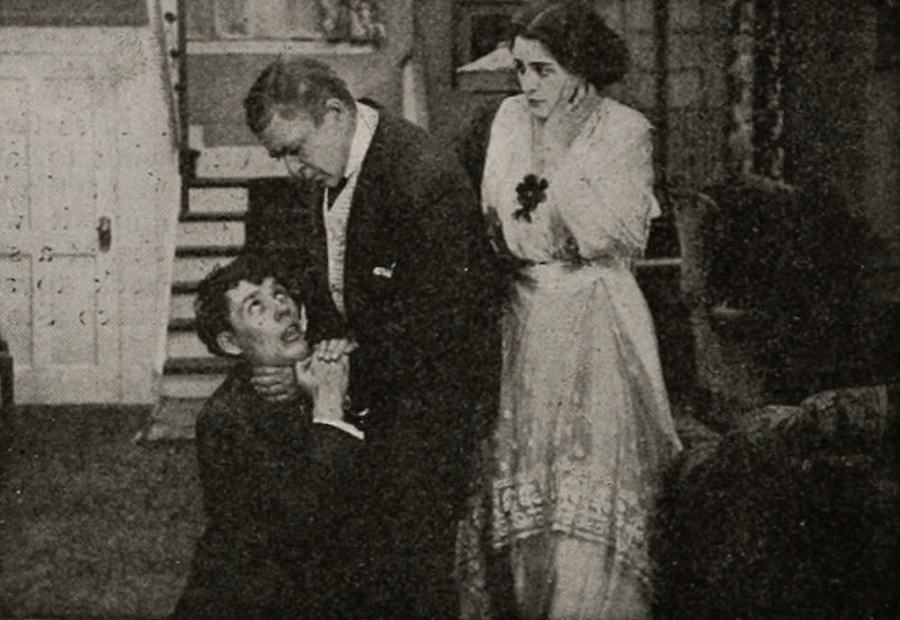
The visual language of For a Woman's Fair Name is defined by its use of shadows and framing, a hallmark of Harry Davenport's style. By utilizing a 1916-era palette, the film creates an immersive experience that perfectly complements its cult themes.
| Cinematography | Handheld |
| Soundtrack | Minimalist |
| Editing | Disjunctive |
| Art Direction | Baroque |
Visualizing the convergence of Harry Davenport's style and the core cult narrative.
When Vivien and her husband, Pierce, come Into their new home, she comes face to face with her husband's secretary, Bolles, and a shadow is cast over her happiness. Bolles is a dope fiend, supported by the charity of his half-brother, McGregor, a man of splendid character, and holds over Vivien and McGregor the fear of scandal because of a trap he had laid for Pierce and Vivien, by which he succeeded in compromising them. McGregor meanwhile meets and falls in love with Alicia, Pierce's young sister, and Bolles, also being in love with her, threatens to reveal everything, in revenge. Through a peculiar combination of circumstances, Bolles, one night half crazed by the drug, shoots Alicia by mistake, and McGregor, to protect Vivien, who was at his home at the time of the shooting, confesses he is guilty. Pierce does not believe his friend is guilty and quietly investigates, confident that McGregor is shielding someone. He learns that it is Vivien, and heartbroken, he refuses to listen to her explanations and determines on a separation. Rolles, whose mind is giving way, sees the trouble he has wrought, and worried over Alicia's condition, which is serious, kills himself. Then the whole story comes out and, receiving proof of his wife's innocence in both instances. Pierce begs for forgiveness, and the two are reunited in complete understanding and love. Alicia recovers slowly, and McGregor is her constant attendant. Eventually the two find happiness when he declares his love, and they are married.
Decades after its release, For a Woman's Fair Name remains a vital piece of the cinematic puzzle. Its influence can be seen in countless modern works, solidifying Harry Davenport's status as a master of the craft in United States and beyond.