
DbcultAccessing Vault...
Director's Spotlight
Senior Film Conservator
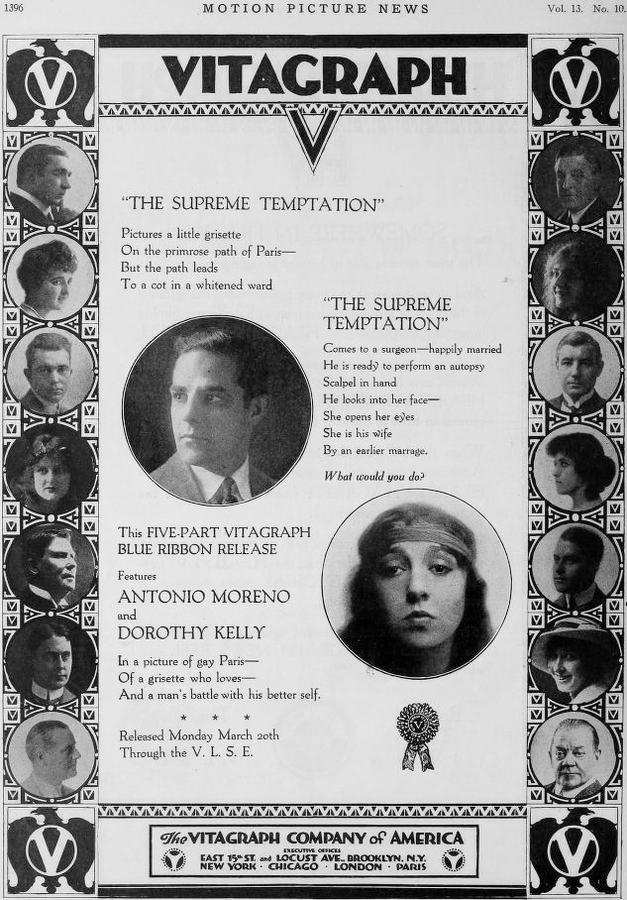
Director's Spotlight: United States
A Deep Dive into the 1916 Vision of Harry Davenport
In the storied career of Harry Davenport, The Supreme Temptation stands as a the provocative questions that Harry Davenport poses to the United States audience. Elevating the source material through Harry Davenport's unique vision, it persists as a haunting reminder of our own cinematic history.
In The Supreme Temptation, Harry Davenport pushes the boundaries of conventional narrative. The film's unique approach to its subject matter has sparked endless debates and interpretations among cinephiles and critics alike.
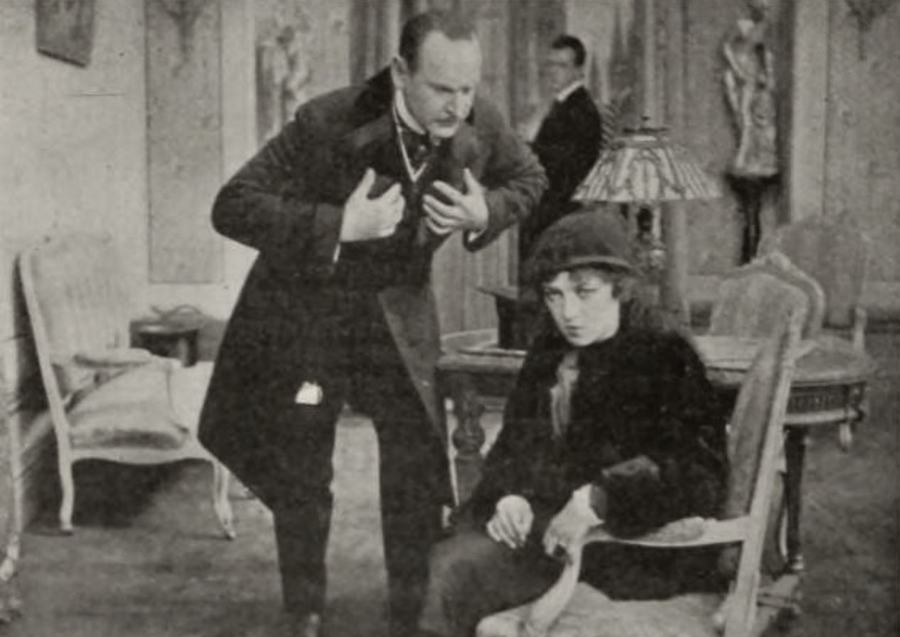
To fully appreciate The Supreme Temptation, one must consider the cinematic climate of 1916. During this period, United States was undergoing significant artistic shifts, and Harry Davenport was at the forefront of this cult movement, often challenging established norms.
| Cinematography | Handheld |
| Soundtrack | Synth-Heavy |
| Editing | Rhythmic |
| Art Direction | Naturalist |
Visualizing the convergence of Harry Davenport's style and the core cult narrative.
Herbert DuBois, a young medical student in Paris, falls in love with and marries Annette, a grisette. They do not get along well, however, and he later secures a separation from her. He returns to America to find his father greatly worried over impending financial ruin. The blow falls and DuBois Senior kills himself, leaving Herbert to care for his mother and sister Lydia. Some time later he falls in love with Florence, the daughter of the family lawyer, and his friend Milton is fascinated by Lydia. M. Picard, a French milliner, pays Herbert a visit and informs him of Annette's death; he and Florence are then married. A year later, Herbert has been promoted to the head of the medical college and he learns that he is soon to become a father. Annette has moved to America. While DuBois is preparing to perform an autopsy on a young woman who died suddenly, he discovers, to his horror, that it is Annette and she is not dead, but in a cataleptic trance, a disease to which her family was subject. Then the supreme temptation comes to him to kill her with a slight movement of his scalpel and thus remove forever the dark past, but his better nature conquers, and after calling the others' attention to the body, he goes out. Restoratives are quickly applied and Annette comes back to life. Then follows an agony of suspense for Herbert. Will she live and spoil his present happiness, or will she die? After what seems eternity, one of the doctors informs him that Annette has died, and rushing up to his wife's room, he is stopped by the nurse who tells him that a son has been born to them.
Decades after its release, The Supreme Temptation remains a vital piece of the cinematic puzzle. Its influence can be seen in countless modern works, solidifying Harry Davenport's status as a master of the craft in United States and beyond.