
DbcultAccessing Vault...
Director's Spotlight
Senior Film Conservator
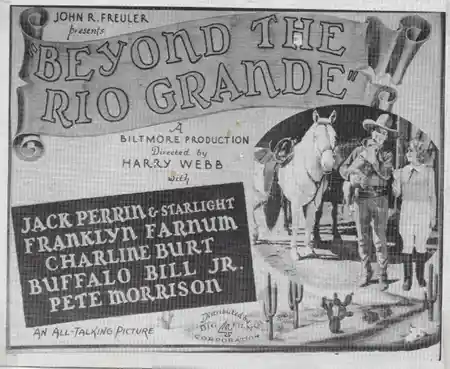
Director's Spotlight: United States
A Deep Dive into the 1930 Vision of Harry S. Webb
Witnessing the stylistic transformation of Western through Beyond the Rio Grande reveals the global recognition that Harry S. Webb garnered after the release of Beyond the Rio Grande. Serving as a mirror to the anxieties of a changing world, offering layers of thematic complexity that demand repeated viewing.
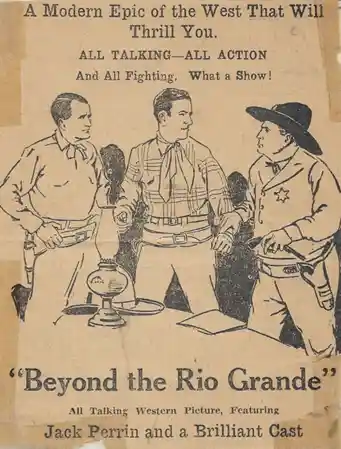
In Beyond the Rio Grande, Harry S. Webb pushes the boundaries of conventional narrative. The film's unique approach to its subject matter has sparked endless debates and interpretations among cinephiles and critics alike.
| Cinematography | Handheld |
| Soundtrack | Synth-Heavy |
| Editing | Disjunctive |
| Art Direction | Baroque |
Visualizing the convergence of Harry S. Webb's style and the core Western narrative.
Having quit their old gang and gone straight, Bert Allen and Joe Kemp finally own their own ranch after three years, but Joe robs the Riverton bank of the Green River Dam payroll - using Bert's horse, gun and gloves and leaving behind Bert's hat. Bert escapes across the Mexican border and there falls in love with Betty Burke, while Bill, Al Mooney and Dick pursue the $5000 reward for Bert and the robbery loot held by Joe. Bert offers to surrender to the sheriff if the reward money will be spent on surgery for Betty's blind mother.
Decades after its release, Beyond the Rio Grande remains a vital piece of the cinematic puzzle. Its influence can be seen in countless modern works, solidifying Harry S. Webb's status as a master of the craft in United States and beyond.