
DbcultAccessing Vault...
Director's Spotlight
Senior Film Conservator
Director's Spotlight: United States
A Deep Dive into the 1920 Vision of Henry Kolker
Deciphering the layers of The Greatest Love (1920) reveals the complex thematic architecture established by Henry Kolker. Utilizing a 1920-specific aesthetic that remains timeless, it stands as the definitive 1920 statement on Drama identity.
In The Greatest Love, Henry Kolker pushes the boundaries of conventional narrative. The film's unique approach to its subject matter has sparked endless debates and interpretations among cinephiles and critics alike.
While deeply rooted in United States, The Greatest Love has achieved a global reach, influencing directors from various backgrounds. Its ability to translate Drama tropes into a universal cinematic language is why it remains a cult staple decades after its 1920 release.
| Cinematography | Deep Focus |
| Soundtrack | Diegetic |
| Editing | Rhythmic |
| Art Direction | Naturalist |
Visualizing the convergence of Henry Kolker's style and the core Drama narrative.
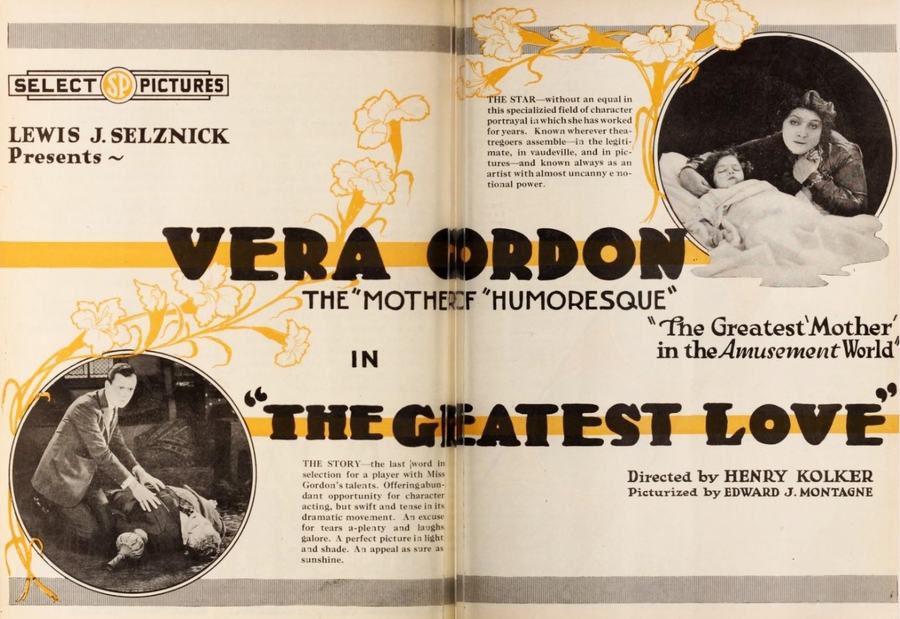
In 1905, the Lantinis and their children, Lorenzo and Francesca, emigrate to New York. Though poor, the family's situation begins to improve when Mr. Manton, a wealthy contractor, offers to provide Lorenzo with the opportunity for advancement, in gratitude for his having saved his daughter Dorothy in an accident. Fifteen years later, the Lantinis have advanced: Lorenzo is a successful architect, in love with Dorothy. At the Manton's party, Lorenzo and Francesca meet Richard Sewall, a theatrical magnate, for whom Lorenzo has designed a building. When Francesca meets with Sewall regarding some costumes, he seduces her. Lorenzo learns what has happened and goes to Sewall's office, only to find him dead, just as the police arrive. He is convicted of the crime, but his mother never doubts his innocence and seeks to prove it. By coincidence, she meets Sewall's wife, who confesses that she murdered Sewall because of his cruelty. Lorenzo is free, and the family reunited.
Decades after its release, The Greatest Love remains a vital piece of the cinematic puzzle. Its influence can be seen in countless modern works, solidifying Henry Kolker's status as a master of the craft in United States and beyond.