
DbcultAccessing Vault...
Director's Spotlight
Senior Film Conservator

Director's Spotlight: United States
A Deep Dive into the 1929 Vision of Henry Lehrman
The Drama DNA of New Year's Eve is a reflection of United States's the subversive storytelling techniques employed by Henry Lehrman in 1929. Breaking the traditional rules of Drama engagement, it leaves an indelible mark on the soul of the viewer.
In New Year's Eve, Henry Lehrman pushes the boundaries of conventional narrative. The film's unique approach to its subject matter has sparked endless debates and interpretations among cinephiles and critics alike.
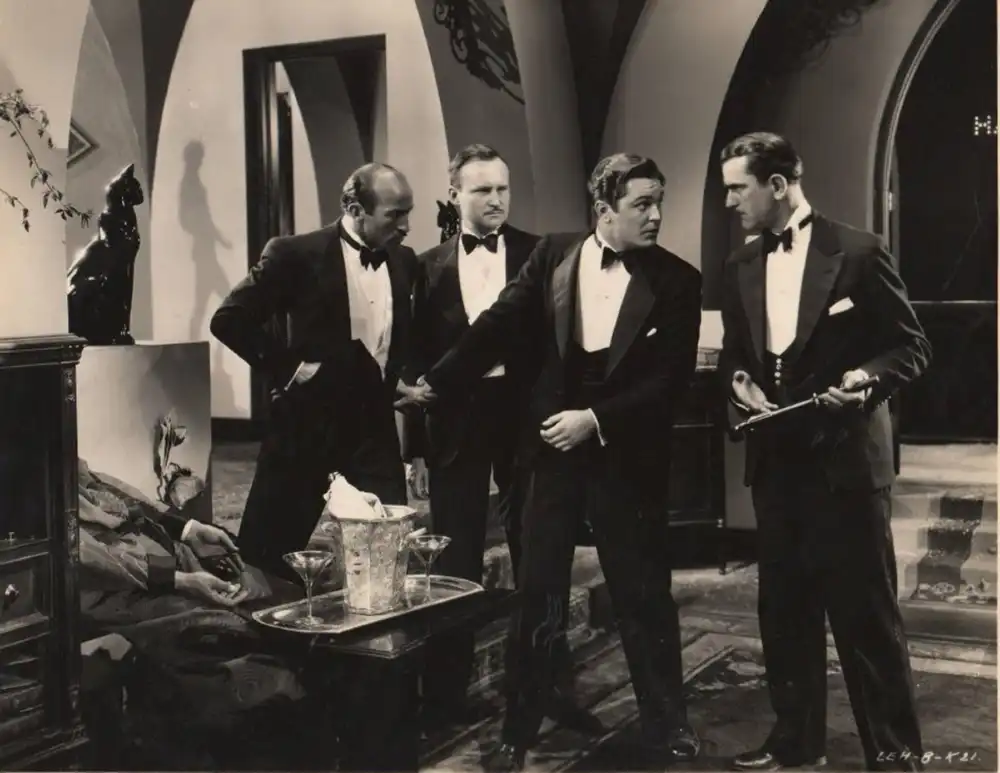
To fully appreciate New Year's Eve, one must consider the cinematic climate of 1929. During this period, United States was undergoing significant artistic shifts, and Henry Lehrman was at the forefront of this Drama movement, often challenging established norms.
| Cinematography | Static |
| Soundtrack | Experimental |
| Editing | Invisible |
| Art Direction | Kitsch |
Visualizing the convergence of Henry Lehrman's style and the core Drama narrative.
Taking place over 24 hours, "New Year's Eve" is the story of Marjorie Ware (Mary Astor), broke and unemployed, who despairs as her ailing younger brother (Freddie Frederick) languishes at home. She runs into rich gambler Larry Harmon (Earle Foxe) and rejects his overtures. She later finds a wallet with 10 $100 bills belonging to Edward Warren (Charles Morton). Edward rewards Marjorie with a $100 bill that has "Happy New Year" written on it. Marjorie goes to a toy store to get a belated Christmas present for her brother, but Steve (Arthur Stone), a pickpocket, steals the money. The toys have already been sent to Mary's home and paid for by the landlady (Helen Ware). Finding that Marjorie is broke, the landlady evicts her. Desperate, Marjorie goes to Larry's apartment to borrow some money. Steve the pickpocket also goes to Larry's apartment, seeking revenge for a fight. Steve kills Larry. Edward, who has followed, finds Mary in the apartment with the now-dead Larry. Before they can leave, the butler discovers them with the body and calls police. Two reviews give different endings, raising the question of whether the movie was re-cut or whether one or both reviewers left before the end of the movie, which got awful notices from the few publications that bothered to review it. According to the review in "Exhibitors Herald World" (March 16, 1929), Edward is held for Larry's murder, but Marjorie finds Steve, who admits he is the killer. Released from jail, Edward is reunited with Marjorie. According to "Motion Picture News" (May 4, 1929), Steve dies while trying to slide down a rope from the roof. Various gamblers try to take Edward for a ride, but Marjorie, finding Steve's body, stops them.
Decades after its release, New Year's Eve remains a vital piece of the cinematic puzzle. Its influence can be seen in countless modern works, solidifying Henry Lehrman's status as a master of the craft in United States and beyond.