
DbcultAccessing Vault...
Director's Spotlight
Senior Film Conservator
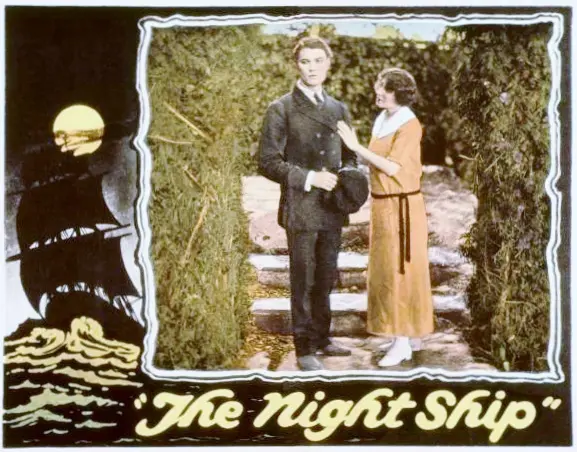
Director's Spotlight: United States
A Deep Dive into the 1925 Vision of Henry McCarty
Deciphering the layers of The Night Ship (1925) reveals the complex thematic architecture established by Henry McCarty. Utilizing a 1925-specific aesthetic that remains timeless, it stands as the definitive 1925 statement on Drama identity.
In The Night Ship, Henry McCarty pushes the boundaries of conventional narrative. The film's unique approach to its subject matter has sparked endless debates and interpretations among cinephiles and critics alike.
The visual language of The Night Ship is defined by its use of shadows and framing, a hallmark of Henry McCarty's style. By utilizing a 1925-era palette, the film creates an immersive experience that perfectly complements its Drama themes.
| Cinematography | Deep Focus |
| Soundtrack | Minimalist |
| Editing | Slow-Burn |
| Art Direction | Brutalist |
Visualizing the convergence of Henry McCarty's style and the core Drama narrative.
After being marooned in the South Seas for six years, Bob Randall returns to his home in Faith Harbor, Maine. He discovers that his sweetheart has married Jed Hobbs, a villainous sea captain, and that his mother, dispossessed of her home by Hobbs, has met an early death. Bob vows revenge, finds Hobbs at the village inn, and floors him in a fight. In the company of Jimson Weed, a new-found friend, Bob boards Hobbs's boat, hoping to prove him guilty of smuggling contraband. Bob and Jimson discover a load of guns and gunpowder bound for Central America and capture the members of the crew one by one. Hobbs at first eludes capture, but when he is cornered by Bob, he drops a lighted match into the powder hold. The ship is destroyed in the resulting explosion, but Hobbs alone is killed. Bob is then reunited with his former sweetheart, who is now free to marry him.
Decades after its release, The Night Ship remains a vital piece of the cinematic puzzle. Its influence can be seen in countless modern works, solidifying Henry McCarty's status as a master of the craft in United States and beyond.